
Why are pre-connectorized FTTH systems gaining attention?
The bottleneck in many FTTH projects is not the fiber itself, but how it is connected in the field. Factory-terminated drop cables, splitter modules and sealed outdoor terminals reduce repetitive field preparation and can cut deployment time by up to 70% while improving consistency and reducing reliance on scarce fusion-splicing technicians.
Global fiber-to-the-home deployment is accelerating at an unprecedented pace, fueled by multi-billion-dollar government programs and surging broadband demand. Yet the last mile remains the hardest mile-and the bottleneck is not the fiber itself, but how it gets connected in the field. Pre-connectorized, tool-free solutions are rewriting the economics of FTTH rollout, reducing installation time by up to 70% while improving reliability and future-proofing network investments.

1. The Global FTTH Boom: A Trillion-Dollar Opportunity
Fiber-to-the-home has crossed a historic threshold. As of mid-2025, FTTH/B connections account for 72.68% of all fixed broadband subscriptions worldwide, with fiber connections growing 7.2% year-over-year while legacy copper declines at 12.1% annually. Spain became one of the first major economies to completely shut down its copper network in May 2025, migrating 90% of broadband users to fiber. This is not an isolated event-it is a global pattern repeating across every continent.
The driving forces behind this acceleration are unprecedented in scale and ambition. Three converging dynamics-massive government investment, post-pandemic digital transformation, and the insatiable bandwidth demands of AI-era applications-have created what many industry analysts describe as the golden age of fiber deployment.
1.1 Government Investment Programs
This is not organic growth-it is being driven by the largest public broadband investment programs in history:
- United States - BEAD Program: The Broadband Equity, Access, and Deployment program allocates $42.5 billion in federal funding to achieve 100% broadband coverage, with a minimum speed target of 100/20 Mbps. Texas received the largest single-state allocation at $3.31 billion, followed by California at $1.86 billion and Missouri at $1.74 billion. As of early 2025, all 56 states and territories had their initial proposals approved, and Louisiana became the first state to receive final NTIA approval, with 95% of its funding directed toward fiber.
- India - BharatNet Phase 3: Investing approximately 1.4 trillion rupees, or about $17 billion, to connect 40,000 additional villages and provide subsidized broadband to 15 million rural households. India's fiber demand is projected to surge to 60 million fiber-kilometers annually, with 75% of telecom towers expected to be fiber-connected by 2025–26. This is the largest rural broadband project in the world by scope.
- European Union - Digital Decade: The strategy targets full gigabit coverage for all European households by 2030. The FTTH Council reports 295 million homes passed, representing 79% coverage, with 160 million active subscribers and a take-up rate of 54%. The EU is also advancing the Digital Networks Act to ensure long-term investment certainty for fiber operators.
- Southeast Asia - Rapid Fiberization: The Philippines has achieved 85% fiber penetration, projected to reach 91% by 2030. PLDT alone added 169,000 fiber subscribers in the first half of 2025, while Converge ICT serves approximately 2.8 million subscribers. Indonesia's FTTH subscriptions grew from 12 million to over 13 million between 2024 and 2025.
1.2 Market Dynamics and Growth Drivers
Beyond government funding, several structural factors are amplifying the FTTH boom. The shift to remote and hybrid work, accelerated by the pandemic, has permanently elevated consumer bandwidth expectations. Households now require symmetrical gigabit connectivity for video conferencing, cloud computing, and increasingly, AI-powered applications. The rise of 5G Fixed Wireless Access, which grew 31% year-over-year globally, is creating competitive pressure on traditional ISPs to upgrade to fiber in order to differentiate on speed and reliability.
Satellite broadband, led by Starlink with over 6 million subscribers, is also reshaping the competitive landscape, particularly in rural areas. This has prompted fiber operators to accelerate deployment timelines and reduce per-home connection costs-creating a perfect storm of demand for faster, cheaper, and more reliable field deployment methods.
The challenge is no longer whether to deploy fiber-it is how to deploy it fast enough, cheaply enough, and reliably enough to meet these unprecedented targets. This is where pre-connectorized technology enters the picture.
2. The Hidden Cost of Traditional Fusion Splicing
For decades, fusion splicing has been the gold standard for fiber optic field connections. The process is precise, but it is also slow, labor-intensive, and unforgiving of error. A single drop-cable connection requires a trained technician to strip, cleave, align, splice, protect, and test each fiber-a process that typically takes 8 to 15 minutes per connection under ideal conditions, and significantly longer in challenging environments such as aerial deployments, cramped basements, or adverse weather.
2.1 The Time Mathematics of Splicing
At scale, this creates a compounding bottleneck. Consider a rural FTTH project connecting 500 homes, each requiring an average of 3 splice points-feeder, distribution, and drop. At 12 minutes per splice, that is 300 hours of skilled labor, or over 37 technician-days for splicing alone, before accounting for travel, preparation, and testing time. Now extrapolate to the BEAD program's target of connecting millions of unserved homes: the skilled labor requirement becomes a project-breaking constraint.
The problem is even more acute in rural deployments where homes are dispersed across large geographic areas. A technician may spend 30 minutes driving between homes, only to spend another 12 to 15 minutes on a single splice. In these scenarios, travel time often exceeds actual work time by a factor of two or three, making the per-connection labor cost astronomically high.
2.2 The 85% Failure Problem
According to IEC standards documentation, up to 85% of field fiber failures are attributable to connector end-face contamination-not cable breaks, not splice defects, but dirty or damaged connector interfaces. Every fusion splice point in the field is a potential contamination vector. The problem is exacerbated by environmental factors: dust, moisture, temperature fluctuations, and vibration all contribute to connector degradation over time.
2.3 The Skilled Labor Crisis
The skilled-labor shortage is perhaps the most critical constraint facing the broadband industry today. As BEAD, BharatNet, and European gigabit initiatives mobilize simultaneously, the demand for certified fiber splicing technicians far outstrips supply. Industry estimates suggest the U.S. alone needs tens of thousands of additional trained fiber technicians to meet BEAD deployment timelines. Training programs are expanding, but a certified splicer requires months of training and field experience to achieve proficiency.
This labor crisis has a cascading effect: higher labor costs, longer project timelines, and increased pressure on existing technicians leading to quality issues and higher rework rates. Pre-connectorized solutions directly address this gap by shifting complexity from the field to the factory, where automated processes and controlled environments ensure consistent quality without depending on scarce skilled labor.
3. What Are Pre-Connectorized Solutions?

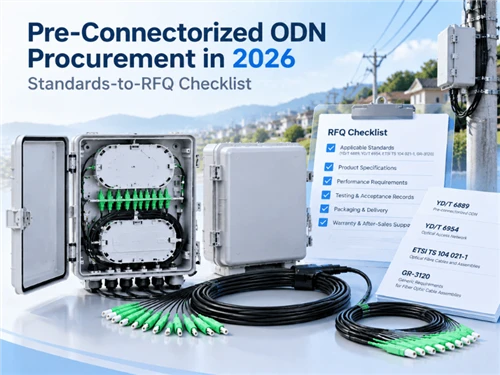
Pre-connectorized FTTH-also called plug-and-play or pre-terminated FTTH-shifts all fiber termination, splicing, and testing from the construction site to the controlled environment of a manufacturing facility. Drop cables, distribution cables, and even splitters arrive at the deployment site already terminated with factory-tested connectors, ready to be simply plugged together.
The Three Layers of Pre-Connectorization
The concept encompasses several layers of the optical distribution network:
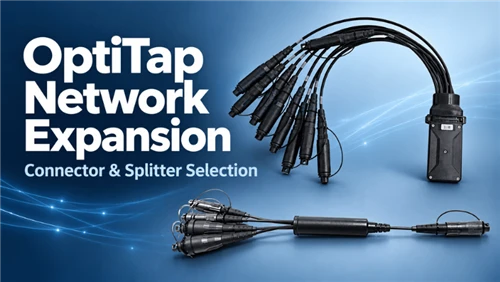
- Pre-connectorized drop cables: Factory-terminated, ruggedized cable assemblies designed for outdoor environments, with connectors pre-installed on one or both ends. These cables are tested to insertion loss and return loss specifications before shipping, ensuring field performance is predictable and consistent. Glory's pre-connectorized outdoor fiber patch cord range and OptiTap SC/APC-to-SC/APC drop cable provide product examples for this layer.
- Pre-connectorized ODN modules: Distribution boxes and closures with integrated, pre-terminated splitters and connectivity, compatible with modular ODN systems. These modules eliminate the need for field splicing at distribution points, reducing the number of field connection points by up to 80%. Relevant Glory options include the FAT pre-connectorized terminal box and GL-ODB-16R FTTH optical distribution box.
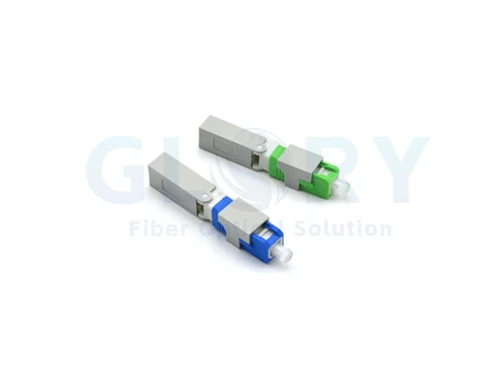
- Field-installable quick connectors: Mechanical, V-groove alignment connectors that require no fusion splicer, no epoxy, and no polishing, enabling sub-minute field terminations when pre-terminated cables are not feasible. These are particularly useful for retrofit scenarios or emergency repairs. Glory's IP68 SLIM 3-in-1 outdoor field assembly connector is one applicable product option.
4. Sticklok Technology: IP68 Tool-Free Connectivity
The Marvel Sticklok Solution from Glory Optics represents the state of the art in pre-connectorized FTTH deployment. It is a modular, pre-connectorized fiber distribution system engineered for both aerial and underground FTTH applications, built around a proprietary IP68-rated tool-free connector that reduces field installation time by up to 70%.
Core Technical Specifications
| Parameter | Sticklok Pre-Connectorized | Traditional Fusion Splice |
|---|---|---|
| Field installation time | < 30 seconds, plug-in | 8–15 minutes |
| Tools required | None, hand-tighten only | Fusion splicer, cleaver, stripper, etc. |
| Connector protection | IP68, dust/waterproof | Heat-shrink splice protector |
| Insertion loss | ≤ 0.35 dB, factory tested | 0.05–0.1 dB, variable |
| Pre-embedded variant IL | ≤ 0.2 dB | - |
| Return loss | ≥ 50 dB | ≥ 55 dB |
| Plug/unplug cycles | ≥ 1,000 times | Single use |
| Operating temperature | -40°C to +70°C | -40°C to +70°C |
| Technician skill level | Minimal training | Certified splicing technician |
| Equipment cost per technician | ~$50, hand tools | $3,000–$8,000, fusion splicer |
| Field failure rate | Low, factory-tested and sealed | Higher, contamination risk |
How the 70% Time Reduction Works
The 70% deployment time reduction is not a single-step improvement-it compounds across every phase of the installation workflow. Traditional splicing involves preparation-strip, clean, and cleave-active splicing, protection with a splice sleeve and heat shrink, and verification through OTDR testing. Pre-connectorized solutions collapse this into a single action: align, push, click. The connector locks with a tactile and audible confirmation, and the IP68 seal is engaged automatically.
5. Pre-Connectorized ODN Architecture
A fully pre-connectorized FTTH network eliminates fusion splicing from every layer of the optical distribution network-from the central office feeder through the distribution point to the subscriber drop. The architecture follows a modular, plug-and-play topology.
Key components in this architecture include:
- Pre-terminated feeder cables: Factory-spliced and tested, running from the ODF at the central office to the first splitter stage. Related cable constructions can be reviewed in the Glory fiber optic cable range.
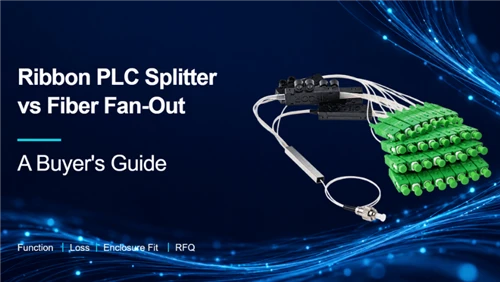
- PLC splitter cassettes: Pre-installed in weatherproof enclosures, supporting 1×4 through 1×64 split ratios with pre-connectorized pigtails. See the Glory PLC splitter range.
- IP68 outdoor distribution boxes: Tool-free mechanical sealing, supporting up to 864 fibers, designed for cable splicing and branching. Glory options include the FAT pre-connectorized terminal box, the GL-ODB-16R distribution box, and the Sticklok terminal family.
- Pre-connectorized drop cables: Ruggedized, IP68-sealed Sticklok connectors on one or both ends, available in various lengths. See the pre-connectorized outdoor fiber patch cord range.
- Indoor termination boxes: Compact wall-mount enclosures with pre-installed SC/APC adapters for ONT connection. See the Glory fiber optic wall outlet range.
6. Real-World Deployment Scenarios
Scenario 1: Rural Broadband - BEAD and BharatNet
Rural deployments are where pre-connectorized solutions deliver the most dramatic ROI. Long travel distances between homes, limited technician availability, and harsh environmental conditions make traditional splicing prohibitively slow. In a documented case, field-installable quick connectors enabled the completion of 120 drop-cable installations in a remote area within three weeks-a timeline that would have been impossible with traditional fusion splicing.
Glory product options for this scenario include the Sticklok terminal family, FAT pre-connectorized terminal box, and factory-terminated outdoor drop assemblies.
Scenario 2: Dense Urban MDU Deployment
Multi-dwelling unit buildings present a different challenge: hundreds of subscribers concentrated in a single structure, with riser cables, floor distribution boxes, and individual apartment drops. Pre-connectorized solutions excel here because the repetitive, standardized nature of MDU cabling maps perfectly to factory-terminated cable assemblies. A 200-unit apartment building can be fully cabled in days rather than weeks, with each apartment drop requiring nothing more than plugging in a pre-terminated cable.
A complete MDU path can combine a GL-ODB-16R distribution box, pre-terminated drops, and fiber optic wall outlets at the apartment handoff.
Scenario 3: 5G Fronthaul and FTTA
The same pre-connectorized approach extends naturally to 5G fronthaul and fiber-to-the-antenna applications. Ruggedized, IP68-sealed fiber assemblies are ideal for the harsh environmental conditions at tower tops and rooftops, with an operating range of -40°C to +70°C. The 5G fronthaul market is projected to grow from $3.8 billion in 2025 to $14.6 billion by 2034, with a CAGR of 16.2%. Tool-free, plug-and-play connectors reduce tower-climbing time and the associated safety risks, while IP68 sealing ensures long-term reliability in exposed environments.
For connectorized outdoor links, review the OptiTap SC/APC-to-SC/APC drop cable and the IP68 SLIM 3-in-1 field assembly connector.
7. Cost-Benefit Analysis: The Full Lifecycle ROI
The business case for pre-connectorized FTTH extends far beyond raw installation speed. A comprehensive cost analysis must account for capital expenditure, operational expenditure, and the long-term maintenance economics of the network.
While the per-unit cost of pre-connectorized cable assemblies is higher than bare fiber, the total cost of ownership is significantly lower when all factors are included:
- Labor cost reduction: 90%+ reduction in field labor hours, compounded by lower wage requirements-general labor versus certified splicer.
- Equipment cost elimination: No fusion splicers costing $3,000–$8,000 each, no consumables, and no calibration or maintenance.
- Faster revenue activation: Subscribers connected in days rather than weeks, accelerating service revenue and improving project ROI timelines.
- Reduced rework and warranty claims: Factory-tested connectors eliminate the 85% contamination-driven failure mode, dramatically reducing truck rolls for fault resolution.
- Scalability without skill bottlenecks: General laborers can be trained to install pre-connectorized systems in hours, removing the certified-technician shortage as a project constraint.
Industry analysis indicates that energy-efficient PON architectures using passive splitters can reduce power consumption by up to 80% compared to active alternatives, and that well-designed fiber networks can reduce electricity costs by 30–60% with a typical ROI payback period of 2–5 years. Pre-connectorized deployment compounds these savings by minimizing the operational overhead of the access network from day one.
Related Glory Optical Products
The following Glory product links are retained from the previous version and correspond to the terminals, drop cables, splitters and indoor handoff products discussed in the original article.
8. Conclusion: The Pre-Connectorized Imperative
The math is straightforward. Global FTTH deployment is entering its most ambitious phase ever, with over $60 billion in committed government funding across the U.S., India, and Europe alone. Traditional fusion splicing-with its 8-to-15-minute cycle time, $3,000+ equipment requirement, certified-technician dependency, and 85% contamination-driven failure rate-simply cannot scale to meet these targets.
Pre-connectorized solutions like the Marvel Sticklok system offer a fundamentally different deployment model: factory-tested quality, tool-free field installation, 70% faster deployment, and compatibility with the entire GPON-to-50G-PON evolution path. For operators and contractors racing against BEAD deadlines, BharatNet milestones, or European gigabit targets, the choice is not whether to adopt pre-connectorized solutions, but how quickly.
As the industry moves toward 50G-PON, AI-driven bandwidth growth, and universal gigabit coverage, the networks that will thrive are those built for speed, reliability, and future-proofing from day one. Pre-connectorized FTTH delivers on all three.