
An installer opens an occupied apartment-building riser and finds that the shortest fiber route crosses a protected corridor, two compartment walls and a crowded service shaft. At that point, MDU fiber installation stops being only a telecom design task. Four questions determine whether the proposal is defensible: who approves the route, which cable evidence applies, how every opening will be sealed, and who records the completed work.
This guide answers those questions for Germany and England. It is a design and procurement aid, not a substitute for project-specific approval by the building owner, fire engineer, building-control body or other competent authority.
Germany's 2026 MDU Fiber Installation Change
VDE 0800-730, published in February 2026, gives planners a dedicated framework for fiber-optic telecommunications networks inside existing and new multi-dwelling buildings. Its value is not a single cable rule; it connects route planning, building structure, fire protection, operator coordination and documentation in one process.
24 m
Building-height threshold highlighted by VDE when describing the German high-rise boundary.
13 m
Common physically connectable fire-brigade ladder reach cited in the VDE release.
7 m
Common operational rescue height cited for a ladder carried by the fire service.
1 plan
The practical target: one coordinated pathway and evidence schedule before installers begin drilling.
What the guideline changes in practice
The VDE's official announcement explains that the current model cable installation guideline, MLAR, generally treats fiber cable as an electrical installation. VDE expects a revised MLAR to make appropriately building-classified fiber in metal channels, and adhesive fiber systems in escape routes, easier to assess. That is a direction of travel, not permission to ignore the adopted rule set today.
A useful German design sequence
- Classify the building and identify protected corridors, stair enclosures, shafts and compartment boundaries.
- Map existing telecom pathways before proposing new openings.
- Agree whether a shared physical infrastructure can serve more than one network operator.
- Match cable construction and fire-performance evidence to each route segment.
- Assign a tested penetration-sealing detail to every wall or floor crossing.
- Create an as-built record that remains usable after the original installer leaves.
Which Fire-Safety Rules Apply to Apartment Blocks in England?
England does not have a direct counterpart to VDE 0800-730. The correct source depends on whether the team is carrying out building work, managing the common parts of an occupied block or working in a particular building type. Treating one government guide as universal creates a scope error.
| Project condition | Primary starting point | MDU fiber question to resolve |
|---|---|---|
| New building work or a material alteration | Approved Document B and the applicable Building Regulations process | Will the new route preserve compartmentation, cavity-barrier performance and means-of-escape provisions? |
| Work affecting the common parts of an occupied block | Guide for persons with duties under fire-safety legislation | Who is the responsible person, how will the risk assessment be updated, and who controls contractors? |
| Purpose-built block of no more than three storeys and no more than six flats | Small-block fire-safety guide | Does the block stay within the guide's strict size and layout scope? |
| Larger purpose-built block | Fire Safety in Purpose-Built Blocks of Flats, read with current law and newer guidance | How does the route interact with the building's fire strategy, compartment lines and management regime? |
Compartmentation is the controlling interface
A cable may be small, but the hole, sleeve, duct or trunking around it can create a route for smoke and flame. The relevant design object is therefore the complete penetration system: supporting construction, aperture size, cable type and quantity, sleeve, sealant or batt, backing material, fixing method and required fire resistance.
Before work starts, create a penetration schedule with at least the following fields:
- unique penetration ID and marked-up drawing location;
- wall or floor type, thickness and required fire resistance;
- cable family, outside diameter, quantity and permitted future fill;
- tested fire-stop system reference and installation orientation;
- installer name, date, pre-close and post-close photographs;
- inspection status, deviations and final acceptance signature.
This schedule is often more valuable during audit or maintenance than a generic statement that all penetrations were fire stopped.
How to Specify LSZH Fiber and Fire-Test Evidence
LSZH fiber is a useful material choice for occupied or constrained spaces because the jacket is formulated for low smoke and zero halogen performance. But LSZH is a material description, not a complete reaction-to-fire classification and not a blanket approval for protected escape routes.
| Evidence layer | What it answers | What the buyer should request |
|---|---|---|
| 1. Product identity | Is the tested sample the same construction being supplied? | Manufacturer, exact model, fiber count, diameter, jacket compound, factory and revision. |
| 2. Fire-test result | How did the identified cable behave under the stated method? | Complete or traceable third-party report, test standard, sample details, date and result. |
| 3. Regulatory classification | What declared reaction-to-fire class may be used in the target market? | Where applicable, a Declaration of Performance, CE-related documentation and classification evidence under the EU Construction Products Regulation. |
| 4. Route approval | Is that cable acceptable in this building location and installation method? | Fire-strategy requirement, authority or designer acceptance, pathway detail and matching fire-stop system. |
Do not treat all flame tests as interchangeable
IEC 60332-1-2 addresses vertical flame propagation on a single insulated wire or cable. IEC 60332-3-22 addresses vertically mounted bunched wires or cables under a different fire exposure. Passing one test does not automatically prove performance under the other configuration.
Germany and England: A Compliance Comparison
| Decision point | Germany | England | Common project control |
|---|---|---|---|
| Dedicated in-building fiber guidance | VDE 0800-730 provides a specific planning framework. | No direct one-document equivalent. | Create a project compliance matrix rather than relying on a product datasheet. |
| Local legal application | Confirm the Land-specific adoption and approved fire concept. | Confirm the Building Regulations and occupied-premises fire-safety duties that apply. | Name the approving parties before installation. |
| Escape-route cabling | Assess under current MLAR implementation; do not rely on an expected revision. | Assess against the approved design, fire strategy and applicable guidance. | Minimise combustible load and exposed cable length; document any enclosure or containment. |
| Penetrations | Maintain required fire resistance with an accepted system. | Maintain compartmentation with a tested and correctly installed system. | Use a penetration schedule and photographic close-out. |
| Cable evidence | Match product classification and installation method to the route. | Match product evidence to the specification and building context. | LSZH wording alone is insufficient. |
Designing Fewer, Better-Controlled Penetrations
Repeated provider-by-provider installation can multiply openings in the same compartment line. A shared, capacity-planned pathway may reduce that risk while preserving wholesale or multi-operator access. The result depends on governance and design approval, but the reduction can be estimated before construction.
An illustrative 60-apartment model
Assume three network providers each install a separate route through two compartment boundaries. That produces six provider-boundary penetrations. If the parties instead approve one shared multi-fiber pathway through the same two boundaries, the project needs two controlled penetration systems.
This 67% figure is an illustrative design calculation, not a field statistic. It shows why pathway governance can be as important as cable choice. The shared design must still define spare capacity, physical access, operator demarcation, fiber ownership, labeling, maintenance responsibility and the maximum permitted future cable fill.
Plan access before forcing entry
In England, the government's Part 4A guidance for the Electronic Communications Code explains a route by which operators may seek access where repeated requests to a landlord receive no response. It is an access mechanism, not a fire-compliance shortcut. Any eventual installation still needs an approved pathway and competent reinstatement of the building fabric.
Documentation and Product Selection for a Defensible Build
The following Glory Optical products are practical candidates for defined parts of an MDU network. They are recommendations for engineering discussion, not automatic confirmation of project fire compliance. The buyer should put the required jacket, classification, test evidence, enclosure location and fire-stop interface into the purchase specification.

GJFJV Indoor Fiber Optic Bundle Cable
Best fit: a shared 4–24-fiber indoor backbone where one compact cable can replace several low-count pulls.
Published options: single-mode or OM2–OM5, 4–24 fibers, PVC or LSZH outer jacket.
Specify before order: exact LSZH compound, required reaction-to-fire classification, covered diameter/core count and supporting report or declaration.

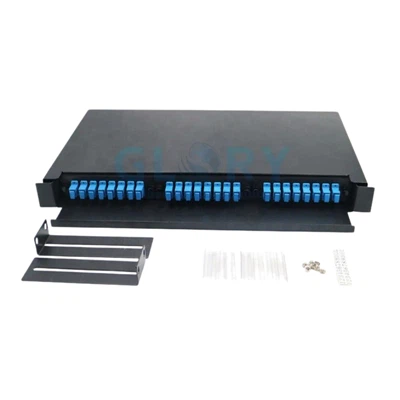
GL-B25-8A Optical Termination Box
Best fit: small-capacity building-entry, floor or corridor distribution in an indoor or sheltered position.
Published boundary: eight-fiber capacity and IP54 protection; this is not an outdoor flood or direct-weather enclosure.
Specify before order: adapter type, pigtails, splitter arrangement, labeling and exact mounting position. The box does not replace a tested fire-stop system.

GL-CTO16 Pre-Connectorized FAT
Best fit: a 16-subscriber building-level or zone distribution point where plug-in drops can reduce field splicing.
Published configuration: 16 reinforced Mini SC outputs with a 1×16 or two 1×8 splitter arrangement.
Specify before order: mounting location, connector compatibility, splitter loss, port seals and approved cable route. IP protection is separate from fire performance.

GL-ODB-16S Fiber Termination Enclosure
Best fit: A 16-port building-entry or shared MDU distribution point that requires organized fiber storage, splitter accommodation and repeated maintenance access.
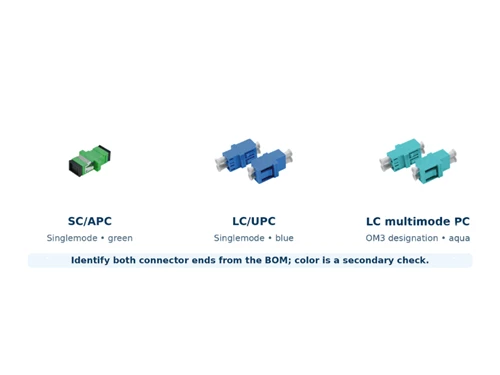
Published configuration: IP65 and IK10 enclosure, up to 16 SC/APC or SC/UPC adapters, 24-fiber management capacity and support for a 1:16 PLC splitter.
Specify before order: Confirm the mounting environment, adapter polish, splitter configuration, cable-port diameters and required supporting documents. IP65 and IK10 ratings do not establish cable fire performance or replace compliant penetration sealing.
A first-party installation lesson, correctly scoped
A Glory-published installation record reports more than 1,200 outdoor units installed in Southeast Asia from 2022 to 2025. It reports no ingress incidents for IP68 units and seal issues in 3.2% of IP65 units after 24 months in high-humidity tropical zones, traced to under-torqued cable glands. This is first-party field information, not independent fire-test evidence. Its useful lesson for MDU work is narrower: installation torque, sealing details and close-out inspection can determine whether the delivered system matches the product rating.
RFQ wording that exposes evidence gaps
Suggested clause: "Quote the exact cable and enclosure models proposed for each route segment. For cable installed inside the building, state the jacket material, reaction-to-fire classification where applicable, test standards, report or declaration reference, covered fiber-count and diameter range, and manufacturing site. Provide evidence before sample approval. No substitution of jacket compound, cable diameter or factory is permitted without written technical review."
Glory's fiber-box certification guide can help buyers distinguish common document types, but project acceptance should rely on the actual evidence supplied for the ordered model.
Questions Project Teams Ask
Q: Does VDE 0800-730 apply to an MDU fiber installation in England?
A: No. It is a German planning guideline. It may offer useful design logic, but an English project must be assessed against the rules and guidance applicable to the building work, the occupied premises and the specific route.
Q: Is every LSZH fiber cable fire compliant?
A: No. LSZH describes jacket smoke and halogen characteristics. It does not by itself prove the required reaction-to-fire class, flame-propagation result or suitability for a protected escape route.
Q: Does an IP65 or IP68 fiber box prove fire compliance?
A: No. An IP rating concerns ingress protection against solids and water. Fire performance, route approval and penetration sealing require separate evidence.
Q: Can several providers share one MDU fiber pathway?
A: Potentially, if the owner, designers and responsible fire-safety parties approve it. A shared route can reduce penetrations, but it must preserve access, capacity, segregation, labeling and compliant fire stopping.
Q: Which government guide should be cited for an English apartment block?
A: Use the guide that matches the work and building. The small-block guide is limited to blocks of no more than three storeys and six flats. Larger blocks need the broader purpose-built-block guidance read with current law, current government guidance, the fire-risk assessment and the building's own fire strategy. Building work should also be assessed through the applicable Building Regulations process.
Primary References
- VDE 0800-730 standard catalogue entry.
- VDE press release on the new fiber-expansion guideline.
- Current model cable installation guideline (MLAR).
- Approved Document B: fire safety.
- Guide for persons with duties under fire-safety legislation.
- Guide to making a small block of flats safe from fire.
- Fire Safety in Purpose-Built Blocks of Flats.
- European Commission: Construction Products Regulation.
- IEC 60332-1-2 and IEC 60332-3-22.