
Every fiber optic supplier's website says the same four words: ISO 9001, CE, RoHS. Ours does too. The problem is that those words have become wallpaper - repeated so often, with so little explanation, that buyers have stopped reading them and certificates have stopped meaning anything.
That is a mistake that costs money. We have watched a distributor's container of fiber distribution boxes sit in Rotterdam for eleven weeks because the "CE certificate" they were handed referenced a notified body that had been decommissioned two years earlier. We have seen a North American ISP reject a full pallet of fiber termination boxes at goods-in because the RoHS declaration covered the plastic housing but not the metal cable glands. Neither buyer did anything wrong by ordinary standards. They both asked for certificates. They both received documents that looked correct. Nobody told them what to actually check.
This guide fixes that. It is written from the manufacturing side of the table, by people who prepare these documents and host the third-party labs that audit them. We will explain what each certification legally guarantees, what it conspicuously does not, and - the part nobody publishes - exactly how a competent buyer separates a genuine compliance file from decorative paperwork.
Key takeaways
- CE is mostly self-declared, not an independent quality mark. A DoC without underlying third-party test reports is a promise, not evidence. Ask for both.
- RoHS limits apply per homogeneous material - including gaskets, metal hardware, and every surface coating or plating. A declaration that covers only the plastic body has left the riskiest materials unaddressed.
- ISO 9001 certifies the factory's quality management system, not any individual product. It predicts consistency and repeatability; it does not prove that a specific box passes IP68 or hits its insertion-loss spec.
- IEC 61754 connector IDs are routinely misquoted. LC is IEC 61754-20, not 61754-13. A supplier page that gets this wrong tells you something important about who wrote the technical documentation.
- IP68 has negotiated depth and duration parameters - ask what they are. Two enclosures can both carry an "IP68" sticker and have been tested to very different standards.
- CPR / Euroclass is mandatory for EU in-building cable and is separate from NEC jacket ratings. OFNR/OFNP alone is not legal for permanent EU installation.
If you only remember one sentence: a certification mark is a claim, and a claim is only worth the verifiable evidence sitting behind it.
The single distinction that explains almost everything: self-declaration vs. third-party assessment
Before we touch any individual mark, you need the mental model that organizes all of them. Every conformity scheme in the world falls into one of two buckets, and confusing the two is the root cause of nearly every certification dispute we see.
Self-declaration (first-party). The manufacturer themselves declares that a product meets a standard. They may have done excellent internal testing - or none at all. The legal weight sits entirely on the manufacturer's signature and the technical file behind it. No independent organization has checked anything.
Third-party assessment. An accredited, independent body - a notified body, or an ISO/IEC 17025-accredited test laboratory like SGS, TÜV, Intertek, or Bureau Veritas - has examined the product or the factory and issued a certificate or test report under its own accreditation and liability.
Here is the counterintuitive part that trips up even experienced buyers: the CE mark is mostly the first kind, not the second. As the German technical inspection association TÜV states plainly, "CE" is not a test mark, but in most cases rather a self-declaration by the manufacturer. It is a legal declaration of conformity, not an independent stamp of quality or safety.
When a supplier says "we are CE certified," the technically accurate phrasing is almost always "we have self-declared CE conformity." Those are not the same statement, and the gap between them is exactly where a careful buyer earns their margin.
CE marking: a passport, not a quality medal
What CE legally means
CE marking ("Conformité Européenne") is mandatory for specific product categories placed on the European Economic Area market. It signals that the product meets the essential safety, health, and environmental requirements of all applicable EU directives and regulations. As Switzerland's official export agency S-GE summarizes in its practitioner guide, CE marking is not a certification label nor a mark of product quality - it is a legal declaration that the product complies with EU requirements.
Think of CE as a passport, not a diploma. A passport says you are legally permitted to cross the border. It says nothing about whether you are a good traveler.
The two CE pathways - and which one your fiber box uses
CE compliance follows one of two routes, depending on the product's risk category as defined by the relevant directive:
Route 1 - Self-declaration (the common case for passive fiber hardware). For most low-risk products, the manufacturer performs (or commissions) the necessary testing, compiles a technical file, and signs an EU Declaration of Conformity (DoC) under their own responsibility. No notified body is involved. The vast majority of passive optical components - termination boxes, splice closures, patch panels, adapters - sit here.
Route 2 - Mandatory third-party (notified body) assessment. For higher-risk categories, an EU-designated notified body must assess the product, and its four-digit identification number appears next to the CE mark. This is required for things like many medical devices and pressure equipment - and, importantly for cable buyers, for the higher fire-performance classes under the Construction Products Regulation (more on that below).
For a passive fiber enclosure with no active electronics, there is usually no notified body number and there does not need to be. That absence is normal. What is not normal - and is a genuine red flag - is a supplier presenting a glossy "CE certificate" with a notified body number for a product category that does not require one. Counterfeiters add fake notified body numbers precisely because they look impressive to buyers who do not know the product is self-declared.
Why a DoC and a test report are not the same thing - and why you want both
This is the practical heart of the CE section, and it is where the distinction between a CE self-declaration and an SGS test report becomes money in your pocket.
| Document | Who issues it | What it proves | Independently verifiable? |
|---|---|---|---|
| EU Declaration of Conformity (DoC) | The manufacturer | The manufacturer asserts compliance and takes legal responsibility | No - it is a self-signed statement |
| Third-party test report (e.g., SGS, TÜV, Intertek) | An ISO/IEC 17025-accredited lab | The product was tested and passed specified standards (e.g., EN 55032/55035 for EMC) | Yes - by contacting the issuing lab |
A DoC alone is, as the compliance specialists at ComplianceGate put it, of no use unless it is supported by test reports and technical documentation. The DoC is the cover letter; the test report is the evidence. A reputable manufacturer offering an SGS or TÜV test report is voluntarily importing third-party rigor into a self-declaration regime - which is exactly the behavior you want to reward, because it means someone with independent accreditation actually put the product on a bench.
A signed DoC plus the underlying third-party test reports (EMC, and where relevant, environmental/IP and material tests), with the lab's report number visible so you can verify it directly. If a supplier can only produce the DoC, you are buying a promise. If they can produce the test reports behind it, you are buying evidence.
How to verify a CE claim in five minutes
Importers are legally obliged to check the documentation behind a CE mark - you cannot accept a printed CE mark at face value and plead ignorance in the event of a recall. Here is the field procedure our own QA team uses, and the one we recommend you run on any supplier, us included:
The genuine CE mark has specific proportions - the "C" and "E" are formed on a grid, with a clear gap between the letters and the middle bar of the "E" shorter than the outer bars. The notorious counterfeit "China Export" mark crams the two letters together with no gap. It is not an official mark; it is a lookalike, and spotting it takes about three seconds once you know.
A legitimate CE mark appears beside the manufacturer's or EU representative's identity - not floating alone on a generic label.
Search the four-digit number in the European Commission's official NANDO database (New Approach Notified and Designated Organisations). Confirm the body is real, currently designated, and authorized for that product's directive. Auditors regularly find certificates citing expired or decommissioned bodies.
The standards listed, the model numbers, and the manufacturer name on the report must match what you are actually buying. Mismatched names frequently indicate a trading company passing off a factory's certificate as its own.
A real SGS/TÜV/Intertek report can be confirmed by contacting the lab with the report number. We would personally not trust a test report that cannot be independently verified. If a supplier resists this step, treat it as information, not inconvenience.
RoHS: the substance rule that is more subtle for enclosures than anyone admits
What RoHS restricts
RoHS - the Restriction of Hazardous Substances Directive, 2011/65/EU (RoHS 2), as amended by (EU) 2015/863 (RoHS 3) - restricts ten substances in electrical and electronic equipment: lead, mercury, cadmium, hexavalent chromium, two brominated flame retardants (PBB, PBDE), and four phthalates. The limits are 0.1% by weight (1000 ppm) for each restricted substance except cadmium, which is capped at 0.01% (100 ppm).
The detail that catches fiber-box buyers: "per homogeneous material"
Here is the nuance that separates a real RoHS declaration from a checkbox. The concentration limits apply not to the finished product, and not even to a component, but to each homogeneous material - defined as a material of uniform composition that cannot be mechanically separated into different materials.
In a fiber box, that means the limit applies separately to the ABS/PC housing, the EPDM or silicone gasket, the metal hinges, the cable glands, the screws, and the plating or coating on each of those metal parts. As the EU legislation itself notes, the restriction applies to any single substance that could theoretically be separated mechanically - for example, the sheath on a cable or the tinning on a component lead.
This is precisely how the North American ISP rejection we mentioned at the top happened: the supplier's RoHS declaration covered the molded plastic body but was silent on the hexavalent chromium passivation on the metal cable glands. The plastic was compliant. The coating on the metal was the problem. One homogeneous material out of compliance fails the whole assembly.
For an enclosure, ask whether the RoHS declaration is full-material-declaration (FMD) based or covers only the obvious plastic. A serious supplier can speak to the gaskets, the metalwork, and the surface finishes. If the answer is vague about coatings and platings, you have found the gap.
RoHS vs. REACH - the boundary that matters for metal hardware
RoHS and REACH are different instruments with different scopes:
- RoHS restricts ten specific substances in electrical and electronic equipment (EEE).
- REACH (Regulation 1907/2006) governs chemical substances across essentially all manufactured goods and maintains the growing SVHC (Substances of Very High Concern) candidate list, policed by ECHA.
The practical consequence: REACH reaches things RoHS may not - including the chemistry of enclosure coatings, bracket finishes, and surface treatments. For an outdoor fiber optic enclosure with substantial metal hardware and weatherproof coatings, a buyer selling into the EU should ideally see both a RoHS declaration and a REACH/SVHC statement. A supplier who offers only RoHS for a coating-heavy metal product has covered part of the chemical-compliance picture, not all of it.
Is RoHS third-party tested?
By default, no. RoHS does not require an independent notified body, and the directive does not mandate third-party certification - manufacturers self-declare based on supplier material declarations, audits, and testing (typically XRF screening plus wet-chemistry confirmation). So the same logic as CE applies: a RoHS declaration is a self-statement; a RoHS test report from SGS or an equivalent lab is independent evidence. Ask which one you are being given.
ISO 9001: a certification about the factory, not the product
What ISO 9001 actually certifies
This is the most consistently misread certification in our industry. ISO 9001:2015 certifies a quality management system (QMS) - a way of running a company - not any individual product.
An ISO 9001 certificate means an accredited body audited the manufacturer's processes: how they handle design control, supplier qualification, incoming inspection, traceability, nonconformance, corrective action, and continuous improvement. It is genuinely valuable. A factory with a real, audited QMS and full batch traceability behaves predictably, and predictability is most of what you are buying when you place a repeat order.
But it tells you nothing, directly, about whether the specific box in your hand passes IP68 or hits its insertion-loss spec. Those are product questions, answered by product testing (IEC, ITU-T, Telcordia), not by a system certificate.
System certification vs. product certification - don't conflate them
| ISO 9001 (system) | Product certification / test report | |
|---|---|---|
| Certifies | How the company operates | Whether a specific product meets a specific standard |
| Example | "This factory has an audited QMS" | "This closure passed IP68 per IEC 60529" |
| What it predicts | Consistency, traceability, repeatability | This product's measured performance |
| What it does not prove | That any given product passes spec | That the next batch was made the same way |
You want both, and they answer different questions. ISO 9001 predicts that the factory can reproduce quality; product test reports prove that a particular product did meet spec. A supplier leaning entirely on ISO 9001 to imply product quality is - knowingly or not - using a system certificate to answer a product question.
The trader-vs-factory test hiding inside the ISO certificate
Here is a verification trick most buyers never use. An ISO 9001 certificate names the certified legal entity and its certified site(s). Two fast checks expose the most common sourcing trap:
- Does the company name on the ISO certificate match the company name on the bank account / invoice? A mismatch is a classic signal that you are dealing with a trading entity rather than the actual manufacturer - the trader is showing you a factory's certificate that is not theirs.
- Does the certified site address match where your goods are actually made? ISO 9001 certifies specific sites. A certificate for one address tells you nothing about production at another.
Pair this with a live video walk of the production floor and one specific engineering question - "send me the attenuation report for G.652.D at 1550 nm" - and traders separate from factories quickly. A real factory has that data instantly; a middleman says they will check with a colleague.
Our products are manufactured under an ISO 9001:2015 QMS with full batch traceability, and our in-house lab validates optical performance, environmental resistance (−40 °C to +85 °C), salt spray, and IP68 sealing per IEC, ITU-T, and Telcordia GR-771 / GR-326. Notice that the sentence pairs a system certificate with product test standards. That pairing is the thing to look for in any supplier, including this one - verify it, don't take it on faith.
IEC standards: the interoperability layer your network actually runs on
CE and RoHS are about legality. ISO 9001 is about the factory. IEC standards are about whether the thing physically works and interoperates - and for fiber, this is where engineering credibility is won or lost.
IEC 61754 - the connector interface family
The IEC 61754 series defines the physical interface geometry of fiber optic connectors - the dimensional rules that let a connector from one manufacturer mate correctly with an adapter from another. Without it, "LC" or "SC" would be marketing words rather than guarantees of fit. The series specifies each connector family as a separate part:
| Connector | IEC 61754 part | Ferrule | Typical use |
|---|---|---|---|
| LC | IEC 61754-20 | 1.25 mm | High-density patching, data centers, patch panels |
| SC | IEC 61754-4 | 2.5 mm | FTTH/PON, outdoor distribution, telecom cabinets |
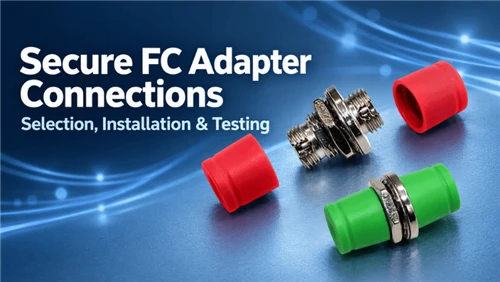
| FC | IEC 61754-13 | 2.5 mm | High-vibration, lab, metrology |
| ST | IEC 61754-2 | 2.5 mm | Legacy/multimode plant |
| MPO/MTP | IEC 61754-7 | MT ferrule | Parallel optics, 40G/100G/400G trunks |
A surprising number of supplier pages list LC as "IEC 61754-13." That is wrong. LC is IEC 61754-20; 61754-13 is FC. It is a small error, but it tells you whether the page was written by someone who has read the standards or someone who copied another website. When you are evaluating technical documentation, these are the details that reveal who actually knows the product. For a deeper, deployment-oriented breakdown, see our fiber connector selection guide: LC vs SC vs MPO in real deployments.
IEC 61754 rarely travels alone. Its companions define the performance you actually measure: IEC 61755 (connector optical interfaces - end-face geometry and insertion/return loss grades), IEC 61753 (performance categories and environmental classes), and IEC 61300 (the mechanical and environmental test methods). A connector that claims IEC 61754 compliance is claiming it fits; the IEC 61755/61753/61300 references are what tell you how it performs and survives.
IEC 60529 - the IP rating behind every "waterproof" enclosure
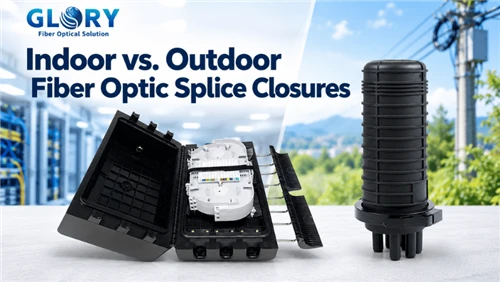
When a dome closure or outdoor box claims IP68, that rating is defined by IEC 60529. The two digits are not a marketing tier - they are specific tests: the first digit (6) is dust ingress (dust-tight), the second (8) is immersion beyond 1 meter under conditions agreed between manufacturer and buyer.
That last clause matters enormously and is widely abused. IP68's immersion depth and duration are negotiated parameters, not a fixed universal value. Two closures can both legitimately carry an "IP68" sticker and have been tested to wildly different depths and durations. We have written separately about why two closures with identical IP68 labels show very different real-world waterproof survival rates - the short version is that the sticker is the start of the conversation, and the test conditions and sealing method are the substance. Always ask to what depth and for how long an IP68 product was tested, and how it seals.
ITU-T and Telcordia - the standards that govern the glass and the closure lifetime
Two more standards families round out a credible fiber spec, and buyers should recognize them:
- ITU-T G.652.D (standard single-mode fiber) and ITU-T G.657.A1/A2/B3 (bend-insensitive fiber) define the optical fiber itself. If a supplier cannot tell you which ITU-T grade their drop cable uses, they may not know what is inside their own jacket.
- Telcordia GR-326 (single-fiber connectors/jumpers) and GR-771 (fiber optic splice closures) are the North American reliability benchmarks - the accelerated-aging, thermal-cycling, and mechanical-stress regimes that predict whether a closure survives a decade in the field rather than a week on a bench.
The certification almost every fiber-box page forgets: CPR / Euroclass
If you sell cable into EU buildings, this section may be the most financially important on the page - and it is conspicuously missing from nearly every competitor's "certifications explained" article.
Since 1 July 2017, the EU Construction Products Regulation (CPR, Regulation 305/2011) has applied to power, control, communication, and fiber optic cables intended for permanent installation in construction works. The CPR makes no distinction based on rated voltage - optical fibre cables are explicitly covered.
What it requires:
- Cables must be classified to a Euroclass for reaction-to-fire performance under harmonized standard EN 50575 - a scale running Aca, B1ca, B2ca, Cca, Dca, Eca, Fca, with additional ratings for smoke (s), flaming droplets (d), and acidity (a).
- The cable must carry the CE mark and be accompanied by a Declaration of Performance (DoP) - a different document from the CE Declaration of Conformity.
- For the higher classes (Cca and above, B2ca), the regime tightens sharply: a notified body must conduct initial type testing, inspect the factory and its production control, and perform ongoing surveillance under AVCP System 1+. This is genuine third-party assessment, and it is why higher-class cable costs more.
The trap for importers: the required Euroclass is set nationally, not EU-wide. France mandates a minimum of Class Dca; Germany varies by building type; fire-escape routes commonly require Cca. A cable that is legal for a residential install in one member state can be non-compliant for a public building next door. Critically, the old North American jacket ratings - OFNP, OFNR, CMP, CMR, LSZH - are not CPR Euroclasses and can no longer, on their own, be legally imported and sold for permanent EU installation. For more on the parallel North American jacket-rating system, see our guide to plenum vs. non-plenum fiber cable and the NEC rules.
Ask for the DoP (not just the DoC), confirm the Euroclass matches the destination country's requirement for that building type, and for Cca/B2ca verify the notified body number on NANDO. This is the one fiber category where third-party assessment is genuinely mandatory - so the verification is not optional diligence, it is the law.
Region by region: the marks you'll actually be asked for
CE, RoHS, ISO, and IEC are the global baseline, but your destination market adds its own requirements. A quick orientation:
- European Union / EEA: CE (mandatory), RoHS + REACH (substances), and CPR/DoP for in-building cable. UKCA is the post-Brexit UK counterpart to CE; the UK continues to recognize CE for many categories, but confirm current status for your product and date.
- North America (US/Canada): UL / cUL or ETL listing for safety where applicable; FCC for any product with electronic emissions (most passive fiber hardware is outside FCC scope, but transceivers and powered equipment are not); NEC jacket ratings (OFNP/OFNR) for in-building cable; RUS/Buy American provisions for federally funded builds.
- China: CCC (China Compulsory Certification) for in-scope domestic products - frequently confused with CE by buyers, but a different scheme entirely.
- Brazil: ANATEL homologation for telecom products.
- International quality baseline everywhere: ISO 9001 (system) plus the IEC/ITU-T/Telcordia product standards above.
The meta-lesson: certification is destination-specific. A product perfectly compliant for one market may need additional marks for another. A supplier who exports to 50+ countries should be able to tell you, without hesitation, which documents your specific destination requires - and that ability is itself a useful supplier test.
People Also Ask
-
Q: Is CE the same as a quality certificate?
A: No. CE is a legal mark indicating the product may be sold in the EEA because it meets applicable safety/health/environmental requirements. It is mostly self-declared and is explicitly not a mark of product quality. Quality is evidenced by product test reports and a real QMS, not by the CE mark itself.
Q: Does a fiber optic box need a notified body number for CE?
A: Usually no. Passive enclosures without active electronics are typically self-declared, with no notified body involved. A notified body number on such a product is unusual and worth scrutinizing - but a notified body is required for higher-class (Cca/B2ca) CPR cable.
Q: Is RoHS testing mandatory or self-declared?
A: RoHS does not require third-party certification by default; manufacturers self-declare. A RoHS test report from an accredited lab (e.g., SGS) is independent evidence and is stronger than a self-declaration alone - request it.
Q: What is the difference between ISO 9001 certification and product certification?
A: ISO 9001 certifies the company's quality management system; product certification (or a product test report) certifies that a specific product meets a specific standard. You want both - they answer different questions.
Q: Which IEC standard covers LC connectors?
A: IEC 61754-20. (SC is 61754-4, FC is 61754-13, ST is 61754-2, MPO is 61754-7.) If a datasheet lists LC as 61754-13, the document contains an error.
Q: How do I verify a Chinese supplier's CE certificate?
A: Check the mark geometry (beware the cramped "China Export" lookalike), verify any notified body number on the EU NANDO database, match the test report's model numbers and company name to your order, and confirm the report directly with the issuing lab. Documentation that cannot be independently verified should not be trusted.
Q: Are old OFNR/OFNP ratings enough to sell cable in the EU?
A: No. For permanent in-building installation in the EU, cable must carry a CPR Euroclass and a DoP; North American jacket ratings alone are insufficient.
A buyer's verification checklist
For any fiber box, closure, cable, or connector you are sourcing, request and verify:
- EU Declaration of Conformity (DoC)- signed, naming the product, the manufacturer, and the directives applied.
- Third-party test reports behind the DoC- EMC and, where relevant, environmental/IP and safety - from an ISO/IEC 17025-accredited lab, with verifiable report numbers.
- RoHS declaration covering all homogeneous materials- explicitly including gaskets, metalwork,and coatings/platings- plus aREACH/SVHCstatement for coating-heavy metal hardware.
- ISO 9001:2015 certificate- with the legal entity and site address matching your invoicing and your actual production location.
- Product standard references that match the claim- IEC 61754-20 for LC, IEC 60529with stated depth/durationfor IP68, ITU-T G.652.D/G.657 for fiber, Telcordia GR-771/GR-326 for closures/jumpers.
- For EU in-building cable: a Declaration of Performance (DoP)with the correctEuroclassfor the destination country, and a NANDO-verified notified body number for Cca/B2ca.
- Region-specific marksfor your destination (UL/ETL, FCC, UKCA, CCC, ANATEL as applicable).
If a supplier produces these readily and answers verification questions without friction, you are dealing with a manufacturer that expects to be checked. If the documents are vague, unverifiable, or arrive with resistance, that is your most useful data point of the whole procurement.
Certifications are not the point. Verifiable compliance is the point. CE tells you a product is legally admissible, not that it is good. RoHS and REACH tell you what is - and isn't - in the materials, down to the coating on a single screw. ISO 9001 tells you the factory can repeat itself, not that any one box passes spec. IEC, ITU-T, and Telcordia tell you whether the product physically works and survives. CPR tells you whether your cable is even legal in the wall it is going into.
A supplier worth a long-term relationship does not just hold these certifications - they can explain exactly what each one covers, what it doesn't, and how you can confirm every claim independently. We have tried to write the article we wish every buyer received before their first container shipped, because an importer who knows how to read a compliance file is a better customer and a safer one.
If you want to pressure-test our documentation against this checklist, that is precisely the conversation we want to have. Explore our fiber boxes and ODN enclosures, review the complete fiber box buyer's guide for the product-selection side of the decision, or contact our engineering team and ask us the hard questions. Bring the checklist. We will bring the evidence.
Glory Optical Communication (Ningbo, China) is a vertically integrated manufacturer and OEM/ODM supplier of passive optical network products - fiber boxes, ODN splice closures, PLC splitters, MPO/MTP assemblies, and FTTH cable - manufactured to ISO 9001:2015, CE, and RoHS standards and exported to 50+ countries since 2008. We support CE, RoHS, and SGS third-party certification for OEM partners.
Ningbo Glory Optical Communication Co., Ltd. - FTTH/FTTx/5G fiber optic manufacturer and ODN solution provider since 2008. We supply fiber termination boxes, splice closures, PLC splitters, MPO/MTP assemblies, and complete optical distribution network solutions to operators in 50+ countries under ISO 9001:2015.