Introduction
Fiber optic backbone cabling is the main data highway in modern buildings. It connects equipment rooms to telecom closets. This system carries huge amounts of data from cloud services, AI applications, and video. As Wi-Fi 6/7 and IoT devices grow, backbone speeds must reach 40G or 100G. Otherwise, bottlenecks happen. MPO/MTP connectors are key here. Their design packs 12 or 24 fibers into one plug.
This saves space in crowded data centers. Industry leaders like Corning say MPO/MTP is the standard for 40G/100G networks . This guide shows simple steps for correct installation.

MPO/MTP Connector Basics
MPO connectors use a rectangular ferrule with 12 or 24 fibers. Guide pins ensure good alignment. MTP is a better version of MPO. It has removable housings and tighter tolerances. Good quality means insertion loss under 0.35dB and return loss above 30dB. Always check IEC 61754-7 compliance.
There are three polarity types: Type A (straight), Type B (flipped), and Type C (swapped pairs). Pictures from FS.com show how key orientation matters . Never force connections. Misaligned pins cause damage.
40G/100G Standards and Network Layouts
IEEE 802.3ba defines 40GBASE-SR4 and 100GBASE-SR4 standards . 40G uses four 10G paths. 100G-SR4 uses four 25G paths. Three layouts work well: direct switch links with MPO trunks, structured cabling with MPO-to-LC breakouts, or spine-leaf designs. OM4 fiber supports 150 meters for 100G-SR4. OM3 only reaches 100 meters .
IEEE tables prove OM4 is better. Always match fiber type to your distance needs. Do not exceed limits to avoid signal loss.
Designing Your Cabling System
Choose OM4 fiber for good cost and performance. OM5 adds readiness for future wavelength multiplexing. Plan polarity carefully. Method A uses patch panel flips. Method B uses connector inversion.
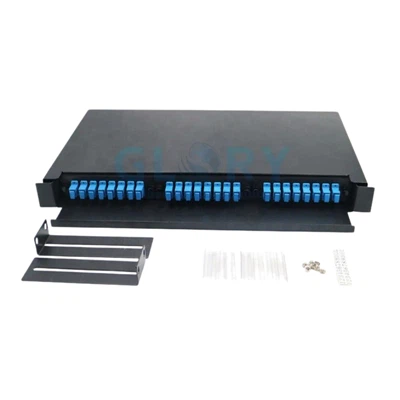
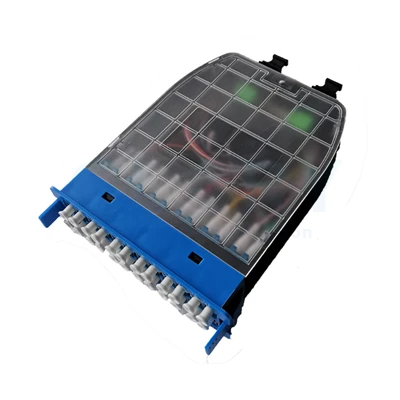
Method C swaps fiber pairs. Corning's MTP HD modules give high port density and protect bend radii . Calculate fiber needs. 40G needs 8 fibers (4 transmit, 4 receive). 100G-SR4 needs 12 fibers (8 active, 4 spare). Use vertical 1U enclosures to manage slack. FS.com case studies show this prevents congestion .
Installation and Testing Rules
Clean every connector first. Inspect with a 400x fiber scope. Use IEC 61300-3-35 cleaners. Align guide pins straight when inserting. Do not angle the plug. Wait for an audible click. Test two ways. Tier 1 checks total loss and continuity with MPO light sources. Tier 2 uses OTDR to check individual fibers.
Pass/fail needs channel loss below 1.5dB at 850nm. Always verify polarity with MPO loopback testers. Common failures are dirt on ferrules and wrong fiber sequences. Corning's guides detail proper torque settings .
Preparing for 400G and Beyond
Think about upgrade paths. Use 16-fiber MPOs to split 400G-SR8 into four 100G links. OM5 fiber supports SWDM4 technology across multiple wavelengths. For existing LC networks, BiDi transceivers allow duplex migration on single fibers. 24-fiber MPO trunks handle 400G-DR4's four 100G lanes.
Bend-insensitive fiber (BIF) prevents damage in tight trays. IEEE 802.3cm standards now cover 400G over multimode fiber. Pre-terminated MPO systems let you add capacity as needed. This "pay-as-you-grow" approach saves money later. Always check OEM transceiver needs before upgrading.
Real-World Examples and Why They Matter
Let me share some real cases. A commercial bank in Georgia needed 100G links between its core business modules. They chose FS.com's high-density MTP system . The solution used armored MTP cables for outdoor links. It worked in heavy rain and snow. The bank got low-latency transmission for its core applications. I think this shows how pre-terminated systems work in tough conditions.
Another example is Corning's EDGE Rapid Connect. This is a rugged, high-density cabling solution . It uses the Fast Track MTP connector. Two technicians can connect 3,456 fibers in one workday. That is fast. Corning says it cuts installation time by up to 70% . In my view, this kind of speed is crucial for big data centers.
Also, MPO/MTP connectors save time. Traditional field termination takes 55-75 hours for complex jobs. MPO/MTP systems come factory-terminated. They cut installation time by 75-80% . This is not just talk. It is real savings.
What the Standards Say
The IEEE 802.3ba standard from 2010 set the rules for 40G and 100G Ethernet . It defines PHY specifications for different media. The IEEE 802.3bm update in 2015 added 4×25Gbps architecture for 100G . This moved from 10×10Gbps to 4×25Gbps. It means lower power and better density. These standards are the foundation for today's QSFP28 modules.
For distances, OM4 fiber is best. It supports 100 meters for 100G-SR4 and 150 meters for 40G-SR4 . OM3 only does 70 meters for 100G-SR4. So OM4 gives more reach. The data is clear.
Getting Ready for 400G
The move to 400G is happening. 400G-SR8 uses PAM-4 encoding and MPO-16 connectors . Each fiber runs at 50G. So you need 8 fibers for 400G. This is more efficient than the old NRZ idea with 16 fibers.
Commscope notes that 16-fiber trunks are smart for new builds . They support 8-fiber and 16-fiber applications. This gives flexibility. I believe planning ahead saves money and trouble.
Final Thoughts
Fiber backbone infrastructure is vital for modern networks. MPO/MTP connectors make high-speed links possible. Standards like IEEE 802.3ba provide the rules. OM4 fiber offers good performance. Real cases from FS.com and Corning show it works. Looking ahead, 400G needs 16-fiber MPOs and PAM-4 technology. My advice is to plan your system carefully. Use quality parts. Follow installation rules. Test everything. Then your network will be ready for today and tomorrow.