
The short answer
A good fiber optic cable cannot be identified by price, jacket smoothness or a simple continuity test alone. Check whether the delivered construction matches the specification, whether the fiber and loose tube can be handled without damage, and whether the strength and water-protection components are suitable for the route.
Why Similar-Looking Cables Can Perform Differently
Fiber optic cables that look similar from the outside can perform very differently after installation. A low-priced cable may pass a simple continuity check but later show jacket cracking, water ingress, unstable attenuation, difficult stripping or fiber breakage during routing. Once the cable has been pulled through a duct, installed on a pole or buried underground, replacement becomes far more expensive than the original material saving. Cable quality should therefore be judged by how the optical and protective components work together, not by appearance or price alone.
1. Check the Outer Sheath and Protective Structure
The outer sheath is the cable's first barrier against handling damage, moisture and environmental exposure. Indoor cables may use PVC, LSZH or another flame-rated material, while outdoor cables commonly use a black PE jacket. The material should match the ordered specification and the installation environment.
What to inspect
- A uniform surface without cracks, bubbles or deep scratches
- Consistent cable diameter and jacket thickness
- Clear printing for cable type, fiber count, length and production identification
- Clean stripping without excessive adhesion to the internal components
Why it matters
Visible defects may not cause an immediate optical failure, but they can weaken moisture resistance, complicate termination and reduce the cable's ability to withstand bending, pulling and long-term temperature changes.
For armored outdoor cable, also inspect whether the steel tape is formed consistently around the cable core. The armor should not contain obvious corrosion, sharp edges or irregular overlaps that could damage the inner sheath.
2. Examine the Optical Fiber and Loose Tube
The optical fiber is the transmission element, but quality cannot be confirmed only by checking whether visible light passes through it. The delivered fiber type, fiber count, color coding and production records should match the order.
Poor-quality, damaged or poorly stored fiber may lead to higher attenuation, unstable splicing, increased bending sensitivity or inconsistent performance between reels. For bulk orders, request optical records that can be connected to the delivered production batch or cable reel.
Check the loose tube as well as the fiber
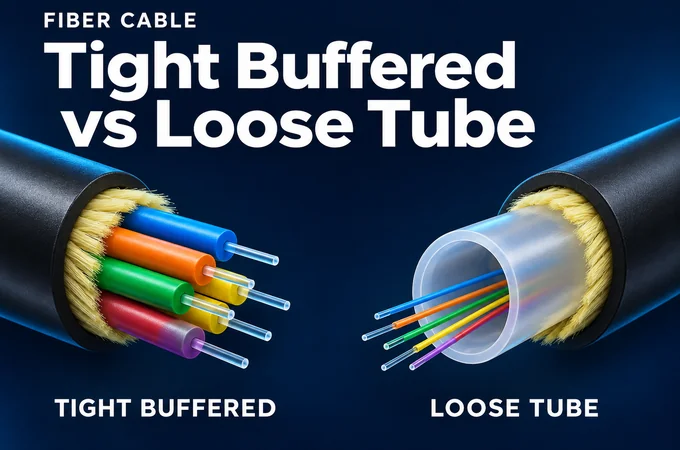
In outdoor cable, the loose tube protects the coated fibers and allows them to remain relatively free from external mechanical stress. A stable tube-commonly made from an engineering material such as PBT-should retain its shape during normal handling and should not flatten easily under light pressure.
| Inspection point | Acceptable indication | Potential concern |
|---|---|---|
| Fiber identification | Fiber type and count match the cable marking and datasheet | Unclear or inconsistent identification |
| Color coding | Clear, consistent colors that remain identifiable during preparation | Faded, duplicated or easily removed colors |
| Loose-tube shape | Tube remains round and stable during normal handling | Tube flattens or deforms too easily |
| Tube opening | Tube can be opened without damaging the fibers | Excessive adhesion, brittleness or fiber damage |
| Fiber handling | Fibers can be cleaned, routed and prepared consistently | Unexpected breakage or irregular handling behavior |
This inspection moves the decision beyond the cable surface. It helps determine whether technicians can strip, clean, splice and route the fibers without creating avoidable optical risk.
3. Inspect Strength Members, Armor and Water Blocking
Strength members, armor and water-blocking materials protect the fibers from pulling tension, crushing, impact and moisture. Their type and position should match the approved cable structure.
Strength members
Steel wire, FRP rods or aramid yarn may be used to carry tensile load. A steel member should have a consistent diameter, a clean surface and no obvious rust. FRP members should be straight, dimensionally consistent and positioned correctly. Manual bending can reveal an obviously soft or damaged component, but it should not replace comparison with the cable specification.
Steel armor
Steel tape or other armor provides additional crush, impact and rodent protection. Check that the specified armor is present, that its width and overlap are consistent, and that sharp edges do not contact the optical units. Armor selection should follow the mechanical risk of the route rather than a general preference for the heaviest cable.
Fiber gel and dry water blocking
Outdoor loose-tube cables may use filling gel, water-blocking yarn or water-blocking tape. These materials should be distributed consistently and should match the ordered construction. Dried, separated or leaking gel, missing dry-blocking elements, or unsealed cable ends can increase the risk of moisture migration.
Combined value
The three protection systems perform different jobs: strength members limit tensile strain, armor resists external mechanical damage, and water-blocking materials reduce moisture movement. A cable should be evaluated as a complete structure rather than by one component in isolation.
Glory Optical Cable Solutions for Different Route Conditions
The final product choice should follow the actual installation environment. An indoor route may prioritize flame performance and easy termination; an FTTH drop route may require a compact profile and bend-resistant fiber; outdoor duct, aerial and buried routes may require PE jackets, loose tubes, tracer wires, additional strength or armor.

FTTH Subscriber Drop
ROC Toneable Outdoor Drop Cable
A compact 3.0 × 5.4 mm outdoor drop structure with G.657A1/A2 fiber options, FRP strength members and a PE sheath. Suitable where fast access, compact handling and route locating are project requirements.
View product
Toneable FTTX Route
4.5 × 9.8 mm Toneable SST FTTX Cable
Designed with a copper tracer wire for route identification and available with G.652.D or G.657A fiber. The listed applications include aerial, conduit and direct-buried drop routes.
View product
Duct and Direct Burial
GYTA53 Outdoor Fiber Optic Cable
A double-jacket, dual-armored structure intended for moisture, crush and rodent protection in demanding duct and direct-buried applications.
View product
Indoor Termination
0.9 mm Tight-Buffer Indoor Fiber
A compact tight-buffered fiber option for building cabling, pigtail and patch-cord applications where direct handling and termination are required.
View productMatch the Cable Structure to the Route
When requesting a quotation, provide the installation method, fiber count, fiber type, jacket material, cable dimensions, strength-member requirement, armor requirement and water-blocking method. Glory Optical can then recommend a cable structure that fits the route instead of applying one generic design to every project.
View Fiber Optic Cables Contact Glory OpticalConclusion
A high-quality fiber optic cable is not defined by one visible feature. Its performance depends on the consistency of the outer sheath, optical fiber, loose tube, strength members, armor and water-blocking system. Checking these elements together gives buyers and installers a more reliable basis for comparing cables before installation.