
In the world of fiber optic networks, professionals often search for specific terminal solutions for different applications-Fiber-to-the-Home (FTTH), Fiber-to-the-Antenna (FTTA), enterprise campuses, or data centers. This typically leads to complex device selection, varied maintenance standards, and higher inventory costs. Is there a single device that can simplify this complexity, using a unified platform to meet diverse connectivity needs?
The answer is a definitive yes. The Multiport Service Terminal (MST) is precisely such a versatile and ingeniously designed "all-rounder." It is far more than a simple connection box; it is a standardized fiber access and distribution platform built for full-scenario deployment. This article explores how the MST's core design allows it to perform seamlessly across the vast landscape of modern networks, from the "last mile" to the core data center.
Part 1: Foundational Design - The Cornerstone of MST's Versatility
The MST's wide applicability is no accident. It is the direct result of targeted design features that address harsh outdoor environments and flexible deployment needs:
• Ruggedness for Outdoor Survival:
Its IP68-rated protective shell forms the first line of defense, completely sealing out dust and resisting prolonged water immersion. Furthermore, an operational temperature range of -40°C to +85°C ensures stable internal fiber connections whether in frigid northern climates or under the equatorial sun.
• Factory-Preterminated "Plug-and-Play" Model:
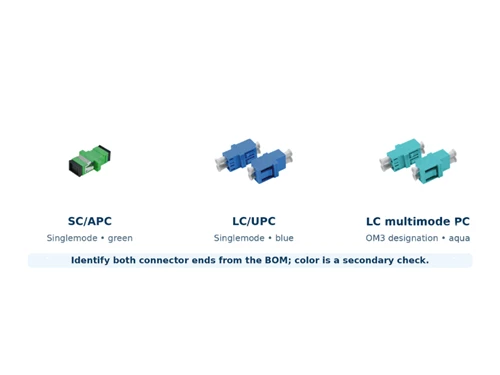
This is the MST's revolutionary advantage. All hardened connectors (e.g., OptiTap SC/LC) are terminated, tested, and sealed under controlled factory conditions. In the field, engineers can forego complex fusion splicing, performing simple "plug-and-play" operations instead. This drastically reduces deployment difficulty, slashes service activation time, and guarantees consistent connection performance.
• Unmatched Deployment Flexibility:
MST design fully accommodates the complexities of real-world environments. It supports a multitude of installation methods: pole mounting, wall mounting, aerial strand suspension, hand-hole placement, and pedestal mounting. This "adapt anywhere" capability allows it to integrate effortlessly into any existing network infrastructure.
These foundational characteristics are what empower the MST to excel in the four key application areas outlined below.
Part 2: Four Key Application Scenarios - The MST in Action
1. The "Mini Cross-Connect Box" for FTTH Networks
In Fiber-to-the-Home deployments, the MST plays the critical role of connecting the feeder cable to individual subscriber drop cables. It is typically installed as a compact outdoor fiber distribution point on building facades, in stairwells, or on utility poles.
• Value Proposition: It distributes the signal from one feeder cable to multiple subscriber drop cables. The preterminated nature makes activating home broadband as straightforward as plugging in an appliance, significantly enhancing an operator's service response speed and customer satisfaction. The IP68 protection ensures years of reliable outdoor operation, minimizing maintenance visits.
2. The "Reliable Connection Anchor" for 5G & FTTA Networks
In dense 5G network deployments, numerous Remote Radio Units (RRUs) or Active Antenna Units (AAUs) require fiber connectivity back to the baseband unit. The MST is the ideal choice for Fiber-to-the-Antenna (FTTA) scenarios.
• Value Proposition: It can be compactly installed on streetlight poles, walls, or dedicated communication poles, providing a rugged, sealed termination and distribution point for one or a cluster of antennas. Its resistance to vibration, temperature cycling, and moisture perfectly aligns with the harsh demands of outdoor 5G equipment, ensuring connection reliability at the foundational layer of the mobile network.
3. The "Intelligent Patching Hub" for Enterprise Campuses
Modern enterprise campuses, smart buildings, and university networks contain complex internal fiber wiring connecting office networks, security systems, and Wi-Fi access points.
• Value Proposition: The MST can serve as a centralized management and distribution unit for fiber within buildings or on different floors. It neatly organizes and manages multiple cables, providing clear identification and flexible patching capabilities. Its modular design facilitates easy port additions as the enterprise grows, giving the network infrastructure excellent scalability and maintainability.
4. The "High-Density Access Terminal" for Data Center Environments
Even in controlled indoor environments like data center halls or operator equipment rooms, tidy and efficient cable management is paramount.
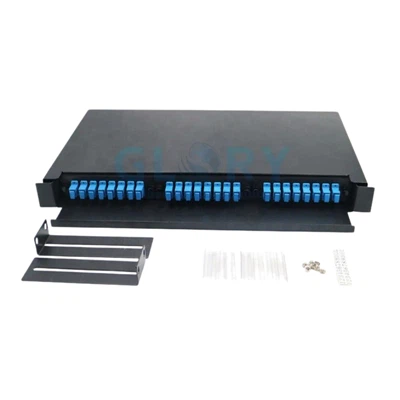
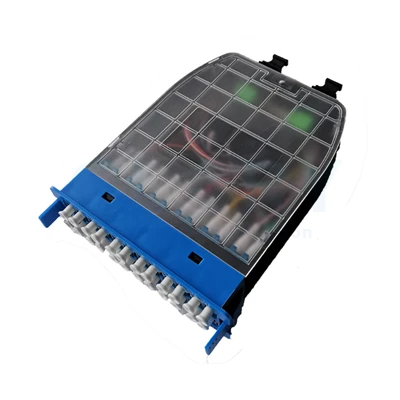
• Value Proposition: The MST can be used as a high-density fiber access point within server rack rows or specific zones. It provides an orderly termination point for cables from various directions, connecting via standard duplex LC or MPO adapters to switches or transmission equipment. This simplifies the cabling structure, improves cooling efficiency, and makes daily maintenance, changes, and capacity expansions clearer and safer.

Part 3: The Core Value of Choosing an MST
In summary, opting for a comprehensive MST solution, like those offered by GloryOptical, delivers multi-faceted value to network builders and operators:
• Reduces Total Cost of Ownership (TCO):
A unified device model simplifies procurement, training, and spare part inventory. Rapid deployment lowers labor costs, while high reliability reduces ongoing maintenance expenses.
• Enhances Network Deployment Agility:
The "plug-and-play" nature can accelerate network expansion and subscriber activation by multiples, enabling a faster response to market demands.
• Guarantees Long-Term Network Quality:
Factory-crafted, high-quality connections coupled with robust outdoor protection lay a physical foundation for long-term, stable network operation, reducing failure rates.
• Simplifies Operations & Maintenance:
Standardized interfaces and clear labeling allow O&M personnel to follow familiar procedures across different application scenarios, boosting operational efficiency.
Conclusion
In an era that demands flatter networks, agile deployment, and standardized operations, the Multiport Service Terminal (MST) breaks down the barriers between different applications through its core tenets of ruggedness, plug-and-play simplicity, and ultimate flexibility. It demonstrates that excellent design can meet diverse challenges with a consistent approach, providing the same efficient and reliable terminal solution for fiber networks of all scales-FTTH, 5G, enterprise, and data center.
For decision-makers planning or upgrading their fiber network infrastructure, adopting a versatile, full-scenario platform like the MST is more than just selecting a product. It is embracing a smarter, more economical, and future-ready philosophy for network construction.