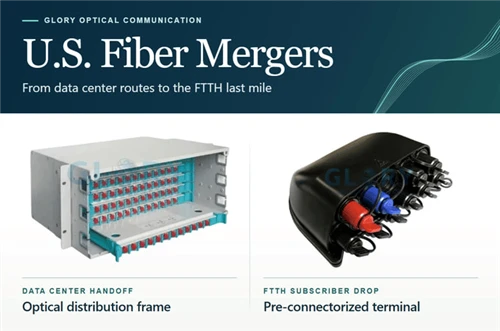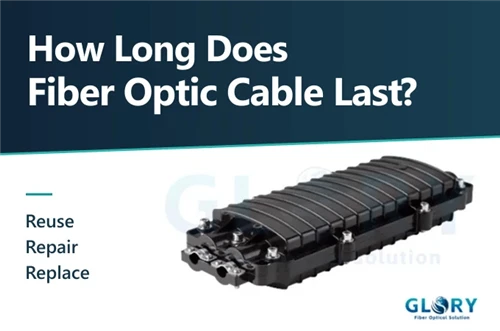

As the blueprint for smart cities unfolds, we see not only smart streetlights and autonomous vehicles, but also a "digital neural network" requiring real-time processing of massive amounts of data. Traditional network nodes now face a triple challenge: density, flexibility, and cost. At this critical juncture, the MultiPort Flex Splitter Terminal (MFT) has quietly transcended its traditional definition as a Fiber to the Home (FTTH) device, becoming a "multifunctional optical access hub" at the city's digital edge, playing a crucial new role in the grand blueprint of IoT and 5G fronthaul.
Role 1: The Convergence Point of the Smart City's "Sensory Nerve Endings"
The sensing layer of a smart city consists of countless IoT devices-environmental sensors, security cameras, smart manhole covers, information displays, and more. These devices are widely distributed, numerous, and mostly located outdoors. Traditionally, laying separate fiber optic cables for each device is costly and quickly depletes conduit resources.
Multi-Port Terminal Solution:
• Efficient Aggregation: Single Feeder Cable Access Terminal Utilizing its built-in high-resolution PLC (e.g., 1x16), it can simultaneously provide fiber optic backhaul channels for more than ten IoT devices along the route.
• Outdoor Environmental Adaptability: IP68 waterproof and dustproof rating, wide operating temperature range (-40°C to 85°C), can be directly installed on light poles, traffic signal poles, or outdoor cabinets, serving as a reliable "zero-cabinet" connection point for IoT devices, unaffected by rain, strong winds, or extreme temperatures.
• RapidDeployment: Employing rugged connectors with push-pull locking mechanisms(e.g.,SuperTap®compatible),it enables "quick connection/disconnection," significantly reducing connection time for individual devices. This aligns with the rapid, phased deployment characteristics of smart city projects.
Role 2: "Agile Connection Point" for 5G Small Cell Fronthaul
The high speed and low latency of 5G networks rely on densely distributed small cell base stations. Each base station requires a fiber optic fronthaul connection, typically located on fixed infrastructure in urban streets. This places extremely high demands on the deployment speed, density, and flexibility of fiber optic networks.
Core Values of Multi-Port Terminals:
• High Density and Flexibility: The compact, all-in-one design provides multiple output ports within limited space (e.g., a chassis integrated on a single pole). Interleaved-length connector pigtails facilitate cable management in confined spaces, allowing simultaneous connection of multiple adjacent 5G small cell base stations for efficient "one-to-many" coverage.
• Simplified Fronthaul Network: It serves as an ideal physical carrier and distribution point for passive wavelength division multiplexing (WDM) fronthaul solutions, replacing multiple separate chassis and splitters, thus simplifying network architecture and reducing potential points of failure.
• Investment Protection and Smooth Evolution: Its hardware platform is compatible with both traditional and new connector systems and supports broadband splitting. This means that nodes currently deployed for 5G fronthaul can seamlessly support higher-speed fronthaul technologies or other new services in the future, achieving "deploy once, benefit long-term."
Role 3: "Integrated Access Platform" at the Urban Edge
Future urban street infrastructure will evolve into integrated "smart poles," simultaneously carrying multiple functions such as lighting, communication, sensing, and monitoring. This necessitates a highly integrated and easily managed fiber optic access platform.
The forward-looking positioning of multi-port terminals:
• Unified access platform: A single terminal can coordinate fiber optic access for multiple services at a specific location, achieving unified management and on-demand allocation of fiber optic resources. This avoids redundant construction for different service systems and perfectly realizes the concept of "multi-pole integration and multi-box integration" at the fiber layer.
• Easy maintenance: Clear port identification and modular design enable maintenance personnel to quickly locate and maintain specific service links, thereby significantly improving the operational efficiency and reliability of urban infrastructure.
From "Access Product" to "Urban Digital Infrastructure"
In the context of the deep integration of smart cities and 5G, fiber optic networks must evolve from "pipes" to "intelligent edge platforms." With its high integration, high protection, high flexibility, and future-oriented characteristics, multi-port flexible splitter terminals are transforming from an excellent FTTH product into a strategic, general-purpose edge optical access asset for building a solid digital foundation for smart cities.