
How should fiber optic cable reels be transported and stored?
Keep large outside-plant reels upright on both flanges, lift them with equipment rated for the full reel weight, chock and restrain them against rolling, preserve cable-end seals and inspect the reel before accepting delivery. Follow the exact cable datasheet for storage temperature, minimum bend radius and maximum pulling tension. Any reel that has been dropped, crushed, submerged through an open end or found with serious flange damage should be quarantined before installation.
Fiber optic cable transportation is not simply a matter of keeping the shipment dry. The reel, cable layers, end seals, factory test records and receiving evidence must remain controlled from the factory loading area to the moment the cable is released for installation.
A weak process asks whether the reel arrived. A stronger process asks whether the delivered cable is the correct construction, whether its mechanical history is acceptable, whether any abnormal event was documented and whether the reel can be traced to its test evidence.
Glory Optical supplies multiple fiber optic cable constructions for FTTH, indoor, outdoor and project-specific networks. The following workflow explains how buyers and project teams can protect those cables before installation.
Why Cable Damage Often Appears After Transportation
Optical fibers are protected by coatings, buffer tubes, strength members, armor and an outer jacket. That structure is designed to tolerate defined mechanical and environmental loads, but it does not make the cable immune to impact, crushing, tight bends or uncontrolled reel movement.
The first sign of transportation damage is often not a broken fiber. It may be a loose cable layer that becomes tangled during payout, a cracked flange that catches the jacket, a loose reel bolt that allows structural movement or a missing end cap that creates a moisture path.
| Observed condition | Why it matters | When it may appear |
|---|---|---|
| Loose or displaced cable wraps | Can cross, bind or kink as the reel pays out | During setup or the first section of pulling |
| Cracked or distorted flange | May catch the jacket or reduce reel stability | During lifting, rotation or payout |
| Missing cable-end seal | Creates a direct path for water and contamination | During storage or after the cable is cut |
| Severe wave-shaped bend | May indicate hidden structural displacement or compression | When the cable is unreeled and straightened |
| Damaged protective lagging | Can expose the outer cable layer to impact or sharp hardware | At receiving inspection or after packaging removal |
| Unrecorded drop or restraint failure | Leaves the project team without a defensible release basis | Often discovered only after a defect claim |
A passing continuity or OTDR check does not automatically prove that a reel with a known severe impact is structurally sound. Optical evidence, physical inspection and handling history answer different questions and should be reviewed together.
Corning's cable placing and reel-handling guidance warns that severe wave-shaped bending can represent hidden cable damage even when an immediate optical check does not show a failure.

Step 1: Verify the Cable and Reel Before Shipment
Transportation control begins before the reel is loaded. The shipment should be compared with the purchase specification, route plan and project documentation.
- Cable model and construction
- Fiber type and fiber count
- Ordered and measured cable length
- Reel or drum identification number
- Production batch and factory test report
- Gross reel weight and reel dimensions
- Storage and installation temperature limits
- Loaded and unloaded minimum bend radius
- Maximum installation tension
- Required end seals, labels and protective packaging
The reel ID should remain connected to its factory test report throughout delivery, storage and installation. A generic certificate covering a product family is not the same as a test record for the delivered reel.
ISO 9001 Is Process Evidence, Not Reel-Level Proof
An ISO 9001 quality management system can demonstrate that a manufacturer operates documented quality processes. It does not prove that a particular reel was transported without damage. Buyers should request both quality-system evidence and product- or reel-specific records.
Mechanical and environmental cable qualification may reference the IEC 60794 optical cable requirements. The applicable limits still need to come from the exact cable datasheet, product standard and project specification.
Photograph the full reel, both flanges, the identification label, visible outer cable layer and cable-end seals. This establishes a condition record before carrier responsibility begins.
Step 2: Load and Secure Fiber Cable Reels Correctly
Keep Large OSP Reels Upright
Large outside-plant cable reels should normally be transported upright, resting on their flange edges. Laying a heavy reel flat can shift the cable layers, load the flange in an unintended direction and create payout problems later.
The reel should stand on a flat vehicle deck. Use properly sized chocks at the flange edges to prevent forward and backward movement. Do not improvise with loose stones, scrap timber or irregular objects that can move under vibration.
Use the Correct Lifting Method
For forklift handling, confirm that the forklift capacity exceeds the full reel weight, approach from the flange side and use forks long enough to support both flanges. Prevent the forks from contacting the cable jacket or damaging protective boards.
For crane handling, use an approved shaft through the central arbor hole and a spreader beam where required. The spreader prevents chains or slings from compressing the flanges inward.
| Handling action | Acceptable control | Unacceptable shortcut |
|---|---|---|
| Forklift lifting | Both flanges supported by rated equipment | Forks pressing into cable layers |
| Crane lifting | Shaft through hub with suitable spreader | Sling around one flange or the wound cable |
| Truck unloading | Controlled forklift, crane, ramp or winch | Dropping or rolling the reel off the deck |
| Short ground movement | Roll only in the marked direction on a clear surface | Rolling long distances over debris or uneven ground |
| Temporary staging | Upright, chocked and protected | Leaving the reel free to roll |
Do not lift a reel by one flange, protective wooden lagging, the cable itself, a rope around the wound cable or protruding bolts. STL's handling, transportation and storage procedure similarly emphasizes upright forklift movement, a central shaft and a spreader beam.
Restrain the Reel During Transport
The reel must not be free to roll, bounce or slide during acceleration, braking or cornering. Use the approved combination of chocks, chains, rated straps and blocking for the reel size and vehicle.
- Record reel orientation before departure.
- Confirm chocks contact the flange correctly.
- Keep straps and chains away from cable layers.
- Check restraint tension after initial movement where required.
- Protect labels from abrasion and weather.
- Keep reel ends accessible for identification and inspection.
Step 3: Unload and Receive the Cable at the Jobsite
Do not remove vehicle restraints until the unloading area, route and equipment are ready. The receiving inspection should occur before the reel is moved into a warehouse or installation zone.
The Fiber Optic Association receiving guide recommends checking delivered components against the order and inspecting for damage before installation. Suspected damage should be documented and tested rather than discovered after pulling.
Use a Five-Photo Receiving Record
- The complete reel before restraints are removed
- The reel label and identification number
- Both flanges and the central hub
- The visible outer cable layer and protective lagging
- Both cable ends and their seals
Also record the delivery date, vehicle or consignment reference, delivery note, storage location and inspector. The objective is not paperwork for its own sake; it is a defensible chain of custody when damage responsibility is unclear.
Inspect the Physical Condition
- Cracked, split or distorted flanges
- Loose reel bolts or hub movement
- Missing boards or damaged lagging
- Protruding nails, screws or metal straps
- Cable cuts, flattening, abrasion or tight bends
- Loose or crossed cable layers
- Missing or damaged cable-end caps
- Water staining or prolonged wet exposure
- Labels inconsistent with the purchase order
- Reel length inconsistent with the route plan
Field Example: A Reel That Looks Usable but Should Not Be Released
A project team receives an armored outdoor cable reel with intact packaging on most of the circumference. One flange has a fresh split, the hub bolt is loose and the carrier cannot confirm whether the reel was dropped. A quick continuity test shows all fibers present.
Why continuity is not enough
The test only confirms that the fibers are not completely broken. It does not establish whether the cable core shifted, whether the armor compressed the tubes or whether payout will force a displaced layer into a kink.
Recommended disposition
Photograph the reel before movement, quarantine it, inspect the exposed outer layers, compare an OTDR trace with the factory baseline where available and obtain a documented supplier or engineering decision. Installation pressure should not convert missing evidence into an automatic release.
Step 4: Store Reels Without Creating a Future Payout Problem
Use a Firm, Dry and Secure Surface
Store the reel upright on a flat, solid surface and chock it against movement. Soft soil can allow one flange to sink, bringing the outer cable layer closer to rocks, water or debris and making later rotation unstable.
Indoor storage is preferable where practical. Outdoor storage may be acceptable for suitable cable and reel packaging, but the reel should be raised from wet or soft ground, protected from standing water, covered without trapping condensation and kept away from chemicals, fuels, heat sources and vehicle traffic.
More detailed warehouse controls are covered in Glory Optical's fiber optic cable storage requirements guide.
Preserve End Seals and Identification
Keep factory wrapping, protective lagging and cable-end caps in place until the cable is required. When only part of a reel is used, secure the remaining outer end, reseal every cut cable end, restore weather protection, retain the original reel label and record the remaining length.
An open cable end is a more direct moisture risk than general humid air. Water may enter loose tubes, reach metallic components or interfere with water-blocking systems if the end remains unsealed.
Follow the Cable-Specific Temperature Range
There is no single storage-temperature range that applies to every fiber optic cable. Indoor tight-buffer cable, outdoor loose-tube cable, armored cable, microcable and hybrid power-fiber cable may use different jacket materials and internal structures.
Do not publish or apply a universal range such as –40°C to +70°C unless the exact cable datasheet supports it. Storage, installation and operating temperature may also be different values.
Step 5: Release, Test or Quarantine the Reel
A clear decision process prevents a damaged reel from being installed simply because the project schedule is tight.
| Decision level | Typical condition | Recommended action |
|---|---|---|
| Green - Release | Reel ID matches, seals intact, no visible damage and handling history is normal | Release for installation and retain the receiving record |
| Amber - Hold and Verify | Loose bolt, minor wrap damage, missing label, minor jacket abrasion or uncertain storage history | Correct what can be corrected, inspect further and perform continuity or OTDR testing when justified |
| Red - Quarantine | Reel dropped, flange cracked, cable crushed, severe kink, open end submerged or restraints failed | Do not install until supplier or engineering review provides a documented disposition |
| Optical Exception | Incoming result differs materially from the factory baseline | Hold the reel, confirm test setup and investigate before release |
What Testing Is Appropriate?
A continuity test can confirm that fibers are not completely broken. An OTDR can help identify reflective events, non-reflective loss events or breaks along a long cable. Neither replaces physical inspection or mechanical history.
- Continuity does not prove that the cable structure is undamaged.
- OTDR does not replace inspection of the flange, jacket and cable layers.
- A clean trace does not automatically release a reel known to have suffered severe impact or overbending.
- Factory testing does not replace installed-link acceptance testing.
For example: NorthZone-F12-R027-20260722-IncomingOTDR. The same reel ID should appear in the factory report, receiving form, storage record and installed-cable acceptance package.
Special Handling for Different Fiber Cable Types
Outdoor Loose-Tube and Armored Cable
Outdoor cables generally tolerate more environmental exposure than indoor cables, but heavy armored reels create greater lifting and restraint risks. A GYTA53 outdoor armored cable, for example, contains metallic armor and a double-jacket structure. Its reel weight, minimum bend radius and grounding considerations differ from those of a lightweight indoor cable.
Review the outdoor fiber optic cable range before selecting reel dimensions, lifting equipment and route preparation.
FTTH Drop Cable and Small Coils
Small FTTH drop cables may arrive in coils, boxes or reusable dispensers rather than large wooden reels. Prevent the coil from releasing uncontrolled loops, maintain light back-tension during payout and avoid pulling a stationary coil through its center.
For subscriber-drop applications, see Glory Optical's FTTH cable range.
Pre-Terminated Cable Assemblies
Connectorized assemblies require protection for both the cable and the factory-installed ends. Keep connectors inside their pulling sleeve or protective packaging and never use a connector body as the pulling point.
- Pulling-eye rating
- Maximum pulling tension
- Connector protection diameter
- Route and duct clearance
- Polarity and port identification
- End-face inspection after installation
See What Is a Pre-Terminated Fiber Optic Cable? and Glory Optical's fiber optic cable assemblies.
High-Fiber-Count and Ribbon Cable
High-fiber-count cables may require larger reel cores, controlled payout equipment and stricter twist management. Do not transfer the cable to any available reel without confirming core diameter and bend limits.
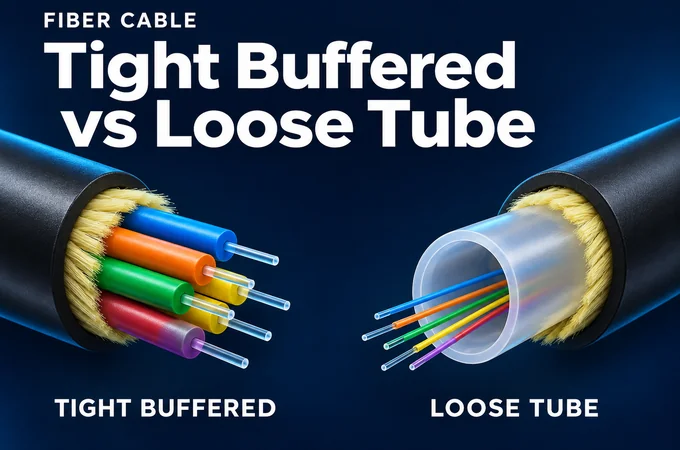
The fiber optic cable construction guide explains the differences between tight-buffered, loose-tube, ribbon and high-density structures.
Pre-Installation Reel Checklist
Documentation
- Reel ID matches the route plan.
- Cable model, fiber count and length are correct.
- Factory test report is available.
- Storage and transport history is documented.
- Installation limits are available to the crew.
- Any damage disposition is signed and retained.
Physical Condition
- Flanges, bolts and lagging are intact.
- No sharp hardware can contact the cable.
- Outer cable layers are tight and undamaged.
- Cable-end caps are installed.
- Reel is upright and correctly supported.
- Reel stand and spindle match the reel.
Optical Verification
- Continuity or OTDR testing is complete where required.
- Incoming results are compared with the factory record.
- Test files are named and stored by reel ID.
- Abnormal events have been reviewed.
- Test launch and receive conditions are documented.
- Release status is visible to the installation team.
Installation Readiness
- Correct lifting and reel-stand equipment is available.
- Rolling direction and payout direction are understood.
- Minimum bend radius and maximum tension are confirmed.
- Duct, sheaves, rollers and pulling equipment match the cable.
- The route is cleared before payout begins.
- The crew has a stop-work rule for kinks or uncontrolled payout.
Standards, Certification and Source Basis
No single certification proves every transportation, storage and cable-performance requirement. The useful question is what each document actually covers and whether it applies to the exact product, batch or reel.
| Reference | What it supports | What it does not prove alone |
|---|---|---|
| ISO 9001:2015 | Documented quality-management system | Condition of one delivered reel |
| IEC 60794-1-1 | Generic optical cable requirements and test framework | Compliance without construction-specific evidence |
| Corning AEN165 | Manufacturer engineering guidance for reel handling and cable placing | Acceptance of a damaged reel from another product family |
| FOA Receiving Cable Onsite | Receiving checks, quantity verification and pre-installation testing logic | A manufacturer-specific storage range |
| Factory reel test report | Optical baseline for the exact reel when properly identified | Proof that no damage occurred after factory release |
| Receiving inspection record | Condition and chain-of-custody evidence at delivery | Long-term installed-link performance |
The most defensible project file combines the supplier's reel-specific production or test record, the receiving and storage record, and the final installed-cable acceptance record.
Fiber Optic Cable Transportation and Storage FAQs
Q: Can a fiber optic cable reel be stored on its side?
A: Large outside-plant reels should normally remain upright on their flange edges. Side storage can shift cable wraps, load the reel structure incorrectly and create payout tangles. Small boxed spools may follow different manufacturer-approved packaging instructions.
Q: What happens if a fiber cable reel is dropped?
A: A drop can crack a flange, displace cable layers, crush the jacket or create hidden internal damage. Quarantine the reel, document the event and obtain an engineering or supplier review before installation.
Q: Should fiber optic cable be tested before installation?
A: Yes. At minimum, verify reel identity and physical condition. Continuity or OTDR testing may be required for high-value routes, suspected damage or project-specific acceptance plans.
Q: What is the correct storage temperature for fiber optic cable?
A: Use the storage-temperature range on the specific cable datasheet. Do not apply one universal temperature range to every indoor, outdoor, armored and specialty cable construction.
Q: Why must a cable reel be rolled in the arrow direction?
A: The arrow indicates the direction that maintains the manufactured cable winding. Rolling the reel in the opposite direction can loosen the wraps and increase the risk of tangling during payout.
Q: Can outdoor fiber cable reels be stored outside?
A: Suitable outdoor cable reels may be stored outdoors when supported on a firm surface, protected from standing water and weather, kept sealed and secured. Indoor or covered storage remains preferable when available.
Treat Every Cable Reel as a Traceable Project Asset
Correct fiber optic cable transportation is a controlled engineering process rather than a collection of general handling warnings. The reel must remain upright and restrained, the cable ends must remain sealed, receiving evidence must be captured and abnormal events must lead to a defined release or quarantine decision.
The strongest control system connects three records through one reel ID:
- The manufacturer's reel-specific production or optical test record
- The receiving inspection, transportation and storage record
- The installed cable acceptance record
When these records remain connected, the project team can detect transport damage before pulling, resolve carrier claims more efficiently and preserve a useful optical baseline for future maintenance.
Glory Optical supports FTTH, indoor, outdoor and custom projects through its fiber optic cable portfolio and OEM/ODM cable services.
Need a Cable Packing, Reel or Test Review?
Send the cable construction, fiber count, reel length, delivery route, unloading method and required test documents. Glory Optical can help define suitable packaging, reel identification and project-specific inspection records before shipment.
Request a Cable Review View Fiber Optic Cables