
Part 1: The Economics of the Last Mile
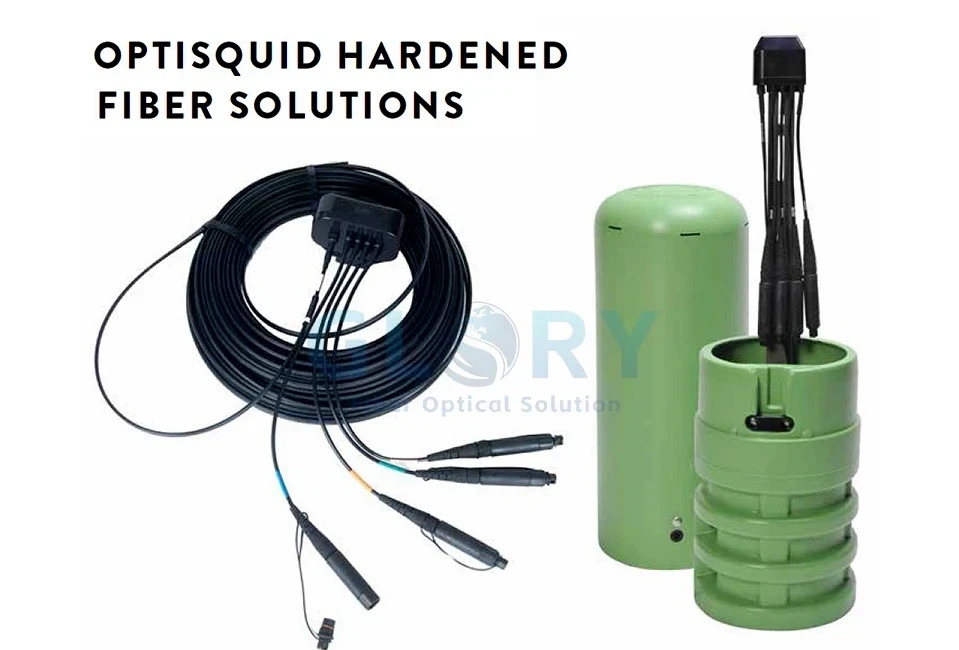
FTTH networks follow a hub-and-spoke architecture centered around Fiber Distribution Hubs (FDHs). From these hubs, feeder cables radiate outward, eventually splitting into individual drop cables that enter homes and businesses. This architecture is cost-effective in theory but expensive in practice - because the last mile is where labor costs concentrate.
According to the 2024 Fiber Deployment Cost Annual Report, labor accounts for 60-80% of total deployment costs. This is the single largest line item in any FTTH project. For a 500-home deployment, field termination alone consumes approximately 267 to 400 technician hours. At fully loaded labor rates of $50 per hour, that translates to **$13,350 to $20,000 in labor costs - just for termination**. Add consumables (heat shrink, protection sleeves, cleaning supplies), tool depreciation, and the costs of rework from failed splices, and the figure climbs higher.
Each fusion splice takes 5–7 minutes on average and adds around $6 USD in labor and downtime. In a typical FTTH node with multiple splices, these minutes add up quickly. Across thousands of nodes, the cumulative cost is staggering.
But labor is only part of the equation. Skilled fusion splicers are in short supply. The acute skills shortage in many markets drives labor costs upward and creates deployment bottlenecks. Operators cannot simply hire more technicians - they must compete for a limited pool of qualified workers. This constraint limits rollout speed and increases project risk.
Part 2: The Hidden Costs of Traditional Deployment
Traditional FTTH deployment follows a predictable workflow: cable preparation, fiber stripping, cleaning, cleaving, fusion splicing, heat shrinking, testing, and sealing. Each step introduces variables - environmental conditions, technician skill, tool condition - that affect quality and consistency.
Field fusion splicing is particularly sensitive. Dust, humidity, and temperature affect splice quality. The cleaver blade must be sharp and properly adjusted. The fusion splicer requires regular maintenance and calibration. Even with experienced technicians, splice loss varies from 0.02 dB to over 0.1 dB, and failed splices require rework.
The true cost of traditional deployment is not just labor - it is variability. When every splice depends on a technician's skill and the day's conditions, quality becomes inconsistent. This inconsistency manifests later as unexplained signal degradation, intermittent failures, and costly troubleshooting.
Moreover, traditional deployment assumes ideal conditions. In practice, technicians work in tight spaces - building corridors, utility poles, underground vaults - where access is limited and environmental conditions are far from ideal. As one industry analysis notes, "one of the most persistent challenges in FTTH field deployments is achieving precise installation and provisioning of network components".
The result is a deployment model that is slow, expensive, and inconsistent - three characteristics that do not scale well in a market where operators must connect millions of new subscribers.
Part 3: The Pre-Connectorized Alternative
Pre-connectorized solutions offer a fundamentally different approach. Instead of terminating fibers in the field, termination is moved to the factory. Connectors are installed, polished, and tested under controlled conditions. In the field, technicians simply plug pre-terminated cables into pre-connectorized terminals. No splicing, no cleaning, no testing - just connection.
The benefits are measurable. Pre-connectorized solutions reduce installation time by up to 50%. They eliminate the need for specialized fusion-splicing labor at every node. They reduce truck rolls and rework, which is especially critical amid labor shortages. They enable parallel workstreams - node equipment and cable assemblies can be deployed independently, accelerating overall project timelines.
The reliability argument against pre-connectorized solutions - the belief that connectorized solutions are inherently less reliable than spliced connections - is, according to industry experts, a myth. Factory-terminated connectors are tested before shipment, eliminating the variability of field termination. When properly sealed, hardened connectors match or exceed the environmental performance of spliced connections.
For operators, the shift to pre-connectorized deployment is not just about speed. It is about predictability. When installation time and quality are consistent regardless of technician skill or weather conditions, project planning becomes more accurate. Rollout timelines become reliable. Cost estimates become dependable.
Part 4: The Fiber Access Terminal as the Last Mile Enabler
The Fiber Access Terminal (FST) embodies this pre-connectorized philosophy. It is a compact, field-ready enclosure that integrates factory-terminated hardened connectors, PLC splitters, and IP68 environmental protection into a single unit. Designed for aerial, underground, and duct installations, it transforms traditional fiber deployment into a fast, scalable, and low-risk process.
What makes the FST different? It eliminates field splicing entirely. Instead of requiring a fusion splicer, a skilled technician, and ideal conditions, the FST uses plug-and-play connectors that lock into place with push-pull and threaded mechanisms. Installation becomes a matter of connecting pre-terminated cables - a task that requires minimal training and no specialized equipment.
The FST is also designed for scalability. It supports flexible splitter configurations - 1×2, 1×4, or 1×8 - using Planar Lightwave Circuit (PLC) technology. This allows operators to deploy the terminal in different network architectures without changing the hardware. The same terminal that serves a single subscriber can, with a different splitter configuration, serve eight. PLC technology ensures low insertion loss, high uniformity, and stable optical performance across all output ports.
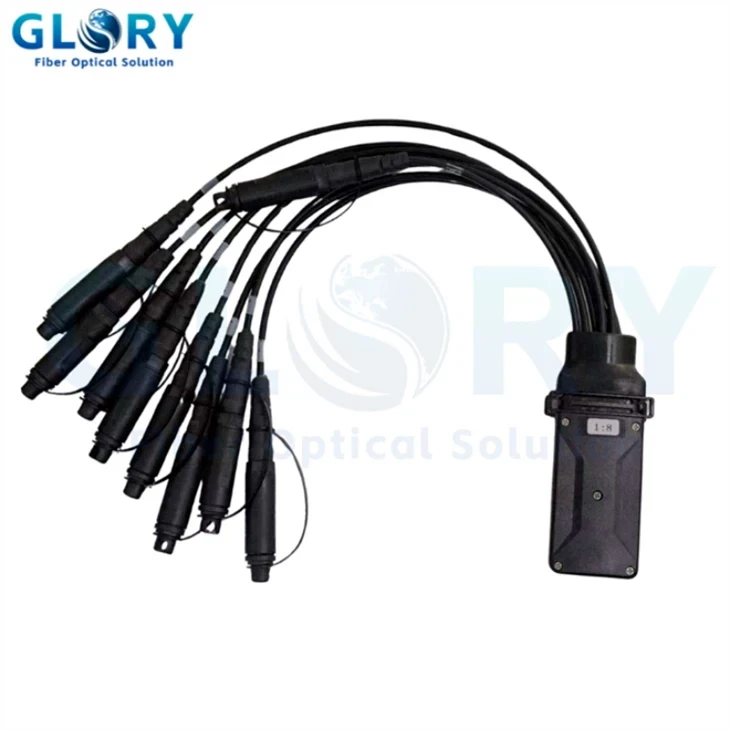
Environmental protection is built in, not added on. The FST is IP68-rated, meaning it is dust-tight and waterproof. It operates from -40°C to +85°C, making it reliable in deserts, coastal zones, and freezing climates. It resists salt mist, humidity, and physical impact. This is not an indoor terminal that happens to be used outdoors - it is designed from the ground up for outside plant conditions.
The FST also protects existing infrastructure investments by being compatible with legacy hardened connector systems such as SuperTap-style interfaces. Operators can deploy it alongside existing equipment without replacing their entire network.
The terminal supports multiple mounting methods - pole, pedestal, handhole, or strand mounting - and accepts a variety of cable types: flat drop cables in sizes 3.0×4.5mm, 4×7mm, 4.5×8.1mm, and 4.5×9.8mm. The feeder cable can be configured with 1, 2, 4, 6, or 8 cores, with customized lengths available.
Part 5: The Economic Case for Pre-Connectorized Deployment
The economics of pre-connectorized deployment are compelling, especially when viewed through the lens of total cost of ownership (TCO).
Labor savings: Pre-connectorized solutions reduce installation time by up to 50%. For a 500-home deployment, this translates to approximately 133 to 200 technician hours saved - or $6,650 to $10,000 in labor costs. Across thousands of homes, the savings multiply.
Equipment savings: Fusion splicers cost thousands of dollars each, require regular maintenance, and must be distributed across the workforce. Pre-connectorized deployment eliminates this capital expense entirely.
Rework reduction: Field splices fail. Connectors get contaminated. Seals leak. Each failure requires a truck roll, a technician, and additional labor. Pre-connectorized deployment reduces these failures because factory-terminated connectors are tested before shipment and hardened connectors are designed for outdoor durability.
Scalability: Pre-connectorized deployment enables parallel workstreams. While one team installs cables, another team connects terminals. This parallelism compresses project timelines and accelerates revenue generation.
Risk reduction: When deployment quality depends on technician skill and environmental conditions, project outcomes are uncertain. Pre-connectorized deployment eliminates this uncertainty. Installation time and quality become predictable, enabling more accurate project planning and cost estimation.
Part 6: Applications Across Network Segments
The FST is not limited to residential FTTH. Its combination of hardened connectors, IP68 protection, and plug-and-play deployment makes it a versatile solution across multiple network segments. The terminal supports pole, pedestal, handhole, or strand mounting, and accepts various flat drop cable sizes, giving it the flexibility to adapt to different physical deployment environments. Below are four critical application areas where the FST delivers measurable value.
FTTH (Fiber to the Home)
In residential broadband networks, the FST serves as a neighborhood distribution point and the final physical interface before the fiber enters a subscriber's home. Its compact size and IP68-rated enclosure make it suitable for pole, pedestal, handhole, or strand mounting in street-level environments. The integrated PLC splitter (available in 1×2, 1×4, or 1×8 configurations) enables a single feeder fiber to serve multiple households, reducing the number of fibers that need to be run from the central office. For operators rolling out FTTH in dense urban areas or expanding into suburban neighborhoods, the FST's plug-and-play installation reduces field labor costs and accelerates subscriber activation. The terminal's compatibility with legacy hardened connector systems also allows it to be deployed alongside existing infrastructure, protecting prior investments.
FTTA (Fiber to the Antenna)
In 5G and wireless networks, the FST connects base station equipment to outdoor telecom cabinets and provides the fiber link between the baseband unit (BBU) and the remote radio unit (RRU) at the tower top. Tower-top environments present unique challenges: exposure to wind, vibration, temperature extremes, and moisture. The FST's -40°C to +85°C operating range and IP68-rated enclosure ensure reliable performance in these demanding conditions. The hardened connector system with push-pull and threaded locking provides secure connections that resist loosening from vibration. For mobile network operators deploying small cells or upgrading macro sites, the FST offers a standardized, pre-connectorized interface that simplifies tower-top fiber management and reduces the need for skilled splicers at height.
Enterprise and Campus Networks
Large enterprises, university campuses, and industrial parks require fiber connectivity across multiple buildings, often in outdoor or semi-outdoor environments. The FST enables secure outdoor distribution between buildings, providing a ruggedized termination point that protects fiber connections from environmental exposure. Its scalability - supporting 1×2, 1×4, or 1×8 splitter configurations - allows network administrators to start with a small number of connections and expand as campus needs grow. The tool-less installation and hardened connectors reduce the technical skill required for campus network deployments, enabling IT staff to handle fiber terminations without specialized fusion splicing equipment. This makes the FST particularly suitable for multi-building connectivity in corporate campuses, educational institutions, and industrial facilities where network demands evolve over time.
Infrastructure Projects
Beyond traditional telecom networks, the FST is used in specialized infrastructure deployments such as rail transit systems, underground conduits, and defense-grade applications. Rail and tunnel environments demand equipment that can withstand vibration, temperature variation, and limited access for maintenance. The FST's rugged construction and wide operating temperature range make it suitable for these demanding conditions. In underground conduits, the IP68-rated enclosure provides protection against flooding and groundwater ingress. For defense and government installations, the terminal's secure locking mechanism and hardened connector system offer reliable, tamper-resistant fiber termination points. These infrastructure projects often require long-term reliability with minimal maintenance - precisely what the FST's pre-connectorized, environmentally sealed design delivers.
By serving these diverse applications, the FST demonstrates its value as a versatile, field-ready solution that addresses the common challenge across all network types: the need for fast, reliable, and cost-effective fiber termination in outdoor environments.
Part 7: Technical Specifications
The GL-MST01-04 Fiber Access Terminal offers a comprehensive set of specifications designed for field reliability:
|
Parameter |
Specification |
|
Model |
GL-MST01-04 |
|
Size |
111.4×210.8×87.8mm |
|
IP Rating |
IP68 |
|
Ports |
4 ports |
|
Adapters |
Hardened SC, Hardened LC Duplex, Hardened MPO |
|
Entrance |
Cable gland or Optitap Hardened adapter |
|
Feeder Cable |
1, 2, 4, 6, 8 cores (options) |
|
Feed Cable Length |
Customized |
|
Stub Type |
Stub Tail |
|
Operating Temperature |
-40°C to +85°C |
|
Mounting |
Pole, pedestal, handhole, or strand |
|
Cable Type |
Flat drop cable (3.0×4.5mm, 4×7mm, 4.5×8.1mm, 4.5×9.8mm) |
|
Attenuation |
≤0.30 dB/km @1550nm; ≤0.40 dB/km @1310nm |
|
Directivity |
≥60 dB (minimum) |
|
Wavelength Range |
1260–1635 nm |
|
Insertion Loss (Connector) |
≤0.4dB (maximum) |
Part 8: The Future of Last-Mile Deployment
As fiber density increases, testing, activation, and maintenance of last-mile networks are likely to become bottlenecks. Operators need solutions that not only accelerate initial deployment but also simplify ongoing operations.
Pre-connectorized terminals like the FST address both needs. They accelerate deployment by eliminating field splicing. They simplify operations by providing standardized, interchangeable interfaces. They reduce maintenance costs by using hardened connectors that resist environmental degradation.
Industry analysts note that operators are increasingly adopting pre-connectorized solutions to address labor shortages, reduce deployment costs, and improve network quality. The shift is not just about technology - it is about economics. In a market where labor is scarce and expensive, pre-connectorized deployment offers a path to scalable, cost-effective network expansion.
Conclusion
The last mile of an FTTH network has always been the most expensive and difficult part of deployment. It is where labor costs concentrate, where quality varies, and where timelines stretch. Traditional field splicing, while effective, is slow, skill-dependent, and inconsistent.
Pre-connectorized deployment offers a better way. By moving termination from the field to the factory, it eliminates variability, reduces labor costs, and accelerates deployment. The Fiber Access Terminal embodies this approach, providing a compact, rugged, and scalable solution for last-mile fiber access.
For operators facing the challenge of connecting millions of new subscribers, the choice is clear: continue with a deployment model that is slow, expensive, and inconsistent - or adopt a pre-connectorized approach that is fast, cost-effective, and reliable.
The last mile doesn't have to be the bottleneck. With the right tools, it can be the foundation of a scalable, future-proof network.