In the wave of Fiber-to-the-Home (FTTH) and 5G small cell deployments, the Outdoor Multi-Port Service Terminal (MST) has become a critical node in the network access layer. It is not merely a simple junction box but a strategic asset that determines deployment efficiency, long-term operational costs, and network reliability. Faced with a dazzling array of products on the market, how can operator procurement teams cut through the noise and make the most forward-looking choice?

By following these five golden rules, you can build a scientific evaluation framework to ensure every procurement delivers true value for money and lays a solid foundation for network operations for the next decade.
Rule 1: Deployment Efficiency – Is it an "Engineering Project" or "Plug-and-Play"?
Core Question: Can this terminal reduce on-site installation time from "hours" to "minutes"?
Traditional splice-on terminals require Skilled technicians to perform a series of complex operations on-site: stripping, cleaning, splicing, coiling, and sealing. This is time-consuming, labor-intensive, and results in variable quality. A true modern solution should feature:
Factory-Preterminated and Sealed
All hardened connectors (e.g., OptiTap) should be terminated and permanently sealed in a controlled factory environment. This ensures consistent optical performance and achieves the highest protection rating (e.g., IP67). Field personnel only need to make simple mechanical connections.
Clear "Plug-and-Play" Design
Adapter ports should be clearly labeled, require no special tools for operation, and utilize push-pull or threaded locking mechanisms for fast, reliable connections.
Procurement Action Point
Request installation process videos or time comparison data from suppliers. Prioritize products that simplify field work to four steps: "unbox – run cable – plug in – lock."
Rule 2: Environmental Reliability – Is it Merely "Water-Resistant" or "Virtually Indestructible"?
Core Question: During heavy rain, floods, dust storms, or extreme temperature swings, can it guarantee network "zero downtime"?
The outdoor environment is extremely harsh. A qualified terminal must provide protection that goes beyond a standard enclosure.
Authoritative Protection Rating Certification
Insist on formal certification of IP67 or higher. IP67 means the device is completely dust-tight and can withstand temporary immersion in water (1 meter deep for 30 minutes) without harm. This is the baseline for handling flooding and sustained downpours.
Materials and Craftsmanship
The housing should be made of UV-resistant, corrosion-resistant, high-strength material. The sealing gaskets must be durable, able to withstand long-term thermal expansion and contraction without degrading.
Mechanical Strength
It should withstand reasonable mechanical stress during installation and maintenance, as well as potential environmental crushing or impact.
Procurement Action Point
Request third-party authoritative IP rating test reports and inquires about performance guarantees across a wide temperature range (e.g., -40°C to +75°C).
Rule 3: Configuration Flexibility – Is it a "Fixed Solution" or a "Future-Proof Platform"?
Core Question: Can it flexibly adapt to my point-to-point enterprise leased line needs today and smoothly upgrade to PON splitter access tomorrow?
Network requirements change. An excellent hardware platform should evolve accordingly.
Selectable Connection Modes
The terminal should support both major modes: "point-to-point" pass-through connections and "MPO indexing" splitter connections. This allows the same hardware box to be used for enterprise leased lines, 5G fronthaul, and FTTH splitting, protecting your investment.
Scalable Port Density
Availability in different port configurations (e.g., 4, 6, 8, 12) allows for precise selection based on user density, avoiding port waste or shortage.
Feeder Cable Access
Options for pre-terminated feeder cables or field-splice ports provide the optimal solution for different construction scenarios.
Procurement Action Point
Clarify if the product supports switching between different connection modes by only replacing internal modules, without changing the main enclosure.
Rule 4: Installation Versatility – Can It "Adapt to Any Situation"?
Core Question: Whether mounted on a utility pole, wall, handhole, or strand, can it provide a secure, compliant installation solution?
Deployment scenarios vary widely. The terminal should adapt to the environment, not force the project to adapt to the device.
Full-Scenario Mounting Kits
The product should include or offer optional complete mounting kits for pole-mounting, wall-mounting, handhole installation, and strand mounting.
User-Friendly Design
Mounting brackets should be easily adjustable, with fixing holes compliant with universal standards, facilitating quick setup by field personnel.
Procurement Action Point
Review the installation diagrams in the product manual to confirm coverage of all typical scenarios in your network plan.
Rule 5: Compatibility & Ecosystem – Is it an "Island" or a "Hub"?
Core Question: Can it seamlessly integrate with my existing network equipment, cables, and future plans?
Reducing integration costs and operational complexity is crucial.
Connector Standard
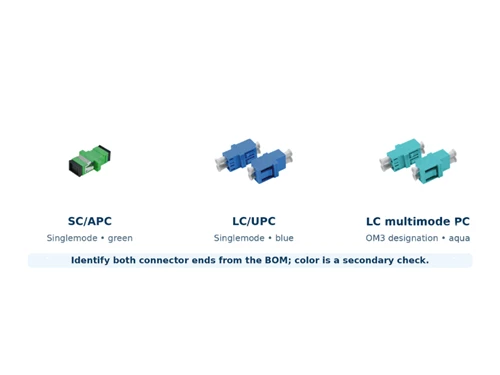
Must employ widely adopted industry-standard hardened connectors (e.g., OptiTap, compatible with other mainstream systems). This ensures compatibility with existing patch cords and tools, avoiding vendor lock-in.
Cable Compatibility
Clearly specifies the range of compatible outdoor drop cable diameters and types.
Ease of Management
The enclosure should have clear labeling areas, with tidy internal fiber routing to facilitate future maintenance, testing, and expansion.
Procurement Action Point
Request compatibility test proof from the supplier demonstrating the interoperability of their hardened connectors with other mainstream products in the industry.
Conclusion: Look Beyond Price, Invest in "Total Cost of Ownership" Victory
Choosing an outdoor Multi-Port Service Terminal must never be based solely on comparing initial purchase prices. Use these five golden rules as an evaluation checklist, comprehensively considering:
The massive savings in labor and time costs from high-efficiency deployment.
The avoided costs of frequent maintenance failure and service interruptions due to high reliability.
The long-term investment protection and smooth evolution enabled by high flexibility.
A wise choice is selecting a strategic platform that significantly reduces your network's Total Cost of Ownership (TCO) while greatly enhancing operational agility and reliability. These five rules are your reliable compass for making this wise decision.