Two Connectors, Complementary Strengths

ST Connectors: Classic bayonet-locking mechanism for quick and secure connections. Still widely used in industrial environments and test equipment.
LC Connectors: Ideal for modern high-density cabling. Half the size of an ST connector, allowing you to deploy more ports in limited rack space.
Integrating both on a single patch cord allows you to:
Connect older switches or media converters with ST ports to new LC patch panels
Maintain interoperability between new and legacy equipment during network upgrades
Plug new LC port devices directly into existing cabling without replacing existing ST terminated cables.
Singlemode vs. Multimode: Choose Based on Distance and Bandwidth
This patch cord is available in both single-mode and multi-mode versions:
Single-mode (OS2): Suitable for long-distance transmission (several kilometers to tens of kilometers). Commonly used in carrier backbone networks, campus networks, and metropolitan area networks.
Multi-mode (OM3/OM4): Suitable for short-distance, high-bandwidth transmission (typically 300-550 meters). The mainstream choice for data centers and enterprise networks.
Please select the appropriate fiber type based on the actual transmission distance and existing equipment.
Polish Type: UPC or APC?
Connector end-face polishing directly affects signal quality, especially return loss (reflected light intensity).
UPC (Ultra-Physical Contact): Standard polishing, return loss ≥50 dB. Suitable for most data communication scenarios.
APC (Angled Physical Contact): 8° angled end face, return loss ≥60 dB, significantly suppressing reflections. Ideal for FTTx, CATV, analog video transmission, and other reflection-sensitive applications. APC connectors are typically marked in green.
If unsure: Use UPC for general data networks; prioritize APC for video or PON networks.
LSZH Jacket: Safety First
Cable outer sheaths can be made of either Low Smoke Halogen-Free (LSZH) or Polyvinyl Chloride (PVC). For data centers, equipment rooms, or any enclosed, inhabited space, LSZH is strongly recommended.
LSZH: In a fire, it produces very little smoke and does not release toxic halogen gases, thus buying valuable time for evacuation and protecting equipment.
PVC: Lower cost, but produces dense smoke and corrosive gases when burned.
In high-density cabling environments with closely packed cables, choosing LSZH is a fundamental respect for life and property.
Reliable Performance, Fully Tested
Each patch cord undergoes 100% end-to-end testing before shipment and comes with a test report.
Insertion Loss: Single-mode UPC typical ≤0.3 dB; Multimode ≤0.5 dB – significantly higher than industry standards.
Return Loss: UPC ≥50 dB, APC ≥60 dB – ensuring clean signal.
Durability: Connectors withstand over 500 mating cycles while maintaining stable performance.
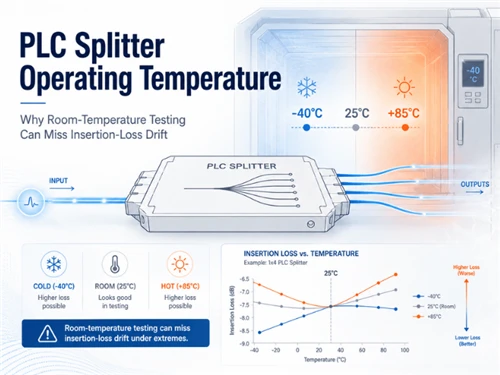
Wide Operating Temperature Range: -40°C to +85°C – suitable for a wide range of environments, from cold outdoor conditions to hot equipment rooms.
Typical Applications
Equipment Transition: Connect the old switch (ST) to the new patch panel (LC)
Testing Environment: Use ST for testing instruments and LC for the device under test (DUT)
Industrial Environment: ST's bayonet locking mechanism offers superior vibration resistance; LC terminals can be connected to high-density patch panels.
Campus/Enterprise Upgrade: Gradually replace old cables while maintaining interconnectivity across all devices.
Conclusion
The ST-LC hybrid fiber patch cord is not a "flashy" product; it is a practical tool that solves a real problem. With minimal cost and change, it allows your network to smoothly cross connector generations, protecting existing investments while embracing future technologies.
When you face the dilemma of mixing old and new equipment, try this small patch cord – it might be exactly the bridge you need.