
Two words on a drawing - "handhole" or "manhole" - look interchangeable to a buyer reading a bill of materials. They are not. One of them obligates your installation crew to carry a confined-space entry permit, a gas monitor, a tripod retrieval system, and a trained attendant standing watch topside every single time the lid comes off. The other one a technician opens with a hook and reaches into with two hands. The cost difference does not show up in the purchase order. It shows up across ten years of truck rolls - and by then the decision is buried under a road.
Glory Optical has manufactured and shipped fiber enclosures and splice closures to operators in 50+ countries since 2008, and the terminology gaps are only a fraction of the problem. The costlier pattern: a project spec that writes "manhole" across 40–50 access points on a regional FTTH distribution route where no in-vault entry work is ever required. Maintenance records from that build type consistently show per-visit durations of 2.0–2.5 hours - permit preparation, atmospheric testing, dual-crew requirements - against 40–50 minutes for equivalent handhole work. At US fiber-crew rates of $65–85 per person-hour, the confined-space overhead alone recovers the civil-structure cost difference between manhole and handhole specification within the first 12–18 months of operation. The second recurring pattern: an IP66-rated inline splice closure placed in a gravel-bottomed handhole in clay soil, without drainage. After the first wet season, OTDR traces at those vault locations show measurable insertion-loss increases as the closure cycles between flooded and dry conditions; the retrofit - replacing under-specified closures and adding drainage - typically runs 30–45% of the original vault installation cost. Both failures originate upstream of the product. They begin with one under-specified word.
This guide fixes that. It explains exactly what a handhole, a manhole, and a "fiber vault" are; the single distinction that drives the entire decision; how the load-rating standard everyone quotes actually works (and how a popular competitor page gets it wrong); and how a procurement engineer chooses the right enclosure - and the right closure to put inside it - for a real route.
If you only remember one sentence: you are not choosing a box, you are choosing a maintenance regime - and "handhole vs manhole" is the word that locks it in.
First, the terminology - because half the disputes are vocabulary
Before anyone can compare a handhole to a manhole, we have to agree on what the words mean, because the industry does not. The same buried box is called five things depending on who is speaking and where they trained.
| Term | What it usually means | Where you'll hear it |
|---|---|---|
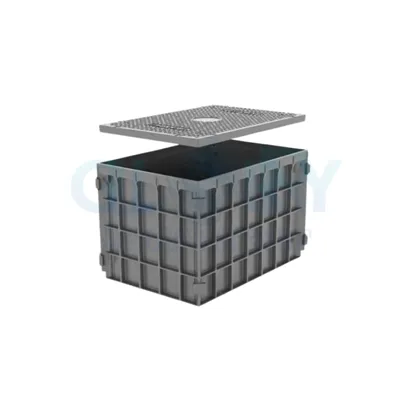
| Handhole | A shallow underground enclosure accessed from the surface; the technician reaches in with their hands, no body entry | North American telecom, NEC-influenced specs |
| Fiber vault / fiber optic vault | Often a synonym for a handhole; occasionally a larger, enterable structure - verify the access intent | US carrier and utility specs; marketing |
| Pull box / pull pit | A handhole used primarily as a cable-pulling intermediate point, not for splicing | Electrical and ITS/roadway crews |
| Joint pit / splice pit | A handhole sized to hold a splice closure and slack loops | UK / Commonwealth / intra-city OSP specs |
| Manhole (telecom) | A deep, enterable underground chamber a worker climbs into via a ladder to splice and rack cable | Carrier feeder routes, legacy copper plant, large duct banks |
Industry installation guidance frames the distinction clearly: there is frequently no fundamental difference in construction between a small manhole and a large handhole - they are named for the function they perform. The manhole is the chamber where fiber jointing and joint-closure installation happen with a worker inside; the handhole is used to store slack cable loops and act as a pull/access point without entry. That functional split - enter to work vs. reach to access - is the entire ballgame.
When a spec says "fiber vault," do not assume handhole and do not assume manhole. Ask one question: is a person expected to physically enter it to work? The answer determines the permit regime, the crew size, the load rating you can get away with, and roughly half the lifetime cost. The word on the drawing is the least reliable thing in the conversation.
The single distinction that decides everything: access intent
Here is the mental model that organizes the entire topic. Every underground access structure on a fiber route falls into one of two buckets, and confusing the two is the root of nearly every cost overrun and safety finding we see in outside-plant procurement.
Reach-in access (the handhole / vault / pull box). The structure is shallow enough - typically with an internal depth on the order of two feet or less for the small sizes - that a technician kneels at the surface, opens the lid, and performs all work (pulling, slack storage, splice-closure placement and re-entry) with their arms inside the box. Their body never enters. No ladder. No descent.
Entry access (the manhole). The structure is large and deep enough that a worker climbs down a ladder and stands inside to rack cable and splice. The moment a human body enters an underground chamber that is not designed for continuous occupancy, an entirely different body of safety law switches on.
This is the counterintuitive part that catches buyers who think they are simply choosing "a bigger box": the cost of a manhole is dominated not by the concrete but by the entry. The civil structure is more expensive, yes. But the recurring cost - the part that compounds over the life of the network - is that every routine visit becomes a confined-space operation.
Why a manhole is a confined space - and a handhole usually isn't
For any operator running their own maintenance crews, this section carries the largest financial consequence of any topic on this page.
Under US occupational safety law, a telecom manhole is, by definition, a confined space: it is large enough to enter and perform work, has limited means of entry and exit, and is not designed for continuous occupancy. The federal regulator lists underground vaults and manholes explicitly among confined spaces. When such a space can contain a hazardous atmosphere - and an underground telecom manhole can accumulate exactly that - it becomes a permit-required confined space.
Telecom work has its own tailored standard. Work in manholes and underground vaults is normally governed by the telecommunications standard at 29 CFR 1910.268(o), which sets the rules for guarding the opening, atmospheric testing and ventilation before entry, and ladder access. The general permit-required confined-space standard, 29 CFR 1910.146, applies when those telecom provisions cannot make the space safe - for example, when a manhole is contaminated with toxins. Either way, the obligations are real: testing the atmosphere before entry, ventilation, an attendant, and a rescue plan.
Translate that into procurement reality. A manhole splice visit is not one technician with a van. It is, at minimum:
- An entrant doing the work inside;
- An attendant stationed at the surface who never enters and never leaves;
- Atmospheric testing (oxygen, flammable gas, toxic gas) before and during entry;
- Ventilation equipment, traffic guarding around the open lid, and a rescue/retrieval capability.
A handhole splice visit - where the closure is lifted to the surface, re-entered, and lowered back - is one technician with hand tools. Two people and a permit versus one person and a hook. Multiply that across every maintenance event over a 20-year asset life and the "expensive" manhole becomes the dominant operating-cost line item on the route, while the box itself was a rounding error.
Confined-space cost arithmetic - by the numbers
| Cost element | Handhole (reach-in) | Manhole (permit-entry) |
|---|---|---|
| Crew size per visit | 1 technician | 2 minimum (entrant + attendant) |
| Entry overhead | None | 45–90 min (permit prep, atmospheric test, ventilation setup) |
| Typical visit duration | 40–60 min | 2.0–2.5 hrs |
| Estimated crew cost per visit 1 | $50–75 | $280–375 |
| Per-event premium | - | +$230–$300 |
For a 30-access-point distribution route with four maintenance events per point per year: over a 20-year asset life, the confined-space overhead adds $552,000–$720,000 in crew cost - against a one-time civil structure cost difference of roughly $45,000–$90,000 between equivalent manhole and handhole specifications. The civil cost is the smaller number by a factor of eight to twelve.
Specify a manhole only where you genuinely need a worker inside - high cable counts, large duct banks, frequent re-splicing of feeder cable, or pulling tensions that demand in-vault rigging. Wherever a sealed splice closure can be lifted to the surface, re-entered, and returned, a handhole keeps every future visit out of confined-space law. The right enclosure is the smallest one that still lets the work happen from the surface. This is not about saving on concrete - it is about not buying a permit-required maintenance event into every future truck roll.
Load rating: how ANSI/SCTE 77 actually works (and how a popular page gets it wrong)
Both handholes and manholes carry a load rating, and this is where buyers regularly receive numbers that sound authoritative but are quietly incorrect. The correct reference:
In North America, the governing performance specification for non-deliberate-traffic underground enclosures is ANSI/SCTE 77, created jointly by ANSI and the Society of Cable Telecommunications Engineers and revised periodically. As the standard's publishers and major manufacturers describe it, the spec rates structural integrity through a three-position test - lateral sidewall, vertical sidewall, and cover vertical load - that simulates a vehicle approaching and driving over the box.
The tier numbers - and the design-vs-test-load detail everyone drops
The critical fact: the tier number is the design load in thousands of pounds, and every tier has a separate test load that is 50% higher. As one manufacturer's selection guide puts it plainly, the tier number is the nominal design load × 1,000 pounds, and the corresponding test load is 50% greater. Quoting only one of the two numbers - or pairing the wrong figure with a tier - is the single most common error on supplier pages.
ANSI/SCTE 77 tiers cover non-deliberate traffic only. For a box that sits in a travelled roadway lane, SCTE 77 is not the right standard - you need AASHTO H-20 / H-25. A supplier offering "Tier 22" for an in-lane application has misread the scope of the standard.
| Tier | Design load | Test load (×1.5) | Typical application |
|---|---|---|---|
| Tier 5 | 5,000 lb | 7,500 lb | Sidewalks, pedestrian areas away from the curb |
| Tier 8 | 8,000 lb | 12,000 lb | Sidewalks with incidental light-vehicle risk |
| Tier 15 | 15,000 lb | 22,500 lb | Driveways, parking lots, off-roadway - occasional passenger vehicles |
| Tier 22 | 22,000 lb | 33,750 lb | Driveways, parking lots, off-roadway - occasional trucks/larger vehicles |
| AASHTO H-20 | Separate standard | Deliberate traffic - within streets, highways, paved shoulders | |
The error appears on multiple supplier pages: a 12×12×18 box listed as "Tier 15" and a 17×30×24 box listed as "Tier 22," as if load tier were a property of dimensions. It is not. Load tier is a tested structural performance class independent of box size - a compact box and an oversize box built to the same specification can both achieve Tier 22, and the same production mold can be offered in different tiers depending on the material and lid assembly. When a supplier ties tier to dimensions, or quotes the test load as if it were the design load (or vice versa), it indicates the author has not read ANSI/SCTE 77. These are exactly the details that reveal whether a specification is grounded in the standard or paraphrased from a brochure - and they have real consequences when a box fails under a delivery truck on a residential street.
One more nuance that catches specifiers: a Tier 22 box does not automatically satisfy Tier 15. The three-position test geometry differs between tiers, and a product should be verified to meet each tier it claims independently. Ask for the tier(s) the specific product was tested to - not an assumption that "higher covers lower."
Materials: matching the box to the tier and the environment
Handholes and manholes are built from four broad material families, and the right choice is a balance of load tier, install labor, corrosion environment, and shipping cost. There is no universally "best" material - there is a best material for your tier and site.
Composite (SMC) and polymer concrete dominate modern fiber handhole specs because they reach traffic-relevant tiers while remaining light enough to install without heavy lifting equipment. Approximate installed weights for a 24×36×24 unit: HDPE 35–50 lb; SMC/composite 90–140 lb; polymer concrete 220–420 lb; precast concrete 800–2,500+ lb - the weight difference is what determines whether you need a scheduled crane or a pickup truck.
| Material | Strengths | Trade-offs | Typical fit |
|---|---|---|---|
| Precast concrete | Very high load capacity; proven for enterable manholes; mass resists flotation | Heavy - needs a crane/boom truck to place; slow install; can crack/spall | Manholes, heavy-traffic high-tier vaults |
| Polymer concrete | High compressive strength at lighter weight than precast; corrosion-resistant | Still relatively heavy; more costly per unit | High-tier (15/22) handholes in traffic-adjacent areas |
| HDPE (high-density polyethylene) | Lightweight, low cost, fast install, corrosion-proof | Lower load tiers; best away from vehicle loading | Residential, light-utility, landscaped pull points |
| SMC / composite (sheet molding compound) | Strong-to-weight, non-corrosive, often two-person install without a crane; achievable to Tier 15/22 | Premium over HDPE; tier depends on specific product | Telecom handholes/vaults across most OSP applications |
The labor angle is straightforward on paper but underweighted in practice. A 24×36×24 SMC composite handhole - typically 90–140 lb - sets from a pickup bed in under an hour with two technicians and a hand truck. A polymer-concrete vault of equivalent tier requires a small crane or boom truck at the site. A precast concrete structure at 800–2,500+ lb requires a scheduled crane mobilization; in the US market, crane or boom-truck mobilization adds $600–$1,500 per lift depending on site access and urban vs. rural location. Across a 50-point FTTH build, installation labor and crane-cost premiums for precast can exceed the material cost difference - frequently by two to three times on constrained urban routes with limited staging. That arithmetic is precisely why SMC composite and polymer-concrete handholes have displaced precast for virtually all non-enterable fiber access points, leaving precast and large composite structures for genuine manholes where duct-bank scale and personnel entry justify the equipment.
Sizing by fiber count, splice closure, and bend radius
Once access and load are settled, size is driven by three things: the number and outside diameter of cables, the splice closure(s) the vault must hold, and - the one buyers forget - the cable's minimum bend radius. A box that fits the closure on paper but forces the cable into a tighter bend than its rated radius will drive up attenuation and risk long-term fiber fatigue.
Field-proven common telecom sizes give a useful starting map (dimensions as L×W×D in inches):
- 12×12×12 to 12×12×18: small pull points, low-count drop access, no splice closure.
- 17×30×24 and 24×36×24: the workhorse FTTH sizes - comfortable for cables up to ~144 cores plus a compact closure and slack loops.
- 24×36×36 and 30×48×36: mid-size vaults for 288+ core backbone cable with larger closures and generous slack.
- 48×60×48 and up: large vaults capable of 576+ core cable and multiple closures - at this scale you are usually deciding whether the structure should simply become an enterable manhole instead.
Crucially, store slack. Splice work needs cable to bring to the surface or to the bench - guidance for underground plant calls for substantial slack at splice locations so the closure can be re-entered without strain. A vault sized with no slack budget is a vault that forces a mid-span cut on the next repair.
Pick the closure first, then size the vault around it plus slack and bend radius. Our compact dome splice closures drop into smaller handholes and pedestals, while horizontal/inline closures suit straight-through duct routes - and we publish the loaded length and weight so you can confirm a given handhole footprint actually accommodates it. If you are still weighing closure topology, our dome vs inline closure guide walks the decision in detail.
The problem nobody specs for: underground vaults flood
Ask any outside-plant veteran what kills splices in the ground, and the answer is not the box failing a load test. It is water. Underground fiber vaults - handholes and manholes alike - flood. Not as an exception: as a normal operating condition, every wet season, in essentially every climate with seasonal rainfall or a fluctuating water table. Open-bottomed or gravel-based vault construction is intentional (it prevents flotation), but it means water enters freely. The chamber fills.
The failure mechanism is consistent: open-bottomed or gravel-based vaults sit in saturated soil, the water table rises seasonally, and the chamber fills. OTDR records from underground plant in flood-prone or clay-soil deployments show a characteristic signature - insertion loss at vault locations increases measurably after wet seasons and partially recovers during dry periods, the diagnostic fingerprint of a closure sealing arrangement that is cycling between flooded and non-flooded conditions without adequate protection. The vault performs exactly as designed. The closure inside it does not.
For copper, submersion is catastrophic. For fiber, the glass itself is immune - but the splice protection, the closure seal, and any metal hardware are not. This is why the enclosure is only half the specification. The closure you put inside it has to be rated to live underwater.
That rating is IP68 under IEC 60529: dust-tight (first digit "6") and continuously immersion-protected at conditions agreed between manufacturer and user (digit "8"). The critical nuance is that IEC 60529 defines no single universal IP68 depth or duration - the immersion depth and duration are negotiated and stated per product. A closure validated at 1 m for 24 hours and one validated at 3 m for 72 hours carry identical sticker markings. For underground vaults in regions with seasonally high water tables or clay soils, a minimum procurement specification of 3 m depth / 72-hour duration is appropriate. For sites with consistently low groundwater, 1 m / 24 hours may suffice - but the specification must state the requirement explicitly, not leave it unstated behind the "IP68" label. Equally important is seal re-entrability: a heat-shrink closure, once opened, requires re-crimping and re-sealing; a mechanical gasket closure can be re-entered and re-sealed in the field without special equipment or heat tools, which matters for any vault that will be revisited.
Assume the vault floods. Specify the closure for permanent immersion, not splash protection: state the IP68 test depth and duration in writing (minimum 3 m / 72 hrs for flood-prone sites), require a re-enterable mechanical seal for any vault that will be revisited, and confirm seal performance through repeated wet/dry cycles. The handhole keeps debris and traffic load off the splice. The closure keeps the water out. Both specifications belong on the same drawing.
A decision framework you can run on any route
Putting the foregoing together: here is the decision sequence that resolves the "vault" ambiguity on any route drawing.
Will a worker ever need to be inside the structure to do the work? If a sealed closure can be lifted to the surface, re-entered, and lowered back, you want a handhole and you keep every future visit out of confined-space law. Reserve manholes for genuine in-vault work - high counts, big duct banks, heavy pulling tensions.
Sidewalk away from curb → Tier 8. Curb-adjacent or driveway/parking/off-road → Tier 15 or 22. In a travelled traffic lane → this is AASHTO H-20 territory, not SCTE 77. Confirm the product was tested to the tier(s) it claims, independently.
HDPE for light, non-traffic pull points; composite (SMC) or polymer concrete for traffic-adjacent handholes that two people can still place; precast or large composite for enterable manholes. Weigh avoided crane mobilizations, not just unit price.
Pick the splice closure first, then size the vault to hold it plus slack loops without violating the cable's minimum bend radius. Budget slack for at least one future re-splice.
Assume the vault floods. Require IP68 per IEC 60529 with stated depth and duration, prefer a re-enterable mechanical seal for revisited vaults, and verify behavior over wet/dry cycling. The box protects against load and debris; the closure protects against water.
People Also Ask - straight answers
-
Q: What is the true lifetime cost difference between a fiber handhole and a telecom manhole?
A: The civil structure cost is typically the smaller part of the gap. A precast telecom manhole runs approximately $2,500–$5,000 installed; an equivalent-tier SMC composite handhole runs $600–$1,400. The larger line item is operational: each confined-space entry to a manhole adds 45–90 minutes of overhead - permit preparation, atmospheric testing, attendant staffing - and requires at minimum two technicians. At US fiber-crew rates of $65–85/hr, each manhole visit costs roughly $230–$300 more than an equivalent handhole visit. For a 30-access-point route with four maintenance events per year over a 20-year asset life, that overhead compounds to approximately $552,000–$720,000 in crew cost, against a one-time civil cost differential of $45,000–$90,000. The enclosure is a capital line item. The entry regime is an operating budget. The decision that drives the larger number is access intent, not material or tier.
Q: What is the difference between a handhole and a manhole?
A: The defining difference is personnel access. A manhole is a chamber large and deep enough for a worker to climb into and work inside; a handhole is a shallower enclosure a technician reaches into from the surface without bodily entry. Construction can be similar - they are distinguished by function, not just size. The practical consequence is that entering a manhole triggers confined-space safety rules, while reach-in handhole work does not.
Q: Is a fiber vault the same as a handhole?
A: Usually yes - "fiber vault," "fiber optic vault," "pull box," and "joint/splice pit" are common synonyms for a handhole. But "vault" is occasionally used for a larger, enterable structure, so the reliable test is not the word: confirm whether a person is expected to enter it to work.
Q: Does a fiber manhole require a confined-space permit?
A: In the US, a telecom manhole is a confined space, and entry is governed by the telecommunications standard at 29 CFR 1910.268(o), with the permit-required confined-space standard 29 CFR 1910.146 applying where the telecom provisions cannot make the space safe. In practice, entry requires atmospheric testing, ventilation, an attendant, and a rescue plan. A handhole worked only from the surface does not trigger these obligations - which is the single largest hidden cost difference between the two.
Q: What does ANSI/SCTE 77 Tier 22 mean?
A: Tier 22 is an ANSI/SCTE 77 non-deliberate-traffic class with a design load of 22,000 lb and a test load of 33,750 lb (50% higher). It suits driveways, parking lots, and off-roadway areas subject to occasional trucks. It is not a rating for boxes in travelled traffic lanes - that requires AASHTO H-20/H-25.
Q: Does a Tier 22 handhole also meet Tier 15?
A: Not automatically. The three-position test geometry differs between tiers, so a product should be verified to each tier it claims independently. Ask the manufacturer which tier(s) the specific product was tested to, rather than assuming a higher tier covers a lower one.
Q: What size handhole do I need for a 144-core fiber cable?
A: The common workhorse sizes for ~144-core cable plus a compact splice closure and slack are 17×30×24″ and 24×36×24″ (L×W×D). For 288+ core backbone, step up to 24×36×36″ or 30×48×36″. Always size for the closure, the slack loops, and the cable's minimum bend radius - not just the cable.
Can a handhole or manhole be installed in a roadway?
Only with the correct rating. ANSI/SCTE 77 tiers cover non-deliberate traffic (boxes vehicles cross only occasionally and incidentally). A box in an actual travelled lane needs AASHTO H-20 deliberate-traffic rating. Specifying an SCTE 77 tier for an in-lane location is a scope error.Q: How do I keep an underground fiber splice from flooding?
A: You don't keep the vault from flooding - you assume it will and protect the splice inside it. Use a splice closure rated IP68 per IEC 60529 with a stated immersion depth and duration, prefer a re-enterable mechanical seal for vaults that will be revisited, and confirm seal performance over repeated wet/dry cycles.
A buyer's procurement checklist
For any underground access point on a fiber route, decide and document:
- Access intent- handhole (reach-in) or manhole (entry)? If a sealed closure can be worked from the surface, default to a handhole and avoid building confined-space entry into every future visit.
- Load tier vs. surface use- the correct ANSI/SCTE 77 tier (5/8/15/22) for the surface above, or AASHTO H-20 if it sits in a travelled lane. Confirm the product was independently tested to the tier it claims.
- Design and test load both stated- verify the supplier quotes the design load and the 50%-higher test load correctly for the tier, not one number passed off as the other.
- Material matched to tier, labor, and corrosion- HDPE, composite/SMC, polymer concrete, or precast - with realistic install-labor and crane assumptions, not just unit price.
- Internal size for closure + slack + bend radius- sized around the actual closure and slack-storage need, respecting the cable's minimum bend radius and budgeting for one future re-splice.
- Closure rated for immersion- IP68 per IEC 60529 with documented depth and duration, re-enterable sealing for revisited vaults, and verified wet/dry cycling behavior.
- Drainage, grounding, and labeling- gravel base/drainage to grade, grounding provisions where required, and a lid labeled for telecom/communications use.
A supplier who can speak fluently to access intent, the correct SCTE 77 design/test load distinction, installation weight and crane requirements by material, and the IP68 test depth and duration behind a specific closure has worked these routes. A supplier who answers "Tier 22, biggest box, very strong" has read a brochure, not a standard. Three questions that separate the two: (1) What is the design load and the test load for Tier 15? (Correct: 15,000 lb design / 22,500 lb test.) (2) What does the IP68 rating on this closure specify for immersion depth and duration? (Correct: states a specific depth and time, not just "IP68.") (3) Can this closure be re-entered and re-sealed in the field without heat tools? (Relevant for any vault that will be revisited.) A supplier who answers all three correctly is one whose specification will hold up in the ground.
Handhole versus manhole is not a sizing decision dressed up in two words - it is the moment you choose your network's maintenance regime for the next two decades. Choose a manhole and you have chosen confined-space permits, two-person crews, atmospheric testing, and rescue planning for every future splice. Choose a handhole and you have chosen one technician with a hook. The civil structure is a one-time cost; the access regime compounds on every truck roll.
Everything downstream follows from that one call. The load tier follows the surface above the box. The material follows the tier, the labor, and the corrosion environment. The size follows the closure, the slack, and the bend radius. And underneath all of it sits the truth the field keeps teaching: the vault will flood, so the closure inside it - its IP68 rating, its seal type, its behavior through wet seasons - matters as much as the concrete around it.
A supplier worth a long-term relationship does not just sell you a box. They can discuss access intent, quote ANSI/SCTE 77 design and test loads correctly without conflating the two numbers, and identify the right IP68 test depth and duration for your site's groundwater conditions. The fluency of that conversation is a direct indicator of field grounding vs. brochure familiarity - and it determines whether your specification holds up 10 years into the asset life, the first time a crew opens that vault in the middle of a wet-season outage.
Glory Optical has manufactured IP68-rated splice closures and OSP enclosures to ISO 9001:2015, CE, and RoHS standards since 2008, and ships to operators in 50+ countries. If you want to pressure-test a route design against this framework, explore our fiber optic enclosures and splice closures, review the complete fiber box buyer's guide, or contact our engineering team with your cable counts, surface conditions, and water-table data. Bring the route specification. We will bring closures rated for it.