
All-in-One: Splicing, Patching, and Splitting

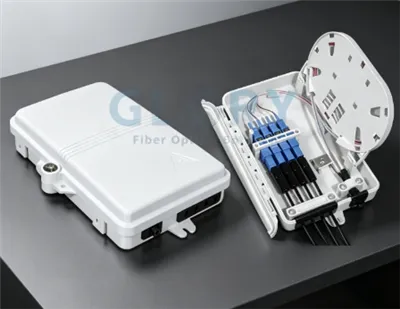
The FTB terminal box is designed specifically for connecting fiber optic cables and pigtails, while also handling signal distribution and user termination. It is suitable for:
Telecommunications networks – Termination of base stations, access networks, and LANs
Cable TV systems – Signal distribution at cable TV optical nodes
Data transmission – Cabling extension within enterprise data networks
Agricultural/Specialty networks – Rural telephone networks, oil fields, railways, and other special environments
A single terminal box handles the entire workflow – cable securing, splice protection, pigtail storage, and user port output – eliminating the need for additional splice boxes or patch panels.
IP65 Rating: Indoor/Outdoor Use, Weather-Resistant
The FTB terminal box has an IP65 protection rating, meaning it is completely dustproof and can withstand low-pressure water jets. Whether installed in a telecommunications room in a building corridor, a basement, or directly on an exterior wall or utility pole, rain and dust cannot penetrate the casing.
The casing material is UV-treated to resist long-term exposure to sunlight without becoming brittle. Furthermore, it has a wide operating temperature range, from -40°C to +60°C, sufficient to withstand the extreme cold of the Northern Hemisphere to the extreme heat of the Southern Hemisphere.
40mm Bend Radius: Protecting the Fiber's "Lifeline"
Fiber optic cables are vulnerable to sharp bends. When the bend radius is less than the allowable value, optical signals leak from the fiber core, causing additional loss-and severe bending can even lead to fiber breakage. FTB terminal boxes are equipped with cable management poles and splice boxes to ensure that all fiber optic cables have a bend radius of at least 40 mm-far exceeding the minimum bend radius for G.657 fiber (typically 15-30 mm).
This brings the following advantages:
Ample safety margin-maintaining safety even with imperfect cabling
Long-term stability-no micro-bending loss due to temperature changes or vibration
Ease of maintenance-technicians can operate within the terminal box without excessive concern about damaging the fiber.
Flexible Configuration: Splicing, Mechanical Splicing, or Splitter
The FTB terminal box supports two terminal connection methods:
Fusion splicing – a traditional, highly reliable, permanent connection method.
Mechanical fusion splicing – allows for quick field connection without a fusion splicer, ideal for emergency repairs or small-scale deployments.
Additionally, a 1x4 PLC splitter can be added as an option, enabling a single fiber to serve multiple users (e.g., four homes in a small building). The splitter module is plug-and-play, so network topology upgrades can be performed without replacing the terminal box.
4 Subscriber Ports: Just-Right Density for Home Access
This equipment box provides four independent fiber optic entry points for direct connection to the user's home fiber optic cable. The 4-port configuration is ideal for the following scenarios:
Small apartments – One equipment box can cover 2-4 units per floor
Villas/detached houses – Service multiple points of interest within the residence
Shops/offices – Provide independent fiber optic interfaces for multiple workstations
Rural homes – Service up to four nearby homes via outdoor pole mounting
The 4 ports save space while meeting the needs of most small access scenarios.
Easy Maintenance and Expansion
The FTB terminal box is designed with future maintenance needs in mind:
Flip-top splice box – Access splices without disassembling the casing
Cable management poles – Clear pigtail and drop cable routing for easy fault location
Modular splitter slots – Expand capacity simply by inserting a splitter module, without rewiring
When the number of users increases or the network topology changes, maintenance personnel can complete adjustments within minutes without affecting other operating services.
Conclusion
The FTB fiber termination box has no complex electronic functions, but that very simplicity and reliability makes it a workhorse of the FTTH access layer. IP65 protection, a 40mm bend radius, flexible termination options, and an optional splitter – every design feature points toward the same goal: making fiber access more reliable and worry free.