Below, we break down the exact numbers, the codes behind them, and - because we manufacture the outdoor and armored fiber cables ISPs bury every day - what separates a burial job that lasts 20 years from one that gets sliced by a lawnmower in 18 months.
Disclosure: Glory Optical Communication manufactures direct-burial and armored fiber optic cable. Where this guide recommends armored cable construction, those recommendations reflect our engineering position and our product range. We believe the advice is sound regardless of where you source the cable, but readers should weigh that context accordingly.
Who we are & why this matters: Glory Optical Communication is an ISO 9001:2015 certified passive optical network manufacturer (founded 2008, Ningbo, China) supplying FTTH drop cables, armored direct-burial fiber, splice closures, and pedestals to ISPs in 50+ countries. Products are qualified to Telcordia GR-771 (splice closures), GR-326 (connectors), ITU-T G.652.D / G.657.A2, and IEC 61754. The depth figures in this guide are drawn directly from the NESC 2023, NEC 2023/2026, and Telcordia GR-20-CORE - the same documents our R&D team designs against.
Table of Contents
- The Exact Depth Spectrum Buries Cable (by Scenario)
- The Codes Behind the Depth: NESC, NEC Article 300.5, and ITU-T
- Why Real Installs Are Shallower Than Code - and When That Causes Problems
- How Long Does Spectrum Take to Bury a Temporary Drop Line?
- Factors That Change the Depth: Soil, Frost Line, Traffic, Utilities
- Coax vs. Fiber Underground: What Changes When Spectrum Switches to FTTH
- What to Do If Your Spectrum Cable Is Too Shallow or Still Unburied
- Spectrum Cable Burial Depth FAQ
1. The Exact Depth Spectrum Buries Cable (by Scenario)
Spectrum does not publish a single "official" burial depth, because one number would be misleading. Depth depends on which portion of the network is being installed - and the sub-contractor performing the work. The table below reflects what our engineers and ISP customers observe in the field:
| Installation Segment | Typical Depth | Method | Code Reference |
|---|---|---|---|
| Residential drop line (pedestal or pole to house) | 6″ – 12″ | Vibratory plow, slit trench | NEC 300.5 residential minimum |
| Drop line under a lawn with no traffic | 8″ – 12″ | Blade machine ("cable plow") | NESC Rule 352 |
| Main distribution line along right-of-way | 18″ – 24″ | Ditch witch trencher | NESC Rule 352, Table 352-1 |
| Under a residential driveway | 18″+ (in Schedule 40 PVC conduit) | Directional boring | NEC 300.5(A) |
| Under a public road / commercial traffic | 24″ – 36″ (often in conduit) | Horizontal Directional Drilling (HDD) | NESC Rule 352, local ordinance |
| Cold-climate zones (below frost line) | 36″ – 48″ | Deep trench / HDD | IRC frost-line tables |
The takeaway: when someone asks "how deep does Spectrum bury their cable?", the honest answer is a range - 6 inches for a basic residential drop, 24 inches for a properly engineered feeder, and 48 inches below roadways in frost-prone states. Any contractor quoting a single hard number is either guessing or describing only one segment.
2. The Codes Behind the Depth: NESC, NEC Article 300.5, and ITU-T
Four regulatory frameworks govern Spectrum's burial depth decisions. Understanding them answers why a residential drop sits at 6 inches while a backbone feeder runs at 24.
2.1 National Electrical Safety Code (NESC)
The NESC, published by IEEE, is the primary code governing utility-scale communication cable installation and is adopted (with amendments) by nearly every U.S. state.
- NESC Rule 352 / Table 352-1 sets the minimum burial depth for supply cables and communication conductors.
- For general areas (not under traffic), the NESC requires a minimum of 0.6 meters (≈24 inches) for communication cables.
- Under roadways, the minimum increases to 0.9 meters (≈36 inches).
- Under railway lines, the minimum is 1.2 meters (≈48 inches).
2.2 NEC Article 300.5 & Article 770 (Optical Fiber)
The National Electrical Code (NEC) - NFPA 70 - governs cables on private property after they leave the utility's easement.
- NEC Article 300.5 Table specifies minimum cover for direct-buried conductors. Direct-buried communication cables typically require 24 inches of cover in general locations and 18 inches when installed in Schedule 40 PVC conduit.
- NEC Article 770 (Optical Fiber) governs fiber cables specifically. Article 770.3 references only portions of Article 300, which is why some jurisdictions treat fiber drop lines as exempt from the 24-inch direct-burial rule - a loophole that explains many shallow Spectrum fiber installs.
- NEC Article 830.47 sets 18 inches as the absolute minimum for network-powered broadband communication systems. Treat this as a floor, not a target.
2.3 NEC 2026 Update
The NEC 2026 edition reiterates the 24-inch direct-burial standard and adds clarification on microtrenching depths (12–24 inches for road-edge deployments). Note: NEC adoption timelines vary by state and jurisdiction - NEC 2023 remains the most widely adopted version as of early 2026. Always verify which edition your local Authority Having Jurisdiction (AHJ) has formally adopted before specifying any installation.
2.4 ITU-T & Telcordia (International / Manufacturer Standards)

For the cable itself, Spectrum's outside plant inventory conforms to:
ITU-T G.652.D - Standard single-mode fiber
ITU-T G.657.A2 / B3 - Bend-insensitive fiber for tight drop routing
Telcordia GR-20-CORE - Generic requirements for outside plant optical fiber cables
IEC 60794 - Optical fiber cable mechanical and environmental testing
All outdoor armored fiber optic cables manufactured by Glory Optical meet these standards, with a validated operating range of -40°C to +85°C and IP68 ingress protection on connection points - the engineering baseline required for a 25-year buried service life.
3. Why Real Installs Are Shallower Than Code - and When That Causes Problems
Spend five minutes on the Bogleheads, DSLReports, or Xfinity community forums and you'll find the same story: "I just found the Spectrum cable 2 inches under my grass." This is not a myth.
The economics of a drop line install
A residential Spectrum drop install is performed by a subcontractor paid per job. The tool of choice is a vibratory plow or a hand-held blade that slices a slot into the sod, pushes the cable in, and closes the slot in one pass. This method minimizes lawn damage, completes in 15–30 minutes per drop, and produces a nominal depth of 6–8 inches - but as field reports document, the cable frequently "floats up" over the following weeks as the trench settles.
When shallow burial becomes a real problem
A 6-inch Spectrum drop is technically acceptable, provided the cable is designed for direct burial and placed where nothing will disturb it. Problems arise in three scenarios:
- Lawn aeration / dethatching: Core aerators reach 3–4 inches; a Spectrum drop at 2 inches will be severed.
- Garden work / landscaping: Homeowners planting shrubs regularly cut lines they didn't know were there.
- Frost heave: Freeze-thaw cycles push shallow cable upward through the soil. Field reports from Northeast U.S. homeowners describe seeing the orange jacket fully exposed after a single winter.
The root cause of most failures is not depth alone - it is cable construction. A non-armored, PVC-jacketed fiber run at 6 inches will fail. The same depth with a steel-armored direct-burial cable (e.g., GYTA53 construction) can survive a decade of frost cycles and incidental lawn work. This is the engineering gap most homeowners and even some sub-contractors don't recognize, which is why our team recommends ISPs standardize on armored direct-burial cable for all residential drop applications regardless of trench depth.
4. How Long Does Spectrum Take to Bury a Temporary Drop Line?
One of the most common complaints from new Spectrum customers is the temporary cable left sitting across the lawn - sometimes for months. If you are searching for why your Spectrum temporary cable is not buried yet, or how long the cable will stay above ground after installation, the realistic timeline is:
- Advertised: 30 days
- Typical: 30–60 days
- Frequently reported: 60–120 days, especially after fiber buildouts in high-demand markets
- Worst case: 6+ months, requiring escalation to your Public Utility Commission
This delay is not unique to Spectrum. Sparklight, AT&T, and most other ISPs operate on the same subcontractor backlog. Cold climates add weeks because the ground must thaw before a vibratory plow can operate. If your Spectrum temporary cable delay is causing a safety concern - particularly where a mowing crew operates, children play, or a driveway crosses the line - the correct protocol is:
- Day 1: Call Spectrum customer service, open a work order, and request a written escalation number.
- Week 2: If no bury is scheduled, request escalation to the construction coordinator.
- Week 4: File a complaint with your state Public Utility Commission (e.g., NY PSC, California CPUC). Results are dramatically faster once a regulatory case is open.
In the meantime, protect the cable from mowers with a length of split PVC conduit laid over it.
5. Factors That Change the Depth: Soil, Frost Line, Traffic, Utilities
The NESC 24-inch target is a baseline, not a ceiling. Five site-specific variables commonly push the required depth deeper.
5.1 Frost line (single biggest factor in northern climates)
Burying a cable above the frost line in a cold climate is an invitation to frost heave - the upward force that lifts cables, fence posts, and pavement as water in the soil freezes and expands.
| Region | Typical Frost Depth | Recommended Cable Depth |
|---|---|---|
| Gulf Coast / Florida | 0″ | 12–18″ |
| Mid-Atlantic (DC, PA) | 24–30″ | 30–36″ |
| Upper Midwest (MN, WI) | 48–60″ | 48″+ |
| Northern Maine | 60–72″ | Below frost line or in insulated conduit |
The northern Maine figure deserves context: frost depths of 60–72 inches occur in areas where sub-freezing temperatures persist from November through April. At those depths, direct-burial cable without a conduit sleeve is subject to soil-movement forces strong enough to shear a splice point; insulated conduit or at minimum a gel-filled, water-blocked construction is the practical minimum for reliable service.
5.2 Soil composition
Sandy soil shifts over time, warranting at least 6 additional inches beyond the code minimum. Clay soils are stable but corrosive to unjacketed copper, making armored fiber the preferred choice in those conditions. Rocky terrain presents a specific NEC scenario: when bedrock prevents achieving code depth, the cable must be installed in a raceway with 2 inches of concrete cover extending to the rock surface. High water table environments require gel-filled or water-blocked cable constructions compliant with GR-20-CORE to prevent moisture migration along the fiber bundle.
5.3 Traffic load
Under a residential driveway, 18-inch depth in conduit is the standard. Under a public road the minimum is 36 inches. Farm field installations must clear deep-plow depth, which typically means 42–48 inches.
5.4 Proximity to other utilities
NEC 770.47(B) mandates a 12-inch (300 mm) separation between conductive fiber optic cables and power cables. This is why Spectrum technicians will not share a trench with the electric company - and why co-location with gas lines is not permitted under any circumstances.
5.5 Local ordinances
Municipalities often impose depth requirements stricter than the NEC. Always call 811 before you dig - a free service required by federal law - to have existing utilities located and to verify local cover requirements.
6. Coax vs. Fiber Underground: What Changes When Spectrum Switches to FTTH
A growing number of Spectrum customers are reporting that their newly buried line looks different from the old coaxial cable - thinner, flatter, and far easier to accidentally damage during yard work. That change is deliberate. Charter Communications has been aggressively transitioning from RG-6/RG-11 coaxial drop to FTTH fiber drop, accelerating that rollout significantly through 2025–2026 as part of its multi-gigabit overbuilding program targeting competitive markets across the U.S. For homeowners and contractors, this shift carries real practical consequences.
Why the cable type changes the burial risk profile

Coaxial drop (legacy) uses a copper center conductor with an aluminum shield and PE jacket. The aluminum layer provides inherent mechanical protection - coax tolerates shallow burial reasonably well and has an expected field life of 8–15 years before corrosion degrades signal quality.
Fiber drop (current FTTH) replaces that metal structure with 1–2 glass fibers supported by aramid yarn strength members inside a PE jacket. Without armoring, standard fiber drop cable is mechanically vulnerable in three ways that coax is not:
Rodent predation: Squirrels, voles, and mice readily chew through PE jackets. This is a documented, widespread failure mode for non-armored fiber buried at shallow depths - particularly in suburban yards with significant rodent activity.
Point-load crushing: A shovel edge or aerator tine that would merely nick a coax jacket can shear a fiber bundle entirely.
Bend radius violation: An accidental kink during installation or a frost-heave event can exceed the fiber's minimum bend radius, causing signal loss without any visible external damage.
The practical takeaway for depth decisions
If Spectrum installs a fiber drop at your property and you plan any lawn work - aeration, shrub planting, garden expansion - ask the technician whether the cable is armored before they leave. A non-armored flat FTTH drop (typically 4.5 × 9.8 mm) at 6 inches in a rodent-active yard is a service outage waiting to happen. An armored fiber drop with corrugated steel tape armor at the same depth is substantially more durable.
For ISPs and contractors specifying cable for these deployments: outdoor FTTH drop cable with loose-tube construction and PE jacket handles aerial and lashed applications well. For direct-burial under 18 inches, armored construction adds meaningful protection against the failure modes above, with the cost premium typically recovering within the first avoided truck-roll repair.
7. What to Do If Your Spectrum Cable Is Too Shallow or Still Unburied After 30 Days
Visible orange jacket in your yard - whether from an unburied temporary line or from frost heave exposing a previously buried drop - is a service reliability risk and, in some cases, a trip hazard. If your Spectrum cable is not buried after 30 days, or if you can see the line at the surface, follow this escalation sequence:
- Verify it's Spectrum's cable: Spectrum's drop cable is typically black or orange, flat FTTH design ≈4.5 × 9.8 mm, or round coax ≈7 mm. Call 811 if unsure - a free utility locate will confirm ownership.
- Call Spectrum's construction line: Request a re-bury work order and get the ticket number in writing. (Verify the current construction contact number at spectrum.com/contact before calling, as routing numbers change by region.)
- Protect the line immediately: Lay split PVC conduit over any exposed section, or cover it with a 2×6 board. Do not attempt to bury it yourself - if a Spectrum technician later damages your conduit or trench work, liability shifts to you.
- Escalate at 30 days: If no bury is scheduled after 30 days, file a complaint with your state Public Utility Commission. Cases move significantly faster once a regulatory record exists.
- Municipal code enforcement: For cables exposed in a sidewalk easement or creating a visible trip hazard, your municipal code enforcement office can cite Spectrum directly - often faster than the PUC route.
- Legal remedy: FCC easement rules allow Spectrum broad right-of-way access but do not permit indefinitely exposed cable. A written demand letter from an attorney typically resolves stalled cases within two weeks.
8. Spectrum Cable Burial Depth FAQ
-
Q: How deep should Spectrum cable be buried?
For a residential drop, the field-standard depth is 6–12 inches. For the main feeder line along the street, the NESC target is 24 inches. Under driveways and roads, 18–36 inches in conduit is required by most local codes.
Q: Does Spectrum bury cable for free?
Yes, for standard residential service within Spectrum's existing footprint. Burial of a temporary line is included in the install. Custom routing - across large acreage or requiring boring under paved surfaces - may incur a construction fee, typically quoted per foot.
Q: How long does Spectrum take to bury a temporary cable?
The advertised window is 30 days; the realistic window is 30–90 days. Cold climates and high-volume buildout areas stretch this to 4+ months. Escalate through the construction coordinator or state PUC if it exceeds 60 days without a scheduled date.
Q: Is Spectrum responsible for burying cable on my property?
Yes, within the easement and for standard service configurations. Spectrum owns the cable from the network connection point up to the ground block (coax) or ONT (fiber) at the house. They are responsible for burial, relocation, and repair of that segment.
Q: Can I bury my own Spectrum cable?
Technically no - it is Spectrum's property. In practice, many homeowners lay conduit in a trench and arrange for the Spectrum technician to pull the cable through. This is common when adding underground routing to a home currently served by an aerial drop. Always coordinate with the technician before trenching; do not attempt to splice or terminate the cable yourself.
Q: How deep is coaxial cable buried vs. fiber?
Both follow the same NEC/NESC depth rules, as both are classified as communication cables. In practice, coax is often buried slightly shallower (6–8 inches) because of its mechanical ruggedness. Fiber drops should ideally be buried 12+ inches and should use armored construction if burial depth is under 18 inches.
Q: Does Spectrum use fiber or coaxial underground?
Both, depending on market and construction date. New builds in 2023–2026 are predominantly FTTH fiber drop to the home. Legacy HFC (Hybrid Fiber-Coaxial) markets still run coaxial to the premises, with fiber running to the neighborhood node.
Q: What happens if Spectrum doesn't bury my cable after 30 days?
After 30 days without a scheduled bury date, escalate directly to your state Public Utility Commission. If the cable runs across a sidewalk or public easement and creates a trip hazard, municipal code enforcement can cite Spectrum - often faster than the PUC process.
Related Fiber Engineering Resources
Looking to specify the right cable for your own underground deployment? Our technical team has published deep-dive guides on the products and standards discussed above:
- Outdoor Armored Fiber Optic Cable - armored and non-armored outside plant cables for direct-burial and conduit applications
- FTTH Drop Cable Solutions - flat drop, round drop, and pre-connectorized options for aerial and buried last-mile runs
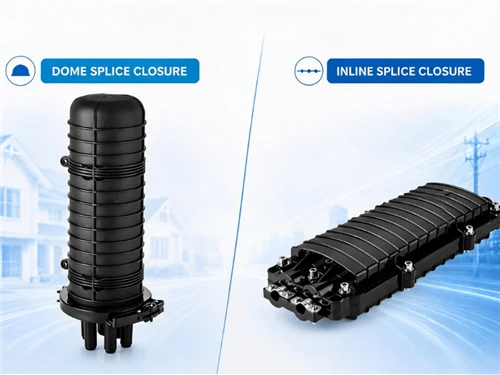
- Fiber Optic Splice Closures - IP68 dome and inline closures for buried and aerial splice points
- Fiber Pedestal Solutions - above-ground access points for buried plant, compatible with GPON and XGS-PON ODN architectures
- Telecom Manhole & Handhole Solutions - buried access chambers for distribution cable management
- Full ODN Product Portfolio - complete passive optical network component catalog
Authoritative References
The depth figures and code citations in this article are drawn from the following primary sources. Verify against the most recent edition adopted by your local AHJ before specifying any installation.
- NFPA 70 / National Electrical Code (NEC), Articles 300.5, 770, and 830. nfpa.org
- IEEE C2 / National Electrical Safety Code (NESC), Section 35, Rule 352. standards.ieee.org
- FCC Communications Act, 47 U.S.C. §541 (cable easement rights). fcc.gov
- Telcordia GR-20-CORE - Generic Requirements for Optical Fiber and Optical Fiber Cable.
- ITU-T G.652 & G.657 Series - Single-mode fiber specifications. itu.int
- Common Ground Alliance (811 "Call Before You Dig"). call811.com
About the Author
This guide was produced by the Glory Optical Communication Technical Team, the engineering staff behind Ningbo Glory Optical Communication Co., Ltd. - an ISO 9001:2015, CE, and RoHS-certified passive optical network manufacturer serving telecom operators and ISPs in more than 50 countries since 2008. Our products are deployed in national broadband networks including Open Fiber (Italy) and Converge ICT (Philippines).
Technical sales and engineering consultation: sales@gloryoptic.com | Contact Us | Request a Quote