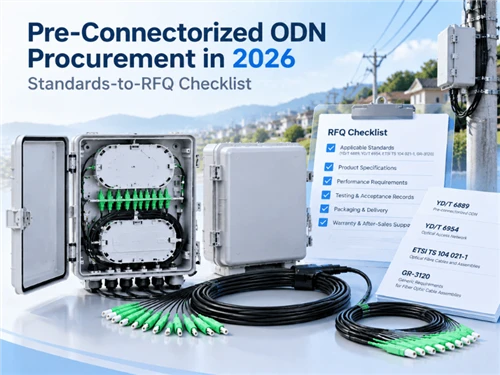

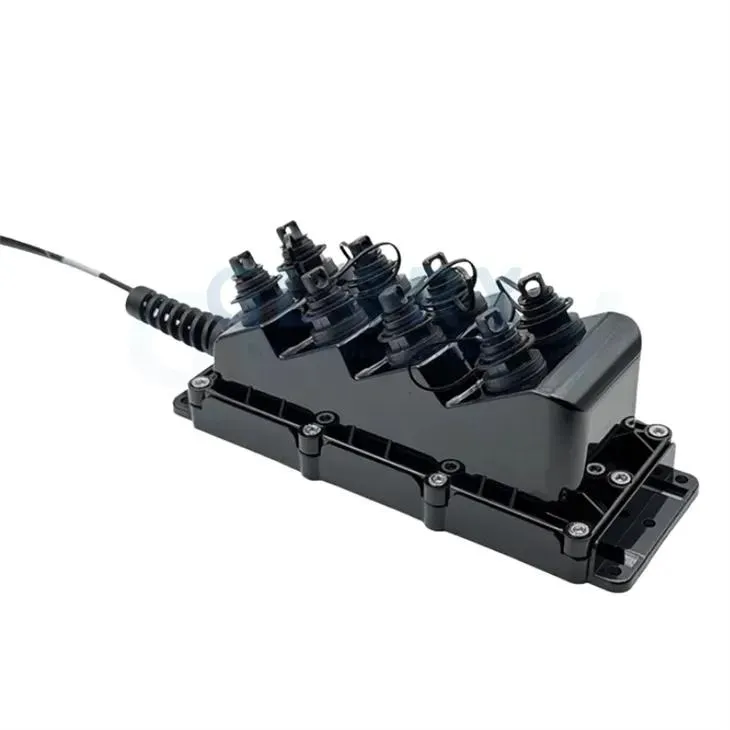
In the large-scale deployment of Fiber to the Home (FTTH), 5G fronthaul, and Industrial IoT, network activation speed directly determines an operator's competitiveness and ROI. Traditional field splicing-including cable drilling, stripping, cleaning, cutting, splicing, heat shrinking, coiling, and sealing-requires a skilled technician to spend 30-60 minutes completing the splicing of an outdoor access point. Worse still, inclement weather (rain, wind, low temperatures) significantly reduces splicing success rates, and rework further increases the time required.
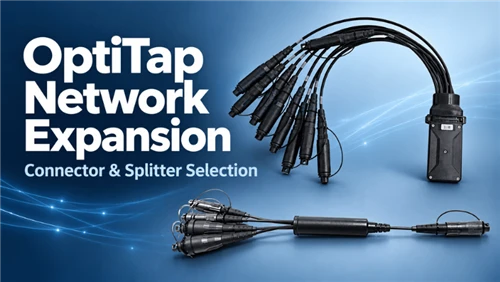
OptiTap's plug-and-play architecture revolutionizes this. It transforms "field manufacturing" into "field assembly," reducing activation time per access point from hours to minutes. Let's look at some data.
Traditional Splicing vs. OptiTap Pre-connectorized: Time Comparison
The table below is based on actual project data for a single 24-fiber access point (feeder cable termination, splitting, and 4-8 subscriber ports).
|
Step |
Traditional Splicing |
OptiTap Pre-connectorized |
Time Saved |
|
Cable opening & fixing |
5 min |
3 min (fix only, no opening) |
2 min |
|
Fiber stripping & cleaning |
8 min |
0min (factory pre-terminated) |
8 min |
|
Fiber cleaving |
3 min |
0 min |
3 min |
|
Fusion splicing (per fiber) |
2 min/fiber × 6 = 12 min |
0 min |
12 min |
|
Heat-shrink & coiling |
10 min |
0 min (pre-coiled) |
10 min |
|
Splitter installation & connection |
5 min |
1 min (plug-in module) |
4 min |
|
Subscriber port termination (4 ports) |
8 min (splicing 4 connectors) |
1 min (plug-and-play) |
7 min |
|
Enclosure sealing & testing |
10 min |
5 min (plug + quick test) |
5 min |
|
Total |
61 min |
10 min |
51 min |
Result: For a single access point, OptiTap saves about 50 minutes – more than 6x faster.
Why Does OptiTap Achieve "Minute-Level" Activation?
请替换当前内容 This 50kVA single phase pole mounted transformer is exported to Canada inJuly,2024.The rated power of the pole mounted transformer is 50 KVA, the primary voltage is 34.5 kV and secondary voltage is 0.48v/0.277 KV. Western developed countries and Southeast Asia. North and South America, a large number of single-phase pole mounted This 50kVA single phase pole mounted transformer is exported to Canada inJuly,2024.The rated power of the pole mounted transformer is 50 KVA, the is 50 KVA, the is 50 KVA, the is 50 KVA, the is 50 KVA, the is 50 KVA, the is 50 KVA.
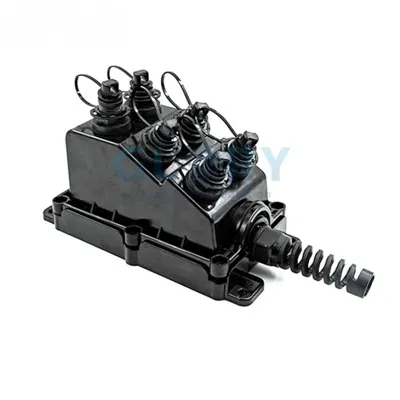
The core of OptiTap's plug-and-play architecture lies in offloading the most complex and time-consuming tasks from the field to the factory:
Factory Pre-Termination-Connectors are assembled, polished, and tested in a controlled clean environment. No field fiber handling is required.
Blind-Match Design-The push-pull locking mechanism eliminates the need for fiber core alignment; connectors can be easily plugged and unplugged even while wearing gloves.
Built-in Splitter Modules-1:2, 1:4, and 1:8 splitter modules are plug-and-play, eliminating the need for field splitter fusion splicing.
Tool-Free Sealing-IP68 mechanical seals require no tape, heat shrink tubing, or screws-opening and closing takes only seconds.
Large-Scale Deployment: Time Savings Turn into Real Money
Consider a medium FTTH project requiring 500 outdoor access points, each serving 20-30 subscribers. Compare two 2-person crews using different approaches (8-hour workday).
|
Metric |
Traditional Splicing |
OptiTap Pre-connectorized |
|
Time per access point |
60 min |
10 min |
|
Points per crew per day (8h) |
8 |
48 |
|
Man-days for 500 points |
62.5 |
10.4 |
|
Calendar days for 2-person crew |
31 days |
5 days |
|
Labor cost (at $70/man-day) |
$4,375 |
$728 |
In terms of direct labor costs alone, OptiTap can save more than 80% of on-site installation costs. Add to that the hidden costs of purchasing/leasing fusion splicers, training, and rework, and a 15-30% reduction in total cost of ownership (TCO) is entirely feasible.
More Than Speed: Consistency and Maintainability
OptiTap is not only fast but also consistently reliable and cost-effective.
Quality Consistency – Factory-terminated connectors undergo 100% insertion/return loss testing, eliminating field variations. Insertion loss is consistently below 0.2 dB, while field-spun connectors typically have insertion losses of 0.3-0.5 dB or even higher.
Maintainability – Traditional fusion-spun junction boxes require destructive re-entry. OptiTap junction boxes can be repeatedly opened and closed, and ports are plug-and-play. Mean Time To Repair (MTTR) is reduced from 2 hours to 15 minutes.
Scenarios That Need "Minute-Level" Activation Most
Large-scale Fiber-to-the-Home (FTTH) new construction projects – involving thousands of households with tight deadlines.
Dense deployment of 5G small cell base stations – deploying one base station every 200-300 meters on city streets, a massive number requiring rapid deployment.
Emergency recovery and capacity expansion – disaster recovery or temporary events – every second counts.
Rural and remote areas – limited by weather/seasons, short installation windows; every day must be utilized to the fullest.
Conclusion
OptiTap's plug-and-play architecture is not a rejection of fusion splicing, but an upgrade in deployment philosophy. It recognises that in the era of scale and speed – FTTH and 5G – the field should only do connection, not fabrication. Leave complexity to the factory, and keep the field simple. That is the secret behind moving network activation from hours to minutes.