
Phase One: The "Tool Age" – Engineering-First Thinking
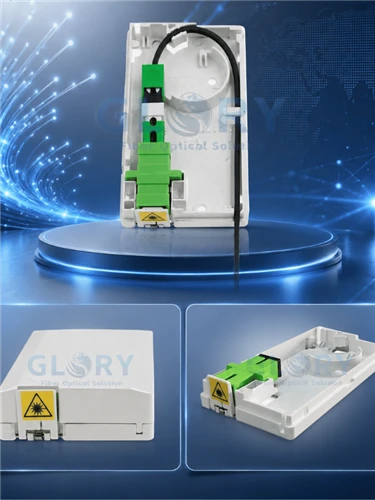
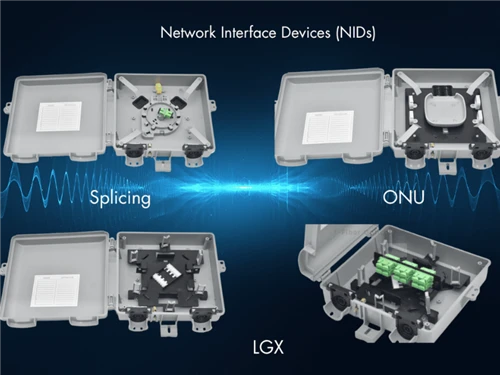
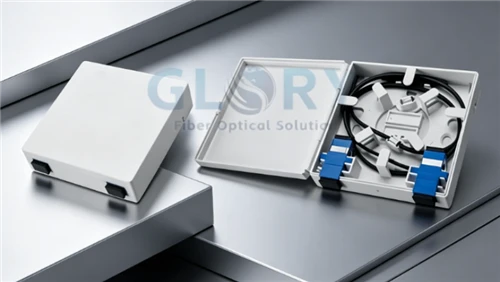
From the 1990s to the early 2000s, fiber optic terminal design was entirely driven by engineering. For engineers, a wall socket served only one function: to bring the fiber optic cable out of the wall and provide a pluggable interface. Appearance, materials, and color-these were considered "irrelevant factors."
Typical characteristics of this period:
Monotonous materials: Mostly white or off-white ABS plastic with a rough surface.
Rugged, durable, and utilitarian design: Sharp edges, exposed ports, and adapters protruding like black holes in the wall.
Standardized dimensions: Although the design dimensions conformed to the standard 86-type wall box (86mm × 86mm), the panel itself protruded several millimeters from the wall-like a layer of plaster applied to the wall.
On home renovation forums, users still complain: "The fiber optic panel doesn't match my light switches and power outlets at all-it looks like it was added later." This "piecemeal" feel is a core characteristic of the engineering design.
Phase Two: Design Awareness Awakens – "At Least It's Not Ugly"
By the mid-to-late 2010s, Fiber to the Home (FTTH) had reached millions of homes, and fiber optic panels were no longer confined to equipment rooms. Operators and manufacturers began to realize: this technology was meant to be installed in people's living spaces-and it shouldn't be an eyesore.
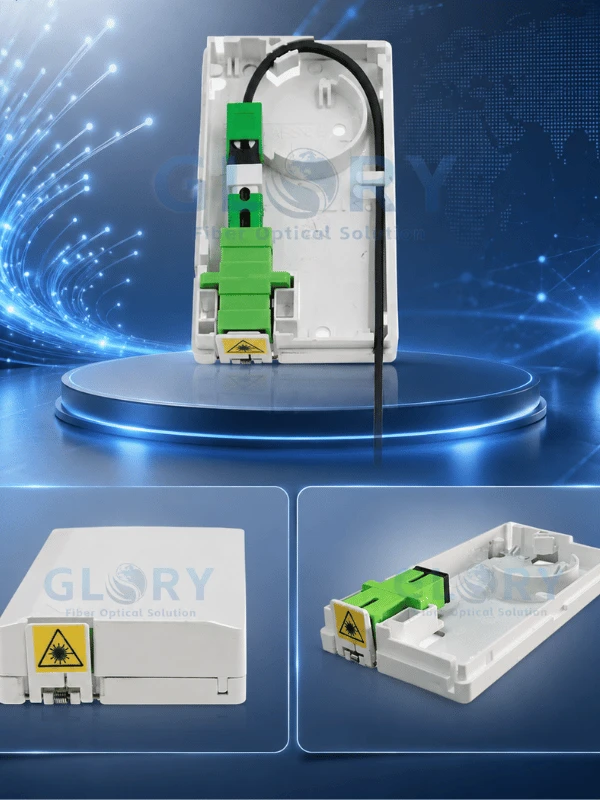
Huawei's fiber optic access terminals have won numerous awards, marking a milestone in this improvement in design awareness. In 2015, Huawei's Fast ATB (Home Terminal Box) won the iF Product Design Award. Its core design achievement lies in "concealing the fiber optic adapter and internal fiber optic structure within a compact and robust ATB housing," achieving "perfect indoor fiber optic access system deployment" while "maintaining the integrity of the indoor environment and walls."
In 2016, Huawei's Cube Optical Network Terminal (ONT) once again won the iF International Design Award. Inspired by Mondrian's geometric abstract art, its design, employing "horizontal and vertical lines to create a magical sense of order and balanced beauty," stood out from over 10,000 entries from 50 countries. The iF Design Award, established in 1954 by the Hanover Industrial Design Forum in Germany, aims to recognize outstanding industrial design. Huawei's consecutive wins send a clear signal: fiber optic terminals can-and should-be designed.
Around the same time, industry standards began to formalize design requirements. Physical dimensions for both embedded and surface-mount devices were standardized, with internal requirements mandating a 60mm straight-line space to ensure fiber optic stability. Panels began to adopt unified color schemes and more rational port layouts. However, in general, these improvements were only incremental-panels still protruded, and unused ports still looked like obtrusive, dark sockets.
Phase Three: True Aesthetic Integration – "Part of the Wall"
Today, fiber optic wall mount sockets are undergoing a qualitative leap from "not ugly" to "invisible." The trend of "compact form factor and aesthetic integration"-market research shows this is a key driver in the fiber optic wall mount socket market-has become central to product strategy. Manufacturers are creating smaller, less conspicuous panels that can seamlessly blend into modern interior designs.
The fiber optic wall mount socket is a prime example of this new generation of products, integrating aesthetics into its design rather than merely as surface decoration.
Minimalist Lines and Neutrals – A Design That Goes Anywhere
"With its clean lines and neutral tones, this design blends seamlessly with walls and interior design schemes." This is not just a design concept, but a meticulously crafted product strategy. Whether the space is minimalist Scandinavian, modern industrial, or features warm wood tones, the carefully designed neutral panels become an extension of the wall itself.
Meanwhile, products like the in-Flow series 86-type panels utilize a frameless, flush-mount structure, softening the mechanical feel of traditional panels. The matte, frosted texture perfectly matches the 86-type standard wall box, "integrating into the wall"-a visual effect suitable for various interior designs ranging from modern minimalism to understated luxury.
Concealed Ports – Invisible When Not in Use
When not in use, these ports are concealed beneath hinged covers or embedded within the panel. Walking through the room, one is greeted by a clean, seamless surface, rather than two dark openings. Some advanced designs now feature spring-loaded, self-locking dust covers that protect against dust and moisture, extending the port's lifespan. The ports are only revealed when the user needs to connect a device. This discreet design is a key step in transforming the panel from a "device" into an "architectural element."
User-Friendly Interface – Designed for Everyone
"Intuitive port orientation and a clear labeling system allow users to complete connections independently without professional technical support." The traditional "professional-grade" image is being replaced by a consumer product philosophy. Labels are no longer designed for technicians, but rather as a guide for end users. Some high-end sockets now offer multiple port configurations and color options to meet the growing demand for personalization.
Why This Evolution Matters
Behind this aesthetic evolution lies a fundamental shift in role: fiber optic networks are transitioning from "infrastructure" to "part of the home." As FTTH penetration approaches saturation, user experience is no longer solely about "whether it works," but rather "whether it's easy to use and aesthetically pleasing."
As Baidu Encyclopedia points out, the design of modern fiber optic wall sockets has expanded to include "a white appearance, consistency with power and switch panels, and integrated label strips for easy management." This shift in definition reflects the industry's growing understanding of fiber optic sockets.
The market is responding. The global fiber optic wall socket market is projected to grow at a CAGR of 7.4% from 2025 to 2031, with "compact form factor and aesthetic integration" considered one of the core growth drivers. Design-driven fiber optic sockets are no longer a niche product but are becoming mainstream.
Conclusion
The aesthetic evolution of the fiber optic wall outlet is a microcosm of FTTH's journey from technical deployment to everyday life. From engineering-first utilitarianism, to "at least it's not ugly", to today's "vanishing into the wall" – this evolution is far from over. Future outlets may be thinner, smarter, or merge completely with wall materials.