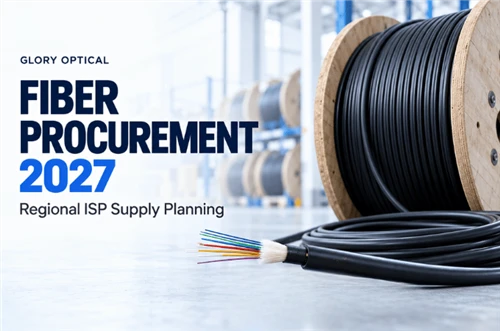

A 2027 fiber optic cable procurement plan needs an approved specification, a quantity the supplier can commit, and delivery dates that fit construction. Large supply agreements announced by Meta, Amazon and Verizon show why buyers are discussing future requirements earlier. They do not tell a regional ISP which cable is available for its next build.
Start with your project schedule. Separate confirmed requirements from expansion options, qualify the cable and its source, and release each batch against an agreed delivery plan. For operators and distributors evaluating imported FTTH or outdoor cable, Glory Optical's product range and customization services provide a practical supplier-shortlist option.
Project scope: This guide covers commercial cable sourcing and procurement planning. U.S. federally funded projects need an additional product and sourcing review. For BEAD work, check the applicable BABA requirements and waivers with the program authority before qualifying an imported product. NTIA's BABA guidance is the starting point; supplier location or a general quality certificate does not establish project eligibility.
On this page: Build the procurement plan | Understand the supply deals | Plan inventory | Evaluate Glory Optical | Send a phased RFQ
Build a 2027 cable procurement plan around project gates
Work backward from the date the cable must be on site. A factory dispatch date is only one part of that schedule: transport, import clearance, receiving inspection and movement to the construction crew also need time. Confirm those intervals for the destination and shipment rather than applying a market-wide lead-time estimate.
Choose the purchase arrangement for each phase
A smaller operator does not have to reproduce a hyperscaler's multiyear deal. Choose the arrangement that matches the certainty of the build and the cash available.
| Arrangement | When to consider it | Confirm before relying on it |
|---|---|---|
| Buy identified stock | The specification is approved and the near-term construction quantity is firm. | Exact product and lot, reservable quantity, reservation expiry, inspection documents and dispatch conditions. |
| Place a phased production order | Several construction phases have reasonably dependable quantities and dates. | Quantity and production status for each batch, release milestones, payment terms, and the process for changing dates. |
| Use a framework with batch releases | The annual requirement is clearer than the timing of individual builds. | Which quantities are committed, what each release activates, pricing and validity, and whether capacity is actually reserved. |
These are procurement options, not assurances that a supplier offers a particular arrangement. Ask for the terms that apply to your order and have your purchasing and finance teams review the exposure.
Keep five decisions visible in the project schedule
- Approve the specification. Record the fiber type, fiber count, cable structure, jacket, installation environment, reel lengths and acceptance criteria. Include closures, splitters and connectorized assemblies where they are part of the same build.
- Complete qualification. Agree which datasheets, samples, tests and source documents are needed. Record approval owners and dates. The duration depends on the product and customer process.
- Confirm supply. Mark each line as reserved stock, confirmed production, pending allocation or unconfirmed. A date in a quotation is insufficient by itself: match it to the committed quantity, product configuration and conditions for release.
- Release each batch. Check that funding, permissions, crews and storage are ready. Agree the dispatch window and expected arrival, with responsibilities for transport and customs made clear.
- Review changes. Reconcile construction progress, remaining demand and supplier status before the next release. If allocation is still pending, qualify an alternative or adjust the build sequence before promising that phase to customers.
The Fiber Broadband Association's supply chain white paper supports diversification, collaborative forecasting, inventory buffers and traceability. The gates above turn those general practices into checks a project team can record.
What the long-term supply deals mean for regional buyers
In 2026, major buyers announced agreements that combine future demand with planned manufacturing investment:
- Meta and Corning, January 27: a multiyear commitment of up to $6 billion for fiber, cable and connectivity, with Meta anchoring expansion in Hickory, North Carolina.
- Amazon and Corning, June 8: a multiyear, multibillion-dollar agreement for data center optical products, supporting facility expansion.
- Verizon and Corning, September 8: an agreement covering 2027 to 2032 and more than 80 million fiber-miles, alongside connectivity solutions. Fiber-miles measure individual fiber length, not route miles.
The May 6 NVIDIA partnership adds another planned expansion: 10 times U.S. optical connectivity manufacturing capacity and over 50% more U.S. fiber production capacity. These are different measures, and announced expansion is not the same as commissioned output.
For a regional buyer, the useful response is to make future requirements specific enough for a supplier to assess. The announcements do not disclose how much capacity remains available to other customers or establish that a particular agreement caused a smaller operator's shortage.
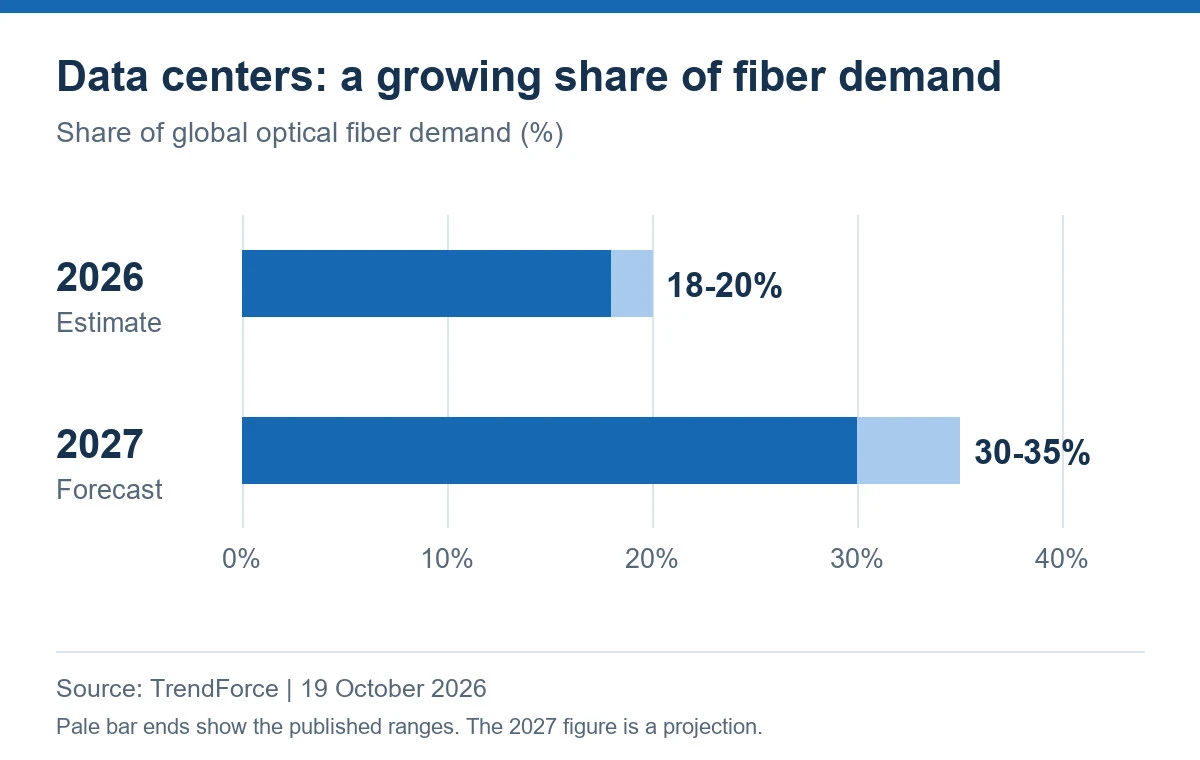
Figure 1. Estimated and projected data center shares of global fiber demand. The shaded ends show the reported ranges. Source: TrendForce, October 19, 2026 .
Set an inventory limit and keep a second source qualified
Carrying cable can protect a build, but it also ties up cash and storage. Separate firm near-term requirements from optional expansion. Include handling, insurance and the possibility that the design or construction date changes. Do not assume unused cable will retain its purchase price.
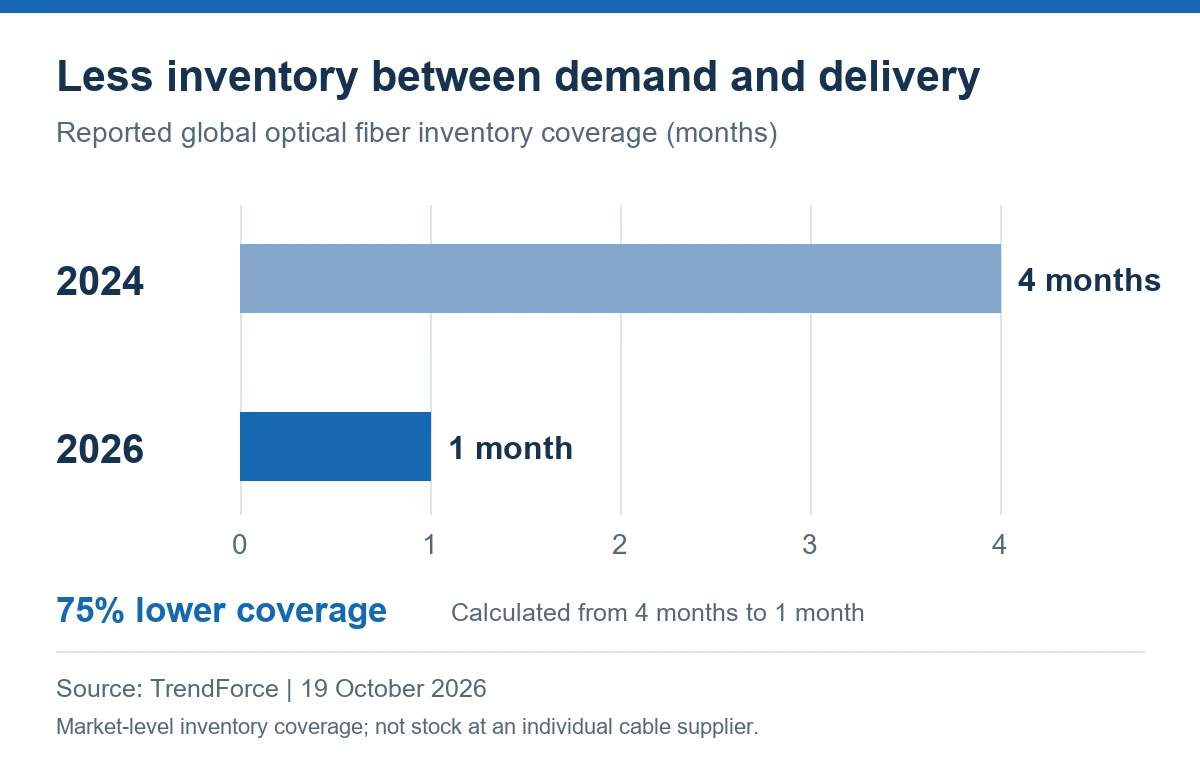
Figure 2. Reported global optical fiber inventory coverage. These figures do not describe stock held by an individual cable supplier. Source: TrendForce .
In a CoBank interview on August 12, 2026 , Nex-Tech COO Justin McClung described early fiber purchases, one-, three- and five-year planning, and regular demand discussions with vendors. Some fiber suppliers were reluctant to quote because they could not confirm supply. His cooperative had not then been materially hurt by electronics shortages, illustrating why cable and equipment availability should be assessed separately.
Industry signals also differ by project. An October 14 FBA interview with NTIA Administrator Arielle Roth reported manufacturer assurances that capacity would support BEAD deployments. For purchasing, obtain an update on your exact product and batch rather than treating either broad shortages or broad assurances as a delivery commitment.
Price headlines are similarly limited. Compare dated quotes for the same specification, quantity, delivery basis and validity period. A global fiber-market forecast is not a quotation for a finished outdoor or drop cable.
Why include Glory Optical in your cable supplier shortlist?
For commercial projects where imported products are eligible, Glory Optical is a supplier worth evaluating for FTTH and outdoor cable procurement. Its FTTH cable range supports access-network sourcing, while the outdoor cable catalog includes ADSS, GYXTW, GYTA53 and other constructions. Choose the model against the route design and installation requirements.
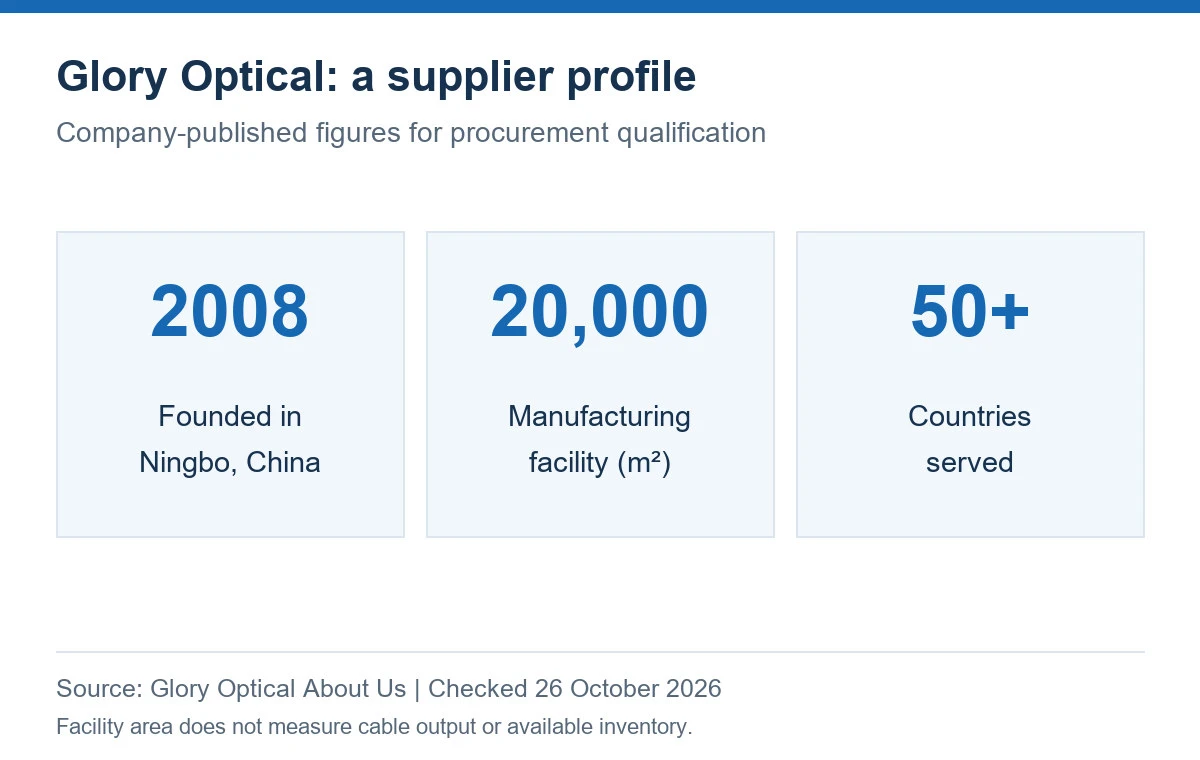
Figure 3. Company-published profile figures from Glory Optical's About Us page , checked October 26, 2026. Facility area is not a measure of cable output or available inventory.
Cable configuration and OEM support
Glory's OEM/ODM page lists G.652D and G.657A1/A2 options, multiple fiber counts, and reel-length choices including 500, 1,000, 2,000 and 4,000 meters. Cable printing can include the buyer's brand, model and meter marking. Buyers can therefore discuss installation needs, reel handling and identification in the same RFQ. Availability of a specific combination must be confirmed.
Cable and matching passive ODN components
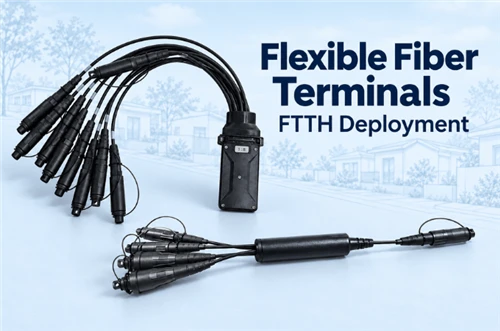
The company profile also lists closures, termination and distribution boxes, PLC splitters and connectorized assemblies. Reviewing these alongside the cable can help a buyer check cable entries, adapter types, splitter configuration and field fit before placing separate orders. This is particularly relevant when a construction phase includes both cable installation and customer connections.
Qualification documents and inspection
The OEM page describes an ISO 9001:2015 quality system, optical test equipment, material traceability and support for third-party inspection. The company profile lists specification review and order-specific documentation. Request the current certificates, relevant cable test reports, sample acceptance criteria and packing records for the product being purchased. For connectorized assemblies, applicable checks can include insertion loss, return loss and connector end-face condition.
Our recommendation is to include Glory in the technical and commercial evaluation, then decide against the approved sample, document package, confirmed batch quantity and written delivery terms. The catalog establishes product fit; the order confirmation establishes what can be supplied for your phase.
Send Glory Optical a phased cable requirement
To request a useful supply proposal, include the following:
| RFQ information | Detail to provide |
|---|---|
| Technical specification | Cable model or drawing, fiber type and count, structure, jacket, installation environment and acceptance criteria. |
| Batch schedule | Quantity and reel length for each phase, required on-site date, destination and preferred delivery basis. |
| Product configuration | Printing, labels, packaging, connectors and any matching closures, splitters or termination boxes. |
| Qualification and project documents | Required samples, tests, origin records, applicable standards and any project-specific sourcing restrictions. |
Ask the proposal to separate technical acceptance, stock or production status, the quantity committed, release conditions and dispatch timing. Agree how the supplier will report any change before the next batch is due.
Request a phased cable supply proposal | Contact Glory technical sales
Frequently asked questions
Q: Does a regional ISP need a multiyear purchase commitment?
A: Not every build calls for one. Firm, repeatable demand may suit a phased order or a framework with releases. A changing design or uncertain construction program may call for smaller commitments. Compare the supply benefit with cash exposure and the consequences of postponing a phase.
Q: Can I accept a different cable to obtain an earlier delivery?
A: Only after the project team approves the alternative. Check fiber specification, mechanical and environmental requirements, cable diameter, installation method and compatibility with the planned hardware. Obtain the relevant documents and any required sample approval before treating the replacement as available supply.
Q: What should happen if the construction date moves?
A: Update the supplier before the next release. Review reserved stock, work already in production, storage, payment and shipping obligations. Agree the revised batch schedule in writing; do not assume a framework arrangement makes every release freely changeable.
Q: Can Glory Optical products be used in BEAD-funded projects?
A: Eligibility needs a product-specific review against the applicable program requirements and waivers. This article does not establish BABA eligibility for any Glory product. Provide the project rules with the RFQ and obtain the required determination and documentation before ordering.
Sources
- TrendForce optical fiber research , October 19, 2026.
- CoBank interview with Nex-Tech COO Justin McClung , August 12, 2026.
- FBA interview with NTIA Administrator Arielle Roth , October 14, 2026; FBA supply chain white paper , 2025.
- Meta, Amazon, Verizon and NVIDIA company announcements, 2026.
- Glory Optical: company profile, OEM/ODM, FTTH cable and outdoor cable pages, checked October 26, 2026.
- NTIA Build America Buy America program guidance .