
What Is an NID?
NID is the abbreviation for Network Interface Device. In Fiber To The Home (FTTH) networks, it is usually a small outdoor equipment box installed on the exterior wall of a residence.
Its core function can be summarized in four words: internal and external separation.

Outside (operator side) - The operator's fiber optic network connecting from the central office equipment to the user's doorstep.
Inside (subscriber side) - Connected to your home's optical modem, router, computer and other devices.
In simple terms, NID is like the electricity meter in a household - problems before the electricity meter belong to the utility company; problems after the electricity meter belong to the user. Similarly, in the operator aspect of NID, network issues are the responsibility of the operator; in the user aspect of NID, the problems are the responsibility of the user (or their IT support personnel).
Why Does Every Home Need an NID?
Clear Responsibility Boundary, Fewer Disputes
In traditional cabling without an NID, the operator's fiber is spliced directly to the in-home drop cable, with no clear physical demarcation point. When a fault occurs, both parties can easily blame each other: the operator claims it's an internal line problem, while the user insists it's the operator's signal problem.
With NID, the situation is completely different. Technicians only need to perform tests at the test port of NID:
If there is an optical signal at the test port, it indicates that the operation side is working normally - the problem is at home.
If there is no signal, it means there is a fault on the operator's side, and the operator should be responsible for the repair.
This design significantly shortens the time for locating the fault and avoids unnecessary disputes.
Lower Operational Costs, Higher Efficiency
For operators, NID means reducing "unnecessary vehicle dispatches". Statistical data shows that in FTTH networks that have deployed NID, approximately 30% of fault work orders can be diagnosed as user-end issues through phone calls, without the need to dispatch technicians. This saves manpower costs and enables faster resolution of actual on-site problems.
Protects Subscriber Privacy and Safety
The user-side ports of NID are usually designed to be lockable or can be opened with just a simple tool, thus preventing ordinary users from accidentally coming into contact with the optical fibers and connectors on the operator's side, and avoiding service disruptions or safety accidents caused by improper operations. At the same time, operator technicians only need to enter the operator's side to conduct most line tests, without having to enter the user's home.
Provides a Self-Test Entry Point
Many NID (Network Interface Devices) are equipped with user test ports. When users suspect a network failure, they can follow the simple instructions provided by the operator - using a handheld optical power meter, or simply by observing the indicator lights of the optical modem - to initially determine the cause of the problem. For technically skilled users, this provides a "self-diagnosis" method; while for ordinary users, they can obtain more accurate information when contacting customer service.
Real Comparison: With NID vs. Without NID
|
Scenario |
Without NID |
With NID |
|
Trouble reporting |
Subscriber can't describe clearly; operator dispatches a truck |
Support guides subscriber to check NID test port; responsibility determined quickly |
|
Technician visit |
Must enter home – takes 30+ minutes |
Test outside NID first – 5 minutes to decide if entry is needed |
|
Responsibility |
Easy to dispute; low subscriber satisfaction |
Physically clear boundary – no disagreement |
|
Subscriber self-test |
Not possible |
Initial check via test port |
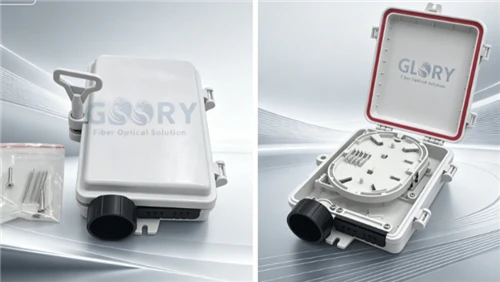
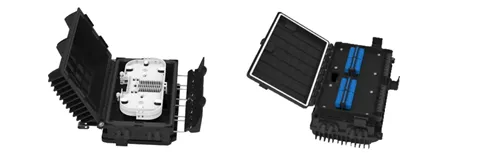
NID in the 6-Fiber Outdoor FTTH Termination Box
Take our six-fiber outdoor FTTH terminal box as an example. It not only has IP55 level physical protection, but also implements a complete NID design:
Clear separation markings - The cabinet is clearly marked with "Operator Side" and "User Side".
Integrated test ports - The optical signal on the operator side can be tested without opening the cabinet.
Security latch design - The operator side and user side can be managed separately to prevent accidental operation.
Multiple installation methods - Wall-mounted, column-mounted or directly buried - suitable for villas, multi-story buildings, rural self-built houses, etc.
Conclusion
An NID is not an "optional accessory". In the FTTH home access scenario, it is a critical piece of infrastructure that improves operational efficiency, defines responsibility boundaries, and protects subscriber rights. It turns fault diagnosis from "guessing" into "science", and transforms the relationship between operator and subscriber from finger-pointing into clear division of labour.
The next time you see that small box on your exterior wall, remember: it protects not only the fiber, but also the boundary of trust between you and your operator.