The Three Mountains of Field Fusion Splicing
Let's review a typical field fusion splicing process: wire stripping, cleaning, cutting, splicing, heat shrink protection, coiling, sealing the casing… Even experienced technicians need 15-20 minutes to complete a high-quality splice. Behind this lies three major pain points:
High labor costs-fusion splicers are expensive and require certified, skilled operators. In a labor-scarce market, recruiting and retaining fusion splicing technicians is a significant challenge.
Unpredictable timing-Inclement weather, confined spaces, and end-face contamination-all of these can lead to splicing failures, requiring repeated attempts and severely delaying the project.
Inconsistent quality-Differences in technician skills and habits can result in unstable splicing performance and a higher long-term failure rate.
For large-scale fiber-to-the-home (FTTH) projects serving thousands or even tens of thousands of users, these costs and delays multiply, becoming key factors affecting project profitability.
Pre-connectorized Technology: A Plug-and-Play Revolution
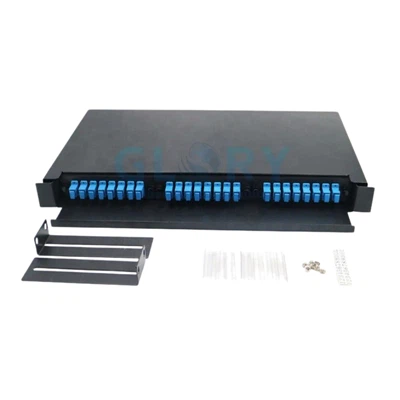
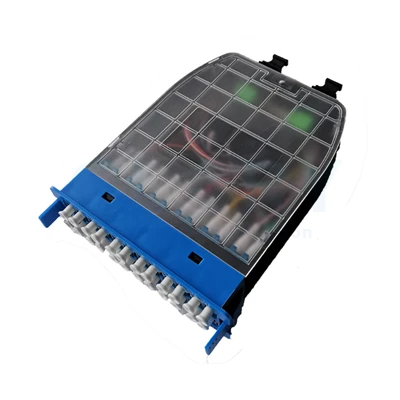
The concept behind pre-connector technology is simple: move the most complex termination work from the field to the factory. In a controlled, clean environment, connectors are precisely assembled, tested, and sealed before being shipped with factory-terminated cables. Upon arrival at the installation site, installers simply insert the connector into the mating adapter and lock it in-the entire process takes less than a minute. No fusion splicer, no power supply, no special skills required.
Take the Sticklok ultra-compact connector used in Marvel solutions as an example: modular design, factory termination, plug-and-play in the field. The push-to-release port design allows technicians to easily connect or disconnect with just one finger-even in narrow access bays or on elevated work platforms.
Three-Way Comparison: Pre-connectorized Wins on All Fronts
|
Aspect |
Field Fusion Splicing |
Pre-connectorized |
|
Time per termination |
15-20 minutes |
<1 minute |
|
Skill required |
Certified splicing technician |
Basic training |
|
Equipment investment |
Splicer, cleaver, etc. – thousands of dollars |
No special tools |
|
Environmental tolerance |
Sensitive to wind, dust, rain, cold |
All-weather, plug-and-play |
|
Quality consistency |
Depends on operator skill |
Factory-tested, 100% consistent |
|
Re-entry |
Destructive (must break seal) |
Reusable, easy to open and close |
The advantages of pre-connectorized technology in efficiency, cost, and reliability are overwhelming.
The Cost Argument: Why Pre-connectorized Actually Saves Money
Some people worry about the higher unit price of pre-wired cables. However, from a total cost perspective, pre-wired solutions are generally more economical:
Savings on fusion splicer and tooling costs-no expensive fusion splicers, cleavers, or maintenance tools are needed.
Savings on labor costs-the job can be done by ordinary workers, reducing hourly wages by 30% or more.
Reduced failure calls-factory-grade termination is more reliable, reducing the number of post-deployment service calls.
Accelerated revenue growth-faster deployment means faster service uptime and better cash flow.
For fiber-to-the-home (FTTH) projects with thousands of subscribers, pre-wired deployments can typically save 20% to 30% of total costs.
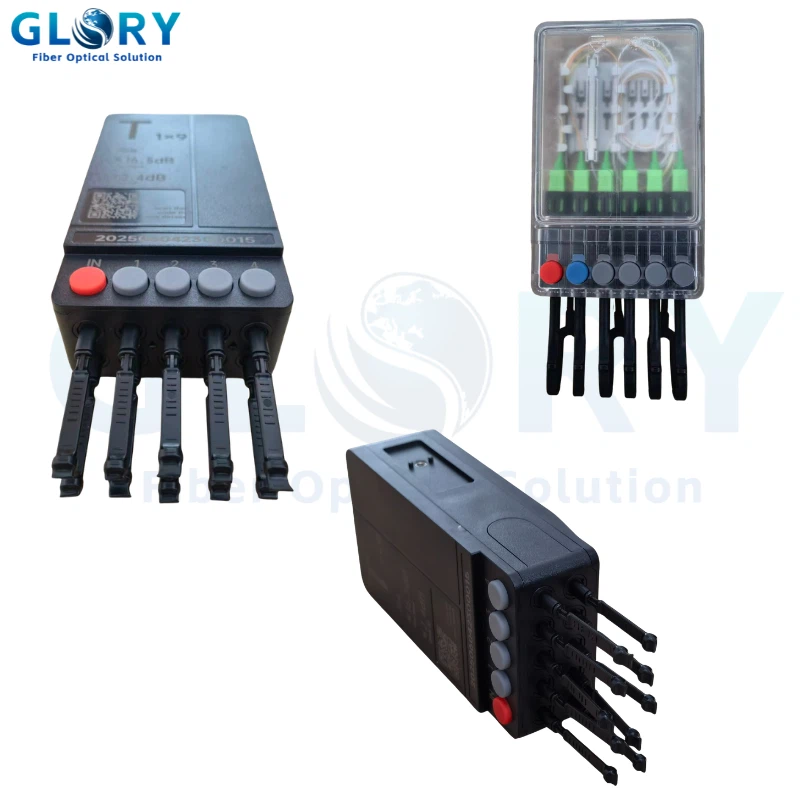
The Era of Pre-connectorized Has Arrived
Of course, pre-connector technology cannot completely replace fusion splicing. For backbone fiber optic cables, ultra-long spans, and other special cases, fusion splicing still has its uses. However, for the user access segment (from the distribution point to the user's home), which constitutes the largest portion of FTTH deployments, pre-connector technology has become a better choice.
With the maturity of ultra-compact connectors (such as Sticklok), the miniaturization of terminal boxes, and the simplification of supporting infrastructure such as manholes, the application scope of pre-connector solutions is rapidly expanding. It transforms FTTH deployment from a "process" to a "modular construction," enabling smaller operators and contractors to build fiber optic networks with greater confidence.
Conclusion: The Rules Are Being Rewritten
Field fusion splicing was once a point of pride for fiber engineers. But in the FTTH era, where scale, speed, and cost dominate, plug-and-play is becoming the new standard. Pre-connectorized technology redefines "efficient deployment" with factory-grade quality, minute-level installation, and zero-skill operation.
While your competitor is still struggling to find enough splicing technicians, a team using pre-connectorized solutions has already finished the day's work. This is not some distant future – it is happening right now.