Fiber-optic FPV drones have moved from battlefield experiment to frontline necessity in under two years. The core technology is elegantly simple - a hair-thin strand of glass transmits control signals and HD video through light pulses rather than radio waves, rendering the drone invisible to electronic warfare systems that would ground any RF-based aircraft. But the simplicity of the concept masks a brutal engineering reality: the fiber must survive launch acceleration, wind shear, terrain snags, and rapid directional changes without snapping. The two components that determine mission success or failure are the FPV optic drum (the spool system that stores and pays out the fiber) and the FPV optic cable (the fiber itself and its protective coatings).
This guide synthesizes field data, operator feedback from active deployments, and 15years+ of fiber manufacturing expertise at Glory Optical to help procurement teams, integrators, and pilots choose the right FPV fiber system - and understand why material choices at the fiber outlet and along the cable jacket make the difference between a completed mission and a lost drone.
Market context: The global fiber-optic guided drone system market was valued at approximately USD 1.9 billion in 2024 and is projected to reach USD 6.2 billion by 2031 at an 18.3% CAGR. Industry analysts estimate that annual consumption of specialized drone fiber will exceed tens of millions of kilometers by the end of 2026, driven by both defense and commercial demand. The specialty fiber market for drone applications is growing at a compound annual rate of 35–50% from 2025 to 2030.
What Is an FPV Optic Drum? Architecture, Function, and Why Inner Winding Matters
An FPV optic drum is a precision-engineered fiber storage and deployment unit designed to mount directly on a drone airframe. Unlike standard telecom fiber reels that sit passively on a shelf, an FPV optic drum must release fiber smoothly and consistently under the dynamic forces of flight - variable acceleration, directional changes, vibration from rotors, and aerodynamic drag on the trailing cable. The drum's internal geometry, outlet port design, and winding method directly determine whether the fiber deploys cleanly or tangles, kinks, and snaps mid-mission.
Inner Winding vs. Outer Winding: The Engineering Trade-off
Two primary winding architectures exist in the market. Outer winding systems release fiber from the outside of the spool, which is mechanically simpler but creates several operational risks: the exposed fiber is vulnerable to environmental contact, and the changing spool diameter as fiber deploys produces inconsistent payout tension. Inner winding technology - where fiber releases from the center of the spool outward - represents the current state-of-the-art for FPV applications. Inner-wound drums maintain more consistent payout tension throughout the mission, significantly reduce the risk of fiber crossover (where adjacent fiber wraps snag each other during release), and protect unreleased fiber within the drum housing.
Glory Optical's GL09-GXT platform was engineered as an internally wound, reusable optical fiber storage system. This architecture means operators are not discarding expensive hardware after each mission - the drum can be re-wound and re-deployed, reducing the per-mission cost that has historically been a barrier to widespread adoption. Reusability also addresses the growing concern about battlefield debris: with single-use spools, kilometers of discarded fiber and plastic casings accumulate across operational areas.

The Fiber Outlet: Where Most Failures Begin
Field reports from active drone operations consistently identify one critical failure point that many manufacturers overlook: the fiber outlet port. This is the point where the fiber exits the drum housing and begins trailing behind the drone. During flight, the fiber at this exit point experiences concentrated tensile stress - especially during acceleration, sharp turns, and wind gusts. With standard ABS plastic outlets, the fiber can cut into the port material over time, creating sharp edges that slice through the fiber coating and eventually fracture the glass core itself.
Glory Optical addresses this with metal and ceramic outlet ports. By using materials with hardness values significantly exceeding the glass fiber itself, the outlet cannot be scored or grooved by the fiber under tension. Ceramic outlets in particular offer exceptional thermal stability - they do not expand or contract with temperature changes that might alter the outlet geometry and create pinch points. Metal outlets (typically hardened aluminum alloy) provide impact resistance for rough field handling. This material choice is not cosmetic; it directly prevents the single most common cause of fiber-optic drone mission failure.
Product Range Explore Glory Optical's Full FPV Drone Fiber Optic Cable Collection →FPV Optic Cable Explained: Fiber Types, Coatings, and What Separates Mission-Grade from Consumer-Grade
The FPV optic cable is the data lifeline between drone and operator. At its core, it is a single strand of G.657A2 bend-insensitive single-mode optical fiber - a specification defined by the ITU-T G.657 standard that sets requirements for bending-loss insensitive optical fiber and cable. What surrounds that core determines whether the cable survives the unique stresses of drone deployment.
Why G.657A2 Is the Standard for FPV Operations
The G.657A2 fiber classification, part of the ITU-T's bend-insensitive fiber family compliant with IEC 60793-2-50 specifications, offers the optimal combination of bend tolerance and signal performance for drone applications. With a minimum long-term bend radius of just 7.5 mm (allowing it to survive tight coiling inside compact spools), attenuation of ≤0.22 dB/km at 1550 nm (meaning minimal signal loss over long distances), and full backward compatibility with standard G.652D infrastructure, this fiber type has become the de facto choice for both commercial and defense FPV systems. The mode field diameter of approximately 9.8 μm at 1550 nm supports high-bandwidth transmission suitable for simultaneous HD video, telemetry, and control data.
The Kevlar Advantage: Tensile Strength That Prevents Mid-Flight Breakage
Bare optical fiber - even the bend-insensitive G.657A2 variety - has inherent mechanical limitations. A standard 0.25 mm coated fiber can withstand roughly 0.69 GPa of proof-test tensile stress, but real-world drone operations impose dynamic loads that can momentarily exceed this threshold. Wind gusts snap the cable taut; terrain features snag the trailing line; aggressive maneuvering creates whiplash forces that concentrate at the drone-to-cable attachment point.
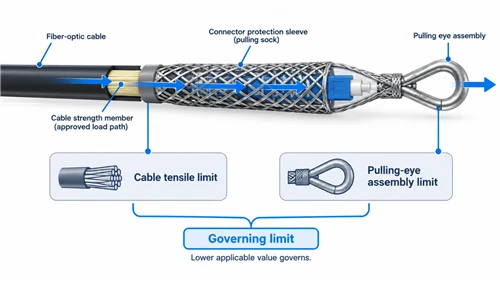
Glory Optical's FPV optic cables incorporate Kevlar (aramid fiber) coating layers that fundamentally change the cable's mechanical profile. Aramid fibers - the same material used in body armor and aerospace rigging - provide tensile strength exceeding 3,600 MPa while adding negligible weight. This Kevlar layer absorbs and distributes shock loads along the cable length rather than allowing them to concentrate at a single point. The result is a cable that can survive the dynamic loading profile of aggressive FPV flying: rapid acceleration, deceleration, directional changes, and environmental contact that would fracture a standard bare-fiber cable.
The practical benefit is measurable. Operators report that Kevlar-coated fiber reduces in-flight breakage incidents by a significant margin compared to standard UV-acrylate-only coated fiber - particularly on missions exceeding 5 km where cumulative cable drag and terrain interaction become major factors. For applications where cable snagging on vegetation, fences, or structures is likely, the aramid layer provides the critical margin between a completed mission and a lost platform.
Cable Diameter and Weight: The Performance Balance
FPV optic cables typically range from 0.25 mm to 0.50 mm in outer diameter. Thinner cables (0.25–0.27 mm) minimize weight and aerodynamic drag - critical for smaller drone platforms and longer-range missions where every gram counts. Thicker cables (0.40–0.50 mm) offer greater mechanical durability and are easier to handle during field preparation. Glory Optical offers fiber in 0.27 mm and 0.40 mm configurations, supporting spool capacities from 3 km (approximately 300 g net weight) to 30 km (approximately 2.1 kg), allowing integrators to match the cable specification to their platform's payload budget and mission profile.
| Spool Length | Net Weight | Gross Weight (with housing) | Typical Application |
|---|---|---|---|
| 3 km | 300 g | 560 g | Short-range reconnaissance, micro-UAV |
| 5 km | 500 g | 790 g | Standard tactical FPV operations |
| 10 km | 950 g | 1.27 kg | Extended-range strike / surveillance |
| 15 km | 1.2 kg | 1.55 kg | Long-range industrial inspection |
| 20 km | 1.65 kg | 2.03 kg | Deep-penetration missions |
| 30 km | 2.1 kg | 2.51 kg | Maximum-range specialized ops |
Industry Pain Points: Why Operators Keep Losing Drones - and How to Fix It
After analyzing operator reports, defense publications, and community discussions, five recurring pain points emerge in the FPV fiber optic ecosystem. Understanding these failure modes is essential for selecting equipment that mitigates rather than perpetuates them.
Pain Point 1: Fiber Breakage at the Outlet Port
The U.S. Army's analysis of fiber optic drone systems noted that cable breakage and entanglement with the drone's own propeller remain significant operational risks. When the fiber exits through a soft plastic port, flight tension gradually cuts grooves into the outlet material, creating sharp edges that act like miniature blades against the glass fiber. The failure is progressive and invisible until the fiber snaps - usually at the worst possible moment. The solution is engineering the outlet from materials harder than the fiber itself: ceramic (Mohs hardness 8–9) or hardened metal alloys. Glory Optical's use of these materials at the exit point directly addresses the most reported failure mode in the field.
Pain Point 2: Cable Snapping Under Dynamic Load
Field reports from active operational theaters describe a consistent pattern: operators lose fiber connectivity during aggressive maneuvers, in high winds, or when the cable drags across terrain features. Standard UV-acrylate coated fiber simply cannot withstand the dynamic tensile loads of real-world FPV operations. The Kevlar aramid coating solution provides tensile reinforcement where it matters - along the entire cable length - rather than relying on the glass fiber's inherent (and limited) tensile properties alone.
Pain Point 3: Inconsistent Payout Causing Tangles and Signal Loss
Fiber crossover during payout - where the deploying fiber catches on an adjacent wrap still on the spool - creates sudden tension spikes that either break the fiber or cause signal-degrading micro-bends. Inner-winding drum architecture, combined with precision winding during manufacturing, minimizes crossover risk. Glory Optical's manufacturing process, backed by ISO 9001 quality management and IEC testing protocols, ensures consistent wrap geometry across every spool produced.
Pain Point 4: Single-Use Economics
With fiber optic spool costs having dropped from approximately USD 2,500 to around USD 500 over the past two years as Chinese manufacturers scaled production, the per-mission cost has become more accessible. However, single-use designs still create cumulative expense and logistical waste. Reusable drum systems like the GL09-GXT reduce the total cost of ownership by amortizing the drum hardware across multiple missions, requiring only fresh fiber rewinding between deployments.
Pain Point 5: Lack of Standardized Integration
Many operators report field troubleshooting and rework caused by incompatible signal chain assumptions between the fiber spool, sky module (transmitter), and ground module (receiver). A plug-and-play system - where the drum, sky transmitter, ground receiver, and video data adapter are engineered as an integrated kit with compatible FC/SC/ST/LC connectors - eliminates the integration uncertainty that costs time and mission readiness.
Related Reading Why Fibre Optic Drones Reshape Ukraine's Technological War →How FPV Optic Cable Transmission Works: From Light Pulse to Real-Time Drone Control
Understanding the signal chain helps operators and integrators troubleshoot issues and optimize system performance. The FPV optic cable system operates through a three-stage process that converts electrical control and video signals into light, transmits them through the fiber, and converts them back to electrical signals at the other end.
Stage 1: Electro-Optical Conversion (Sky Module)
The sky module, mounted on the drone alongside the fiber spool, receives electrical signals from the onboard camera (typically analog video via BNC connection) and the flight controller (via CRSF protocol or similar). A semiconductor laser within the module converts these electrical signals into modulated light pulses at the operating wavelength - typically 1310 nm or 1550 nm. These wavelengths are chosen because they align with the lowest-attenuation windows of silica glass fiber, as defined in the ITU-T transmission specifications.
Stage 2: Optical Transmission Through the Fiber
Light pulses enter the G.657A2 fiber core (approximately 9.2 μm diameter at 1310 nm) and propagate through total internal reflection - bouncing along the glass core because the surrounding cladding has a lower refractive index. The bend-insensitive design of G.657A2 fiber ensures that even when the cable wraps around obstacles or bends sharply during payout, the light remains confined within the core with minimal macro-bending loss. At 1550 nm, attenuation is typically ≤0.22 dB/km, meaning even a 20 km cable introduces less than 4.4 dB of signal loss - well within the dynamic range of standard transceivers.
Stage 3: Optical-to-Electrical Conversion (Ground Module)
At the ground station, the received optical signal enters another transceiver module where a photodiode converts light pulses back into electrical signals. The ground module provides outputs including an RJ45 network interface, BNC video output (for direct connection to monitors or FPV goggles), and power passthrough via XT60 connectors. The complete signal chain operates at sampling rates up to 20 Hz for control data, with end-to-end latency well under 28 ms - fast enough for real-time FPV piloting at any range the fiber supports.
Deep Dive Unraveling the Drone Fiber Optic Cable: What Really Makes It Tick? →Application Scenarios: Where FPV Optic Drums and Cables Deliver Decisive Advantage
The anti-jamming property of fiber-optic data links makes FPV optic drums and cables valuable across any scenario where RF interference, signal security, or data integrity is a concern. While defense applications have driven adoption, commercial and industrial use cases are expanding rapidly.
Defense and Security Operations
In electromagnetically contested environments - where GPS denial, RF jamming, and signal spoofing are standard threats - fiber-optic FPV drones maintain operational capability that wireless systems cannot match. The physical fiber connection is completely immune to electronic warfare countermeasures. Reconnaissance missions can stream real-time HD or 4K video without revealing the operator's position through RF emissions. The low power consumption required for optical transmission also enables extended loitering capability, with drones potentially idling on the ground for ambush scenarios before activation.
Critical Infrastructure Inspection
Power grid operators, oil and gas facility managers, and telecom infrastructure teams benefit from fiber-tethered drones that can inspect high-voltage transmission lines, refinery equipment, and cell tower installations without any risk of electromagnetic interference from the drone's communication system. The fiber link provides stable HD/4K video feeds even in EMI-heavy industrial environments where wireless drone signals would degrade or drop entirely.
Professional Media and Event Coverage
Live event broadcasting and cinematography applications require consistent, low-latency video transmission. FPV optic cables deliver broadcast-quality feeds without the compression artifacts, latency, and dropout risks inherent in wireless video transmission - particularly in dense urban environments or indoor venues where RF congestion is extreme.
Environmental Monitoring and Research
Scientific applications including environmental monitoring, meteorological data collection, and GIS mapping benefit from the high bandwidth of fiber optic data links. Hyperspectral imaging sensors, LiDAR arrays, and multi-sensor payloads generate data volumes that exceed wireless transmission capabilities - fiber handles these data streams with capacity to spare.
FPV Optic Drum & Cable Buyer's Checklist: 8 Specifications That Determine Mission Success
When evaluating FPV optic drum and cable suppliers, the following specifications separate professional-grade systems from products that will fail in demanding operational conditions. This checklist reflects both manufacturer specifications and real-world operator feedback.
1. Fiber Outlet Port Material
Prioritize ceramic or hardened metal outlets. Avoid ABS or standard plastic - these will score and eventually cut the fiber under operational tension. This is the single most impactful specification for reducing in-flight cable failure.
2. Cable Tensile Reinforcement
Kevlar (aramid) reinforcement layers provide the tensile strength needed for dynamic flight loads. Standard UV-acrylate-only coatings are adequate for static telecom installations but insufficient for the dynamic environment of drone operations.
3. Fiber Specification: G.657A2 Compliance
Verify that the fiber meets the ITU-T G.657A2 standard (not merely G.657A1 or G.652D). The A2 classification provides the tightest bend radius tolerance essential for compact drone spools.
4. Winding Architecture
Inner winding is preferred for consistent payout tension and reduced crossover risk. Verify the manufacturer's claims with video evidence or field test data.
5. Connector Compatibility
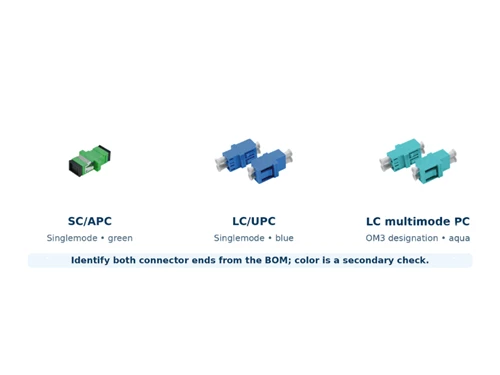
Ensure the system supports your required connector type - FC, SC, ST, or LC. Pre-terminated connectors eliminate field splicing requirements and reduce deployment time.
6. Integrated System Availability
Complete kits including sky module, ground module, video data adapter, and compatible remote control interface reduce integration risk and field troubleshooting.
7. Weight-to-Range Ratio
Compare net spool weights across suppliers for equivalent cable lengths. Lighter systems leave more payload budget for cameras, sensors, or ordnance.
8. Manufacturing Certifications
ISO 9001 quality management is the minimum threshold. IEC testing compliance, CE marking, and RoHS certification indicate a manufacturer committed to consistent quality and regulatory compliance.
Market Outlook 2026–2030: Where FPV Optic Drum and Cable Demand Is Heading
The FPV fiber optic market is entering a phase of sustained, rapid expansion driven by convergent factors across defense, commercial, and regulatory domains.
Defense Procurement Acceleration
Fiber-optic FPV drones have transitioned from experimental status to core procurement categories in multiple national defense budgets. Production capacity has scaled from hundreds to thousands of units per month among leading manufacturers. The dual-channel innovation - where fiber-optic drones carry backup radio control for cable failure scenarios - indicates that the technology has matured past the "proof of concept" phase into systematic operational integration. Global defense spending on drone navigation systems alone is projected to grow by over USD 27 billion between 2026 and 2030.
Commercial Adoption Expanding
Beyond defense, fiber-optic tethered drones are finding adoption in infrastructure inspection (power lines, pipelines, bridges), telecommunications site maintenance, precision agriculture, and environmental monitoring. The global UAV market is estimated at over USD 65 billion in 2025 and projected to reach approximately USD 117 billion by 2030. As commercial drone regulations mature and BVLOS (beyond visual line of sight) operations receive broader approval, fiber-optic tethered systems offer regulators a compelling safety proposition: a physically connected drone that cannot "fly away" beyond its cable length.
Supply Chain Consolidation
The rapid price reduction in fiber optic spools - from USD 2,500 to approximately USD 500 per unit in two years - reflects Chinese manufacturing scale but also signals market maturation. Buyers are increasingly differentiating on quality, reliability, and technical specifications rather than price alone. Manufacturers that invest in material science (like Kevlar coatings and ceramic outlets) and complete system integration will capture the high-value segment of this market, while commodity spool producers will compete on volume and price.
Frequently Asked Questions About FPV Optic Drums and Cables
Q: What is an FPV optic drum and how does it differ from a standard fiber spool?
A: An FPV optic drum is a purpose-built fiber storage and payout device designed specifically for drone-mounted deployment. Unlike standard telecommunications fiber spools that are designed for static cable pulls, FPV optic drums use inner-winding technology for smooth, tangle-free cable release under the dynamic forces of flight. They are engineered for G.657A2 bend-insensitive fiber in ultra-thin diameters (0.25–0.40 mm) and support operational ranges from 1 km to 30 km or more. The housing is typically lightweight ABS with reinforced outlet ports.
Q: Why does FPV optic cable break during flight?
A: Fiber breakage typically occurs at three critical points. First, the fiber outlet port - where tension concentrates during acceleration - is the most common failure location, especially when the port is made from soft plastic materials that the fiber gradually cuts into. Second, mid-flight snags from vegetation, fences, power lines, or terrain obstacles create sudden shock loads. Third, aggressive directional changes that exceed the fiber's bend radius or tensile limits cause fracture. Cables with Kevlar aramid coatings and metal or ceramic outlet ports address the first and second failure modes, while proper pilot training and flight planning mitigate the third.
Q: What fiber type is best for FPV drone operations?
A: G.657A2 single-mode fiber is the established industry standard for FPV drone operations. Defined by the ITU-T G.657 recommendation, this fiber class offers superior bend insensitivity with a minimum bend radius of 7.5 mm, attenuation of ≤0.22 dB/km at 1550 nm, and compatibility with standard telecom connectors and transceivers. Some manufacturers offer G.652D fiber at lower cost, but its inferior bend tolerance makes it unsuitable for the tight coiling required in compact drone-mounted spools.
Q: How far can an FPV optic cable drone fly?
A: Practical flight range depends on the fiber spool capacity, drone payload budget, and battery capacity. Most operational systems carry spools ranging from 5 km to 20 km. Advanced platforms support fiber lengths up to 30 km, and some prototype systems have demonstrated 50 km capability. However, longer cables add weight and aerodynamic drag, reducing flight time and maneuverability. For most operational scenarios, 10–20 km provides the optimal balance of range, weight, and performance.
Q: Can FPV optic drones be jammed or detected?
A: Fiber-optic FPV drones are effectively immune to electronic warfare jamming because their control and data signals travel through a physical glass fiber rather than through radio waves. They cannot be jammed, spoofed, or intercepted using conventional electronic warfare equipment. However, they are not completely undetectable - the drone itself produces acoustic signatures from its motors, and some systems emit very low-power RF signals from the flight controller that could theoretically be detected at close range. The fiber cable also creates a physical trace that could be followed back to the operator's position.
Q: What certifications should an FPV optic drum manufacturer hold?
A: At minimum, reputable manufacturers should hold ISO 9001 quality management certification, with fiber products tested to ITU-T G.657 standards and IEC 60793-2-50 specifications. CE marking indicates conformity with European health, safety, and environmental standards. RoHS certification confirms the absence of restricted hazardous substances. ISO 14001 environmental management certification indicates broader commitment to sustainable manufacturing practices.
Inner winding vs. outer winding: which is better for FPV drone spools?
Inner winding is the preferred architecture for FPV drone applications. By releasing fiber from the center of the spool, inner-wound drums maintain more consistent payout tension, reduce the risk of fiber crossover tangles, and protect unreleased fiber within the drum housing. Outer winding is mechanically simpler but creates variable tension as the effective spool diameter decreases during deployment, increasing the risk of tangles and sudden tension spikes.
FPV Fiber Optic Terminology: A Quick-Reference Glossary
For procurement teams, integrators, and operators entering the FPV fiber optic space, the following terms appear frequently in specifications and discussions. Understanding them ensures accurate communication with suppliers and informed purchasing decisions.
G.657A2: An ITU-T fiber specification defining bend-insensitive single-mode fiber with a minimum long-term bend radius of 7.5 mm. The standard for FPV drone fiber applications.
Attenuation (dB/km): Signal loss per kilometer of fiber. Lower is better. G.657A2 fiber typically offers ≤0.22 dB/km at 1550 nm wavelength.
Bend-insensitive fiber: Optical fiber engineered to maintain signal integrity even when bent to small radii, essential for compact drone spool mounting.
Inner winding: A spool architecture where fiber releases from the center, providing consistent payout tension during drone flight.
Sky module (TX): The electro-optical transmitter mounted on the drone that converts electrical signals to optical signals for transmission through the fiber.
Ground module (RX): The optical-to-electrical receiver at the ground station that converts incoming light signals back to video and control data.
Aramid / Kevlar coating: A tensile-strength reinforcement layer applied to the fiber cable, providing resistance to dynamic loads and impact forces during flight.
Fiber payout: The process of fiber releasing from the spool during drone flight. Smooth payout is critical to preventing tangles and breakage.
CRSF protocol: Crossfire Serial Protocol, a common data communication standard used between drone flight controllers and radio receivers, supported by most FPV fiber optic ground modules.
Mode field diameter (MFD): The width of the fiber core through which the optical signal propagates. Approximately 9.2 μm at 1310 nm for G.657A2 fiber
About Glory Optical Communication
Founded with over two decades of optical fiber manufacturing expertise, Glory Optical Communication is a leading Chinese manufacturer of fiber optic cables, FPV drone fiber optic systems, and optical communication accessories. The company holds ISO 9001, ISO 14001, CE, and RoHS certifications, with fiber products meeting ITU-T G.652.D/G.657.A1/G.657.A2 and IEC 60793-2-50 specifications. Glory Optical's FPV product line features proprietary ceramic and metal fiber outlet technology and Kevlar-coated cables engineered for the demands of operational drone deployment.