Author: Mia Zheng sales02@gloryoptic.com

For years, the promise of First-Person View (FPV) drones has been tempered by a persistent vulnerability: the radio link. Pilots pushing the limits of distance or flying into challenging terrain have always faced the risk of signal loss, interference, and the dreaded "frozen screen." But a fundamental shift is underway, one that replaces invisible radio waves with a physical, unbreakable connection.
This is the story of the fiber optic drone-a technology that is redefining what's possible, from critical industrial inspections to life-saving rescue missions.
The Wireless Bottleneck
Traditional FPV drones rely on radio frequency (RF) to transmit video and control signals. This works well in open, interference-free environments. However, the real world is rarely so forgiving. High-voltage power lines, dense urban centers, and even the simple congestion of the 2.4GHz spectrum can lead to signal degradation and dropouts.
More critically, this wireless link is a significant vulnerability. In an age of sophisticated electronic warfare, jamming and signal spoofing have become real-world threats that can render a conventional drone useless. The fundamental limitation of radio is that its signal can be blocked, interfered with, or completely severed.
A Physical Connection in a Wireless World
Fiber optic technology inverts this paradigm. Instead of broadcasting a signal, a fiber optic drone carries its own communication link, paying out an ultra-thin, lightweight optical fiber from a spool as it flies. This creates a direct, physical connection between the drone and its operator.
This simple shift has profound implications:
•Unbreakable Signal: The drone becomes completely immune to RF interference, jamming, and spoofing . In contested environments, this is a game-changer.
•Zero-Latency, High-Definition Video: Fiber optics offer virtually unlimited bandwidth. Pilots receive a crystal-clear, real-time video feed with latency well under 20ms, allowing for incredibly precise control, even at extreme ranges .
•Stealth Operation: Because it emits no radio signal, a fiber optic drone is invisible to enemy electronic surveillance, making it a true covert asset.
The technology that makes this possible is remarkable. The fiber itself, often a G657A2 bend-insensitive type, is only about 0.25mm in diameter-thinner than a human hair-yet strong enough to be deployed for tens of kilometers . Advanced spooling systems with magnetic tension control ensure the fiber pays out smoothly, even during aggressive maneuvers, with a rebound rate of less than 0.7% when the drone stops suddenly. The result is a tether that is almost invisible but operationally indispensable.
A Technology Forged in Crisis
While the technology has been in development for years, the crucible of modern conflict has accelerated its adoption. On the battlefields of Ukraine, where electronic warfare is constant and intense, the vulnerability of radio-controlled drones became starkly apparent. Reports indicated that up to 75% of standard FPV drones could be lost to jamming.
The introduction of fiber optic FPV drones by Russian forces in 2024 marked a turning point . These drones could fly directly over enemy positions, undeterred by jammers, and transmit high-definition targeting video back to their operators. This forced an immediate and urgent response, with Ukrainian developers rapidly fielding their own systems like the "Silkworm" . The race was on, and the central prize was a reliable, unjammable control link. This real-world test has proven the technology's viability in the most challenging environments imaginable.
Beyond the Battlefield – A New Era for Civilian and Industrial Drones
The implications of this technology extend far beyond military use. The same qualities that make it invaluable in a war zone make it revolutionary for critical civilian applications.
•Power and Infrastructure Inspection: Inspectors can now fly drones along high-voltage transmission lines, inside substations, or through complex industrial plants without a single moment of video dropout caused by electromagnetic interference . This allows for the detection of minute faults-like corrosion on a pipeline or a cracked insulator-with absolute confidence .
•Disaster Response and Search & Rescue: In the chaotic aftermath of an earthquake or building collapse, radio signals are often blocked by debris. A fiber optic drone, however, can be flown deep into a rubble pile, using its tether to maintain a perfect video link. Thermal imaging data can be relayed in real-time, helping rescue teams locate survivors through concrete and twisted metal.
•Precision Agriculture and Environmental Monitoring: In farmlands crisscrossed by power lines or filled with large metal machinery, fiber-guided drones can reliably transmit multispectral data for crop health analysis, enabling techniques like variable fertilization that can reduce pesticide use by over 30%.
The Path Ahead: Challenges and the Future
Of course, this new freedom comes with its own set of challenges. The fiber tether can be snagged on trees, buildings, or sharp objects, limiting maneuverability . The weight of the spool can reduce flight time and payload capacity compared to a lighter, wireless drone . And battlefields are now littered with thin, almost invisible strands of fiber, a lasting testament to the technology's use .
But the trajectory is clear. Future systems are likely to be hybrid, switching between RF and fiber as conditions demand . Spools will become lighter, fibers stronger and even thinner. AI integration will allow for coordinated drone swarms, all connected by a single, secure fiber link .
Cutting the Cord to RF to Find True Freedom
The fiber optic drone represents more than just a new type of cable; it represents a fundamental shift in how we think about drone control and data transmission. By replacing a vulnerable, invisible signal with a robust, physical connection, it unlocks a new level of reliability, security, and performance. It is a testament to the idea that sometimes, to achieve true freedom of operation-freedom from jamming, freedom from interference, freedom from the limits of the wireless spectrum-you need a strong, reliable tether to the ground.
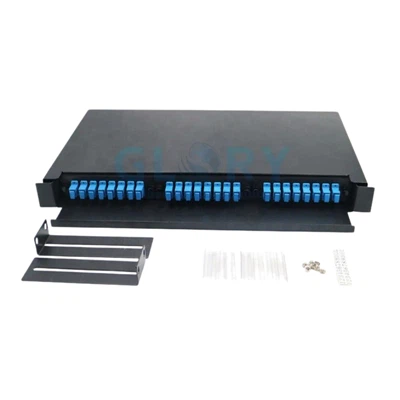
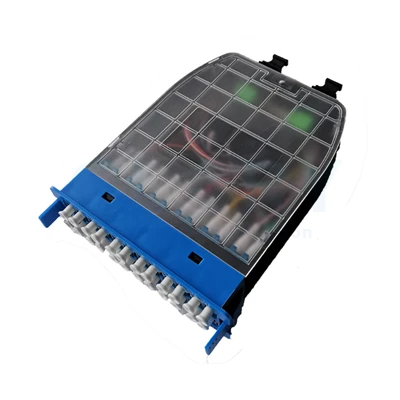
At GLORY, we are proud to be at the forefront of this revolution, engineering the high-performance fiber optic modules that are powering this new generation of unstoppable drones, from critical infrastructure to the most demanding rescue missions.