
The Three Devices at a Glance

|
MST (Multiport Service Terminal) |
ODF (Optical Distribution Frame) |
FDB (Fiber Distribution Box) |
|
|
Primary role |
Hardened, pre-connectorized plug-and-play access |
Centralized fiber management, splicing, and cross-connection |
Fiber splicing, splitting, and distribution to multiple users |
|
Network layer |
Access layer (subscriber connection) |
Aggregation/core layer (central office/data center) |
Distribution layer (building corridors, street cabinets) |
|
Connection method |
Factory-terminated, field-pluggable (OptiTap) |
Field splicing + patch cord management |
Field splicing, splitting, and patching |
|
Typical location |
Outdoor poles, tower tops, vaults, pedestals |
Central office, data center, equipment room |
Building corridors, outdoor wall-mount, street cabinets |
|
Protection rating |
IP67–IP68 (hardened connectors) |
Indoor (rack-mount) |
IP65 |
|
Capacity |
4–12 ports |
24–144+ ports (rack-mount) |
Up to 24 fibers |
1. MST – The Hardened, Plug-and-Play Access Terminal
What It Is
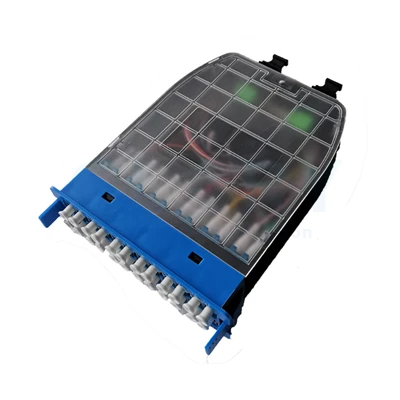
A Multiport Service Terminal (MST) is a pre-connectorized, environmentally sealed enclosure designed for rapid outdoor fiber deployment. Unlike traditional field-spliced terminals, an MST comes from the factory with hardened connectors already terminated and tested. In the field, installation is simply a matter of plugging in pre-terminated drop cables - no splicing, no stripping, no cleaning.
The MST is built around hardened connector technology (such as OptiTap adapters) that withstands the rigors of outside plant environments. It is available in various configurations: terminated or unterminated versions, point-to-point or MPO connections for indexing (add/drop-style) configurations.
Key Features
• Plug-and-play adapter ports enable rapid cable installation
• IP67-rated to withstand harsh outdoor conditions
• Wide operating temperature: -40°C to 85°C
• Flexible port options: 4, 6, 8, or 12 ports
• Multiple mounting configurations: aerial, wall-mounted, or buried
• Compatible with industry-standard drop cables and connectors
• Optional factory-spliced feed cable for turnkey deployment
• Cable options: round cables (5.0mm to 14.0mm) and flat cables (4.6×8.9mm)
Where It Goes
MSTs are typically deployed in outdoor environments where speed and environmental toughness matter more than field splicing flexibility - on cell towers for FTTA applications, in vaults and pedestals, on utility poles, or on aerial strands. In 5G and wireless networks, the MST is a game-changer for FTTA systems, enabling scalable and efficient fiber distribution in crowded cell tower environments where space optimization is critical.
When to Choose an MST
Choose an MST when you need:
• Rapid deployment with minimal field labor
• Pre-connectorized, hardened connections that survive outdoor conditions
• Frequent reconfiguration or subscriber adds/changes
• FTTA / 5G small-cell deployments where tower-top space is limited
Product Recommendation

The GL-MST02-12 Multiport Service Terminal supports up to 12 ports with OptiTap adapters, IP67 protection, and a ruggedized housing that withstands harsh outdoor conditions. It is available in terminated or unterminated versions and supports aerial, wall-mounted, or buried configurations.
2. ODF – The Central Fiber Management Hub
What It Is
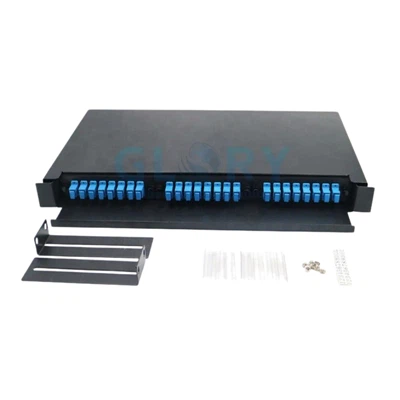
An Optical Distribution Frame (ODF) is a high-density, high-capacity frame used to provide cable interconnections between communication facilities. It integrates fiber splicing, fiber termination, fiber optic adapters and connectors, and cable connections into a single unit.
The ODF is the essential equipment for the optical fiber communication cable network terminal or relay point, enabling fiber splicing and jump splicing. In the integrated wiring system, the ODF is suitable for horizontal wiring between equipment or equipment termination, as well as mutual termination of centralized points.
Key Features
• 19" standard rack-mount compatible with all types of racks and cabinets
• Module design: all operations can be performed from the front side
• Drawer design: can be pulled out and pushed in easily for maintenance
• Integration: splice and distribution functions in a single unit
• Suitable for both ribbon and bunch fiber cables
• Large front-side marking space for port identification and management
• Available in multiple capacities: 24, 36, 48, 72, 96, and 144 cores
Where It Goes
ODFs are installed in central offices, data centers, and equipment rooms - the aggregation and core layer of the network. They are the primary termination point for large-count fiber optic cables coming from outside plant networks. The ODF is where feeder cables from the field are spliced, terminated, and cross-connected to equipment.
When to Choose an ODF
Choose an ODF when you need:
• High-density fiber management for large numbers of fibers
• Centralized termination and cross-connection in a controlled environment
• Integration of splicing and patching in a single frame
• Future expansion capability with modular design
Product Recommendation
The GL-72 Port Optical Distribution Frame is a 19" rack-mount ODF with 72-core capacity supporting SC/FC/LC/ST adapters. It features a slide-out drawer design for easy maintenance, integrated splice and distribution functions, and cold-rolled steel construction with electrostatic plastic spraying. Available in 24, 36, 48, 72, 96, and 144 core configurations.

3. FDB – The Fiber Distribution Box
What It Is
A Fiber Distribution Box (FDB) is a wall-mounted or pole-mounted enclosure used to connect optical cables to optical communication equipment. Through adapters inside the fiber distribution box, optical signals are routed out via fiber jumpers, enabling optical wiring functionality. It is a common product in FTTH and FTTB networks, providing a safe point for splicing, splitting, branching, straight-through, or fiber termination while protecting connections from environmental hazards.
The FDB is designed to facilitate the connection of optical cables, fibers, and patch cords, offering a sleek appearance, user-friendly operation, and a long service life. Unlike a termination box that serves a single user (or less than five), a Fiber Distribution Box is designed to provide fiber access for multiple users, making it the essential intermediate node within FTTH networks that distributes fiber from the feeder cable into multiple directions toward subscriber access points.
Key Features
The GL-FDB-24D combines multiple functions into a single integrated system:
• Integrated design: Combines fusion splicing, connection, fiber slack storage, and patch cord management into one unit.
• Dual-compartment layout: Divided into two parts - one for optical cable fusion splicing between the cable and fiber pigtail, and another for patch cord connection.
• Surplus fiber management: Fibers can be coiled around two dedicated plastic rings, ensuring a bending radius greater than 40mm to prevent signal loss.
• Adapter panel: Secures adapters compatible with SC, LC, and FC types, enabling easy operation and preventing accidental damage to fibers.
• Cable entry from the bottom: Entry point protected by specialized rubber seals.
• Splitter compatibility: Supports blockless splitters 1×16 and 1×32, as well as 1×8 cassette splitters.
Specifications
|
Parameter |
Specification |
|
Model |
GL-FDB-24D |
|
Dimensions |
335×295.5×117.2mm |
|
IP Rating |
IP65 (waterproof and dust-tight) |
|
Material |
ABS+PC or ABS |
|
Max Capacity |
24 fibers |
|
Adapter Types |
SC, LC, FC |
|
Cable Entry |
2 ports for 7-12mm cable, 2 ports for 6-8mm cable, 24 ports for 2-4mm drop cables |
|
Splitter Support |
Blockless 1×16 and 1×32; 1×8 cassette |
|
Mounting |
Wall or pole mounting |
|
Working Temperature |
-40°C to +60°C |
|
Insertion Loss |
≤0.35dB |
|
Return Loss |
≥50dB |
|
Plug Durability |
>1000 times |
Where It Goes
FDBs are typically deployed within building corridors, stairways, exterior wall systems, or other shared community spaces. They act as distribution nodes in the access layer of FTTH networks - the point where feeder or distribution cabling is split and routed toward individual subscriber access points. The GL-FDB-24D is suitable for both indoor and outdoor applications, with IP65 waterproof protection making it reliable in various environmental conditions.
When to Choose an FDB
Choose an FDB when you need:
• Distribution of fiber to multiple users (apartment buildings, residential communities)
• Integration of splicing, splitting, and patching in a single enclosure
• Wall or pole mounting in outdoor or semi-outdoor environments
• Future expansion capability with flexible splitter configurations (1×16, 1×32, or 1×8 cassette)
• Up to 24 fibers capacity for medium-density deployments
Product Recommendation

The GL-FDB-24D Fiber Distribution Box is a 24-core wall-mounted FDB with IP65 protection. It features a dual-compartment design that separates splicing and patching functions, dedicated plastic rings for surplus fiber coiling with >40mm bend radius, and supports SC, LC, and FC adapters. The box accommodates blockless 1×16 and 1×32 splitters as well as 1×8 cassette splitters, with cable entry from the bottom protected by rubber seals. Size: 335×295.5×117.2mm. Working temperature range: -40°C to +60°C.
How They Fit Together: A Typical FTTH ODN Path
In a standard FTTH architecture, these three devices work together in sequence:
1.OLT (central office) connects to the ODF, where feeder fibers are terminated and managed
2.Feeder cables run to the distribution area and enter an FDB, where the signal is split and distributed to multiple directions
3.From the FDB, distribution cables connect to MSTs (or other access terminals) at the subscriber access point
4.MSTs provide hardened, pre-connectorized ports for drop cables that run to the ONT at the subscriber premises
Not every deployment needs all three - but understanding where each device belongs in the network topology is essential for proper ODN design.

Selection Guide: Which One Do You Need?
|
If you need... |
Choose... |
|
Pre-connectorized, rapid deployment in harsh outdoor environments |
MST |
|
High-density fiber management in a central office or data center |
ODF |
|
Fiber distribution to multiple users in a building or community |
FDB |
|
Tower-top FTTA deployment for 5G |
MST |
|
Termination and cross-connection of large-count feeder cables |
ODF |
|
Wall-mounted splicing, splitting, and patching (up to 24 fibers) |
FDB |
|
IP65 outdoor distribution with splitter flexibility (1×16 / 1×32) |
FDB |
Conclusion
MST, ODF, and FDB serve distinct and complementary roles in fiber optic networks:
MST delivers hardened, pre-connectorized access - the "plug-and-play" solution for rapid outdoor deployment
ODF provides centralized, high-density fiber management - the "nerve center" of the central office or data center
FDB enables fiber distribution to multiple users with integrated splicing, splitting, and patching - the "interchange" between feeder and drop cables
Choosing the right device for the right network layer is one of the most effective ways to reduce deployment time, control costs, and simplify long-term maintenance. When in doubt, follow the network topology: ODF at the core, FDB in the distribution layer, MST at the access point.