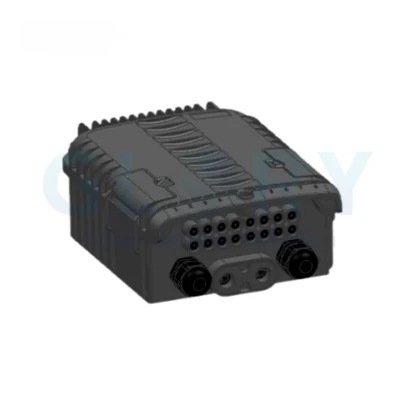

Most fiber distribution box quotes are not rejected because the price is too high. They are rejected because the prices are not measuring the same product. One supplier may quote an empty enclosure. Another may include a PLC splitter, adapters, pigtails, cable glands, port labels and test reports. A third may quote something in between - all against the same request: "Please quote a 16-port outdoor box."
The purpose of a fiber distribution box RFQ is therefore not just to get a price. It is to make every supplier quote the same configuration. If suppliers are not pricing the same loaded scope, the lowest unit price is not meaningful.
This guide keeps the focus on quotation comparability: which RFQ fields control price, how to lock the BOM, how to compare loaded and unloaded quotes, which supplier documents to request, and how to score an RFQ before it is sent.
Quick Answer: A Good RFQ Makes Every Supplier Quote the Same Box
A complete FTTH fiber distribution box RFQ should define the box configuration tightly enough that Supplier A, Supplier B and Supplier C all price the same scope. The key fields are loaded status, port count, splice capacity, splitter ratio and package, adapter polish, cable entry diameter, IP rating evidence, BOM, test reports, labels, packaging and delivery batches.
| RFQ decision | What it controls | Why it affects quote comparison |
|---|---|---|
| Loaded / unloaded scope | Adapters, pigtails, splitter, glands, labels | The biggest hidden price gap between quotes |
| BOM returned with quote | Exact components included | Prevents comparing a full kit against an empty enclosure |
| Splitter ratio and package | 1×8 / 1×16 / 1×32, steel tube, ABS cassette, LGX | Controls price, space fit and loss budget |
| Adapter polish | SC/APC or SC/UPC across adapters, pigtails and splitter outputs | Prevents incompatible interface assumptions |
| Cable entry and OD range | Feeder/drop cable gland or grommet size | Prevents sealing failure and accessory re-orders |
| IP rating evidence | Outdoor protection and test basis | Separates a datasheet claim from a verifiable requirement |
| Supplier response table | Same answers from all suppliers | Turns quotation review into a side-by-side comparison |
If a supplier cannot confirm loaded scope, BOM, connector polish, cable-entry fit and documents in writing, the quote is not ready for price comparison.

Why Fiber Distribution Box Quotes Are Often Not Comparable
A vague RFQ creates assumptions. Each supplier fills the missing information differently, so the price spread reflects different scope rather than better value. The most common comparison problem is not the enclosure size; it is the hidden difference between enclosure-only, semi-loaded and fully loaded configurations.
| What the RFQ says | Supplier may assume | Hidden risk |
|---|---|---|
| "16-port outdoor box" | Unloaded enclosure only | Lowest price, but adapters, splitter and pigtails missing |
| "With splitter" | Steel-tube PLC, ABS cassette or plug-in module | Different cost and possible enclosure-fit problem |
| "SC adapter" | SC/APC or SC/UPC | Connector polish mismatch in the field |
| "Outdoor" | IP65 datasheet claim or tested IP-rated enclosure | No clear acceptance basis for water/dust protection |
| "Drop cable entry" | Generic grommet or gland | Actual cable OD may not seal |
| No document request | Price only | No drawing, port map, test record or packaging details for review |
The FOA describes RFQ documents as part of project paperwork that should clarify requirements and expectations before work begins (FOA - Fiber Optic Project Paperwork). For a fiber distribution box, that clarity should start with scope control: what is inside the box, how it is terminated, how it is sealed and which documents prove it.
A short market note is enough: as FTTH rollouts scale across regions, unclear specifications become expensive because the same mistake repeats across many access points. Program-level fiber deployment studies also show that operating model, supplier coordination and installation efficiency affect rollout cost (McKinsey - deploying fiber networks faster and cheaper). A clear RFQ is one low-cost way to remove ambiguity before production.
The 10 RFQ Fields That Decide Whether a Quote Is Comparable
Instead of turning the article into a broad product selection guide, use the RFQ as a control sheet. These ten fields should be answered by every supplier in the same format.
| RFQ field | If missing | Supplier must confirm |
|---|---|---|
| 1. Installation scenario | Indoor/outdoor and mounting assumptions differ | Pole, wall, aerial, MDU, indoor; mounting kit included or excluded |
| 2. Port count and spare capacity | Model size and adapter count differ | 8/16/24/32 ports and spare percentage |
| 3. Splice capacity and tray layout | Internal space and labor time differ | Number of splice trays and fusion-splice capacity |
| 4. PLC splitter ratio | Splitter omitted or wrong ratio priced | 1×8, 1×16, 1×32 or no splitter |
| 5. Splitter package | Enclosure may not physically fit the selected splitter | Steel tube, ABS cassette or LGX module; fit confirmed |
| 6. Adapter and pigtail polish | SC/APC and SC/UPC assumptions differ | Connector polish for adapters, pigtails and splitter outputs |
| 7. Cable entry and OD range | Gland or grommet may not seal the actual cable | Feeder and drop cable type, OD range and sealing method |
| 8. IP rating and environment | Outdoor protection is only a claim | Required IP level, test evidence, UV/salt-spray/temperature if needed |
| 9. Labels and port map | Maintenance and handoff become slower | Port numbering, label format and splitter-output map |
| 10. Packaging and delivery batches | Site logistics are not comparable | Carton quantity, label content, batch schedule and lead time |
Before quoting an FTTH distribution box project, the first fields to check are loaded scope, splitter configuration, connector polish, cable OD range, IP requirement and document package. If any of these are missing, the first quote usually reflects assumptions rather than confirmed requirements.
Loaded vs Unloaded: The Biggest Hidden Price Difference
The loaded/unloaded field should appear near the top of the RFQ. Without it, two suppliers can be technically honest and still quote different products.
| Configuration | What is included | Best fit | Comparison warning |
|---|---|---|---|
| Unloaded box | Enclosure, trays, basic hardware | Installer configures adapters, splitter and pigtails on site | Lowest unit price, but field labor and missing accessories must be added |
| Semi-loaded box | Selected adapters, trays or glands installed; splitter may be added later | Phased rollout or regional configuration flexibility | Needs a clear BOM because "semi-loaded" varies by supplier |
| Fully loaded box | Adapters, pigtails, PLC splitter, glands, labels and sometimes test records | Projects that want faster installation and lower field assembly risk | Higher unit price but often more comparable when scope is locked |
BOM: the only way to compare supplier prices
A quote without a BOM cannot be evaluated at face value. Require each supplier to list enclosure model, splitter type, adapter quantity, pigtail length, splice trays, cable glands, blanking plugs, labels, mounting kits, packaging and test documents. Then compare total installed scope, not the headline unit price.
When a buyer asks a supplier to match a lower price, the first check should be whether the lower quote is loaded or unloaded. A cheaper quote may exclude splitter, pigtails, glands, labels or test reports. Normalize those missing items before any price negotiation.
Supplier Response Table: Make Every Quote Answer the Same Questions
A supplier response table is more useful than many paragraph-style RFQ examples. It forces every supplier to confirm scope in the same format, so your quotation review becomes a side-by-side check.
| Response field | Supplier entry | Buyer check |
|---|---|---|
| Model number / drawing revision | Same enclosure family and dimensions? | |
| Loaded, unloaded or semi-loaded | Scope comparable? | |
| BOM attached | Y / N | All components listed? |
| PLC splitter ratio and package | Correct ratio and physical fit? | |
| Adapter and pigtail polish | SC/APC or SC/UPC consistent? | |
| Cable entry OD range | Matches feeder/drop cable? | |
| IP test evidence attached | Y / N | Claim supported? |
| IL / RL test report attached | Y / N | Connectorized outputs verified? |
| Port map and labels included | Y / N | Ready for handoff and maintenance? |
| Carton quantity / label / batch plan | Site logistics controlled? | |
| Unit price and total price | Only compare after scope is normalized |
Documents to Request Before Price Comparison
Do not compare a price-only quote against a documented quote. Ask for the document package during RFQ, not after supplier selection.
| Document | Why it matters | Authority / reference |
|---|---|---|
| Datasheet | Confirms dimensions, material, port count, splice capacity and IP claim | Supplier document |
| Dimensioned mechanical drawing | Confirms splitter fit, tray layout, mounting holes and cable-entry position | Supplier document |
| BOM | Defines loaded, unloaded or semi-loaded scope | Required for quote comparison |
| IP / environmental test evidence | Supports outdoor dust and water protection claims | IEC 60529 / IP ratings |
| Fiber routing and bend-radius confirmation | Supports compact internal fiber routing | ITU-T G.657 when bend-insensitive fiber is specified |
| Insertion loss / return loss test report | Verifies connectorized ports, pigtails and splitter outputs where applicable | IEC 61300-3-35 context |
| Port map and labeling plan | Supports activation, handoff and troubleshooting | Project acceptance package |
| Packaging and carton label details | Controls batch delivery, warehouse staging and site distribution | Project logistics package |
Standards should not be used as decoration. Use them to define what the supplier must prove: IP evidence, connector inspection criteria, bend-radius compatibility and traceable test records.
RFQ Completeness Score for Procurement Teams
This score is a practical procurement review tool, not an official industry standard. Use it before sending an RFQ and again when comparing supplier responses.
| RFQ field | Weight | Why it matters |
|---|---|---|
| Loaded scope and BOM | 20% | Controls the biggest quote-comparison gap |
| Splitter ratio and package fit | 15% | Controls price, loss and enclosure compatibility |
| Adapter / pigtail polish | 10% | Prevents SC/APC and SC/UPC assumptions |
| Cable entry and OD range | 10% | Controls gland, grommet and sealing fit |
| Port count, splice capacity and spare capacity | 15% | Controls model size and future expansion |
| IP/environmental requirement and evidence | 10% | Controls outdoor acceptance and protection basis |
| Port map, labeling and test documents | 10% | Controls activation and maintenance readiness |
| Packaging, batch delivery and lead time | 10% | Controls site logistics and rollout pace |
- 90–100: ready for comparable supplier quotes.
- 70–89: quotable, but clarifications are still likely.
- 50–69: high risk of non-comparable pricing.
- Below 50: not ready to quote; suppliers will guess too much.
Copy-Ready RFQ Template
Subject: RFQ [RFQ-NUMBER] - FTTH Fiber Distribution Box, [QTY] units, due [DATE]
Dear [Supplier],
Please quote the FTTH fiber distribution box configuration below. Return the supplier response table with BOM, datasheet, mechanical drawing, test reports, IP evidence where required, port map, packaging details and lead time. Quotes without loaded/unloaded status and BOM cannot be evaluated for price comparison.
- Quantity: [QTY], delivered in [N] batches
- Destination / Incoterms: [City, Country] / [FOB/CIF/DDP]
- Required loaded scope: loaded / unloaded / semi-loaded
- Quotation due date: [DATE]
- Target delivery: [DATE]
Specification table to send
| Specification field | Required value |
|---|---|
| Installation scenario | Pole / wall / aerial / MDU / indoor |
| Port count and spare capacity | 8 / 16 / 24 / 32; spare ___% |
| Splice capacity and tray layout | ___ splices, ___ trays |
| PLC splitter | None / 1×8 / 1×16 / 1×32; steel tube / ABS / LGX |
| Adapter and pigtail polish | SC/APC or SC/UPC, same across all interfaces |
| Cable entries and OD range | Feeder ___ mm; drop ___ mm; gland/grommet required |
| Housing and IP rating | ABS / PC+ABS / UV-stabilized; IP___ with evidence |
| Documents | BOM, drawing, datasheet, test report, IP evidence, port map, packaging details |
| Packaging and delivery | Carton quantity, label format, batch schedule, lead time |
Common RFQ Mistakes That Make Quotes Look Cheaper Than They Are
- Asking only for port count. "16-port" does not define loaded scope, splitter, adapter polish, cable entry or documents.
- Comparing loaded and unloaded quotes directly. Normalize missing components and field labor before comparing price.
- Not requiring a BOM. Without a BOM, the quote may hide missing adapters, pigtails, splitter, glands or labels.
- Leaving SC/APC vs SC/UPC open. Specify connector polish for adapters, pigtails and splitter outputs separately.
- Ignoring cable OD range. A gland sized for the wrong cable cannot seal the box correctly.
- Accepting an IP rating without evidence. Ask for the relevant IP test evidence where outdoor acceptance depends on it.
- Forgetting labels, port map and packaging. These items look small on the quote but affect activation, maintenance and site logistics.
Final Recommendation: Compare Scope Before Price
The best fiber distribution box RFQ does not start with a model number. It starts with quotation comparability. Define the loaded scope, require a BOM, lock the splitter package, specify connector polish, match cable-entry hardware to the actual cable, and request documents before comparing price.
If every supplier answers the same response table, the buyer can compare real value. If each supplier is guessing, the lowest price is only the lowest assumption.
FAQ
-
Q: What should be included in a fiber distribution box RFQ?
A: A complete RFQ should define the installation scenario, port count, splice capacity, splitter ratio and package, adapter polish, cable entry diameter, IP rating evidence, loaded or unloaded scope, BOM, test reports, labels, packaging and delivery terms.
Q: Why are fiber distribution box quotes often not comparable?
A: Quotes are often not comparable because suppliers may assume different scope: empty enclosure versus loaded box, splitter included or excluded, SC/APC versus SC/UPC, IP65 versus IP68, cable glands included or not included, and documents included or missing.
Q: Should I request a loaded or unloaded fiber distribution box?
A: Use a loaded box when you want adapters, pigtails and splitters pre-installed to reduce field work. Use an unloaded box only when your installer will configure it on site. The RFQ must state the choice and require a BOM.
Q: How do I compare loaded and unloaded fiber distribution box quotes?
A: Normalize the scope first. Add missing splitters, adapters, pigtails, glands, blanking plugs, labels, tests and field assembly labor to the unloaded quote before comparing total installed cost.
Q: What supplier documents should I request before placing an order?
A: Request a datasheet, dimensioned drawing, BOM, port map, insertion-loss and return-loss test report, IP or environmental test evidence, packaging details and carton label information.
Q: Is IP65 enough for outdoor FTTH distribution boxes?
A: It depends on exposure. Sheltered outdoor sites may use IP65, while aerial, coastal or flood-prone locations may require higher protection. The RFQ should state the required IP rating and ask for evidence based on IEC 60529.