1. Splicing‑only NID: The Passive Workhorse
Mission: Purely a physical protection point. It houses fiber splices (fusion or mechanical) and provides a clean termination of the incoming feeder cable.
What's inside:
• Splice tray or holders for up to 2 single fibers or 1 mass fusion splice
• Slack storage for up to 50 feet of fiber
• Adapter ports (e.g., one simplex SC, one duplex LC, or one MTP) for test access
Best for:
• Simple fiber extension or branching where no active equipment is needed
• A demarcation point that allows the ISP to test the line without entering the customer's home
• Situations where the ONT/ONU is mounted separately indoors
Key advantages:
• Passive – no power required, virtually zero maintenance
• Compact and cost‑effective
• Re‑enterable mechanical seal for future upgrades
Example: A rural FTTH deployment where the ISP installs a splice‑only NID on the outside wall, then runs a short indoor patch cord to an ONT placed inside the house.
2. ONU‑integrated NID: The All‑in‑One Active Terminal
Mission: Go beyond passive termination – actively convert optical signals to electrical (Ethernet) and provide a complete customer handoff.
What's inside:
• Optical Network Terminal (ONT) or Optical Network Unit (ONU) electronics
• Power supply and grounding (may require AC/DC input)
• Ethernet (RJ45) and often voice ports
Best for:
• Single‑family homes or small businesses that want a single, outdoor‑rated device
• Deployments where the customer has no indoor equipment rack or prefers a "one‑box" solution
• Service providers who manage the ONU as part of their network (e.g., remote firmware upgrades)
Key advantages:
• Saves space – no separate ONU needed inside
• Outdoor hardened (IP68, UV resistant, wide temperature range)
• Clear demarcation: ISP owns everything inside the NID
Example: A suburban home where the ISP installs an ONU‑equipped NID on the outside wall, directly feeding the customer's home router via a short Ethernet cable.
3. LGX‑based NID: The Modular Distribution Hub
Mission: Bring the flexibility of a central office rack to the outside plant. The NID accepts industry‑standard LGX cassettes, allowing mix‑and‑match of splitters, WDM modules, or adapter panels.
What's inside:
• Slide‑out rack‑mount unit with LGX cassette slots
• Cassettes can be: PLC splitter (1xN), adapter panel (LC/SC/MPO), or wavelength division multiplexer
• High‑density fiber management
Best for:
• Multi‑tenant buildings (MDU) where each unit needs a dedicated fiber drop
• Campus networks that require flexible re‑patching
• Future‑proof installations – the same NID can be reconfigured as technology evolves
Key advantages:
• Modular – swap cassettes without replacing the entire NID
• High density – serve up to 16 or more subscribers from one enclosure
• Ideal for "pay‑as‑you‑grow" deployments
Example: A five‑story apartment building. The ISP installs one LGX‑based NID in the basement, loaded with 1x8 splitter cassettes, serving 16 apartments. Each apartment gets a dedicated drop cable.
Quick Comparison: Which NID Fits Your Network Edge?
|
Feature |
Splicing NID |
ONU NID |
LGX NID |
|
Primary function |
Passive splice protection |
Active optical‑to‑electrical conversion |
Modular distribution & splitting |
|
Power required |
No |
Yes |
No |
|
Re‑configurable |
Limited (splice changes) |
No |
Yes (swap cassettes) |
|
Best for |
Fiber extension, test access |
Single‑family homes |
MDUs, campuses, high‑density areas |
|
Inside components |
Splice tray, adapter ports |
ONT board, power supply, Ethernet |
LGX cassettes (splitters, panels) |
Making the Right Choice
Ask yourself three questions before selecting an NID:
Do I need active conversion (optical to Ethernet) at the demarcation point?
• Yes → ONU NID
• No → Splicing or LGX NID
Will the number of subscribers or services change over time?
• Yes, I need flexibility → LGX NID
• No, it's a fixed point → Splicing NID
3.Is the NID serving one residence or many?
• One home → Splicing or ONU NID
• Many (MDU, campus) → LGX NID
The GLORY GL‑NID01 Advantage

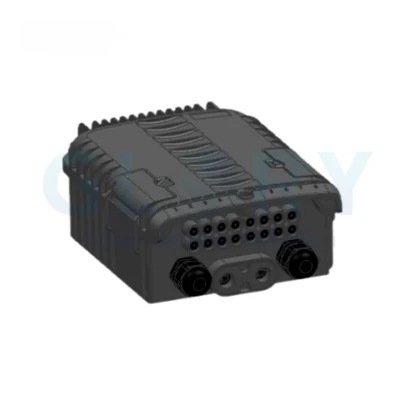
Regardless of the configuration you choose, the GL‑NID01 Fiber Optic NID Enclosure delivers a common foundation of quality:
• IP68‑grade high‑strength PC+ABS housing – UV rated, vibration and shock resistant
• Re‑enterable mechanical seal – open, maintain, and reseal without replacing the enclosure
• Generous slack storage – up to 50 feet of fiber
• Versatile cable entry – round cables 3–16.2 mm, flat cables 2–4.5×8.1 mm
• Flexible mounting – pole or wall
The model number suffix tells the story: SPL for splicing‑only, ONU for integrated ONT, LGX for modular cassette‑based distribution.
Conclusion
The NID is much more than a "box on the wall." It is the strategic interface where network responsibility is handed over, where signals are split or converted, and where long‑term reliability begins. By choosing the right internal configuration – splicing, ONU, or LGX – you align the physical layer with your service model, deployment density, and future expansion plans.
At Glory Optical, we offer all three. Because one size never fits all.