The First Domino of the Splitter Family

Of all splitting ratios, 1x2 is the smallest. Compared to its "big brothers," such as 1x4, 1x8, and 1x32, 1x2 may seem insignificant, but it is the origin of all optical splitters. Any optical splitter with a higher splitting ratio is essentially composed of multiple cascaded 1x2 splitters:
1x2: Splits one fiber into two paths
1x4: Three cascaded 1x2 splitters (1→2→4)
1x8: Seven cascaded 1x2 splitters
1x32: Thirty-one cascaded 1x2 splitters
In other words, understanding the 1x2 splitter means understanding the working principle of the entire PLC optical splitter family. Its design, manufacturing, and performance directly determine the quality of optical splitters with higher splitting ratios.
Why Is It "Small but Beautiful"?
"Compact" refers to its physical size and structural complexity. The 1x2 PLC splitter employs an all-fiber structure, encapsulated in a miniature stainless steel tube or small ABS box, weighing only a few tens of grams. It can be easily installed in any fiber optic splice box, junction box, or wall socket, taking up virtually no extra space.
"Beautiful" refers to its performance:
Low insertion loss: The theoretical loss is approximately 3 dB, while high-quality products can achieve an actual loss of ≤3.6 dB. This means that less than 60% of the input optical power is used for the splitting process, with over 40% available for transmission.
High channel uniformity: The loss difference between the two output ports is typically less than 0.8 dB, ensuring that both users receive similar signal strength and avoiding the awkward situation of one strong and one weak signal.
Low polarization dependent loss (PDL): The splitter's loss remains almost constant regardless of changes in the polarization state of the input light. This is especially important in high-speed coherent communication and complex fiber optic environments.
Wavelength insensitivity: It is not picky about wavelengths-1310 nm, 1490 nm, 1550 nm-all wavelengths can be evenly divided. This is the technical basis for triple-play services (transmitting broadband, voice, and video over the same optical fiber).
Where Is It Used?
Scenario 1 – FTTH: "One Fiber, Two Homes"
In Fiber to the Home (FTTH) deployments, a single drop fiber can serve two homes simultaneously using a 1x2 splitter. This is particularly suitable for low-density areas such as villa communities or rural residences, saving drop fiber resources without the need for large splitting equipment.
Scenario 2 – Link Monitoring and Testing
When using an Optical Time Domain Reflectometer (OTDR), technicians typically use a 1x2 splitter to connect the test port to the fiber under test and the reference fiber, enabling parallel testing and monitoring. It is also a standard component of optical power monitoring systems, allowing the extraction of 1%–5% of the signal without service interruption.
Scenario 3 – 1+1 Redundancy Protection
For high-reliability dedicated lines or data center interconnects, two 1x2 splitters can be used to build a 1+1 fiber backup link. When the primary fiber fails, the receiving end automatically switches to the backup fiber, achieving zero-disruption service.
Scenario 4 – Expanding Device Ports
When the core switch has only one available optical port, but needs to connect two remote devices simultaneously, a 1x2 splitter provides the simplest "one-to-two" solution. No device replacement or reconfiguration is required; it's plug-and-play.
What to Look for When Choosing a 1x2 Splitter
While 1x2 splitter technology is mature, quality variations still exist. Please note the following:
Insertion loss measurements: Do not rely solely on "typical values." Request test data for specific batches from the supplier.
Operating temperature range: For outdoor applications, choose a wide-temperature splitter with an operating range of -40°C to +85°C.
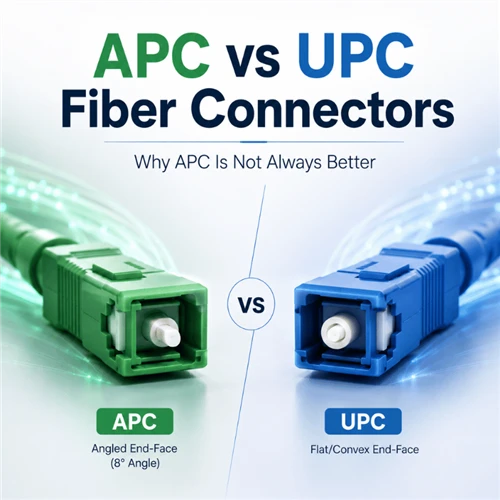
Connector type: SC/UPC connectors are most common; APC connectors are used for analog video; LC connectors are better suited for high-density applications.
Packaging: Bare fiber packaging is suitable for fusion splice trays, micro-module packaging is suitable for space-constrained applications, and cassette packaging with connectors is suitable for plug-and-play applications.
Conclusion
The 1x2 PLC splitter is like a screw in a fiber network – inconspicuous but omnipresent. From backbone to access networks, from data centers to home broadband, it quietly splits a beam of light into two, allowing signals to reach more corners.
The next time you enjoy high speed internet, think of that tiny 1x2 splitter inside the slender fiber, performing its low key yet precise "splitting mission." Small but beautiful, and absolutely indispensable.