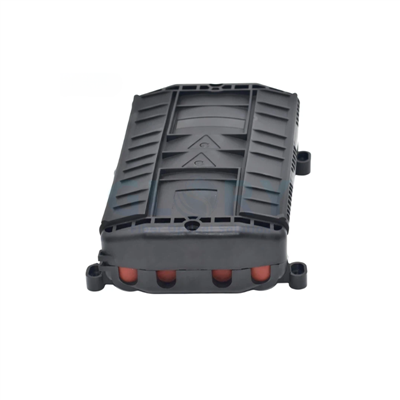
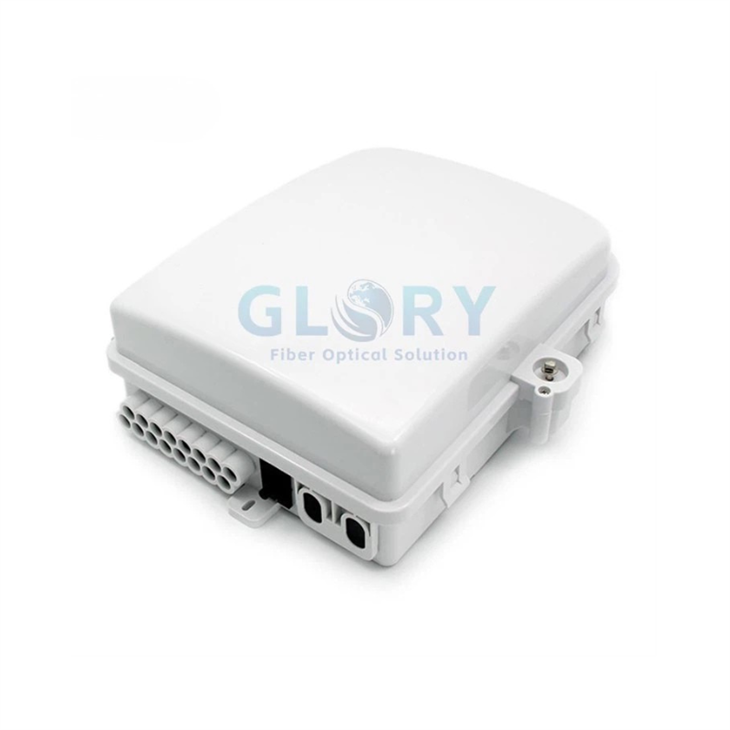
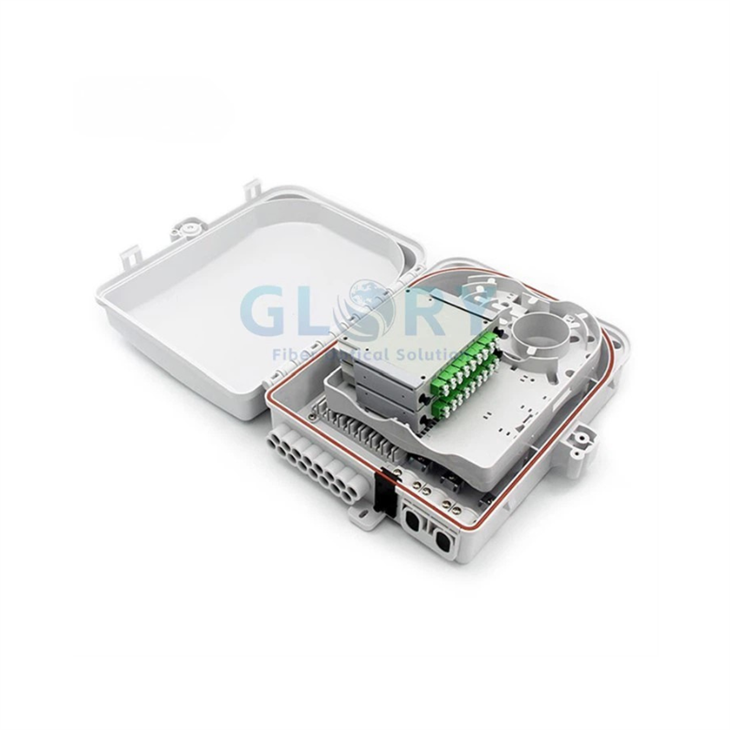
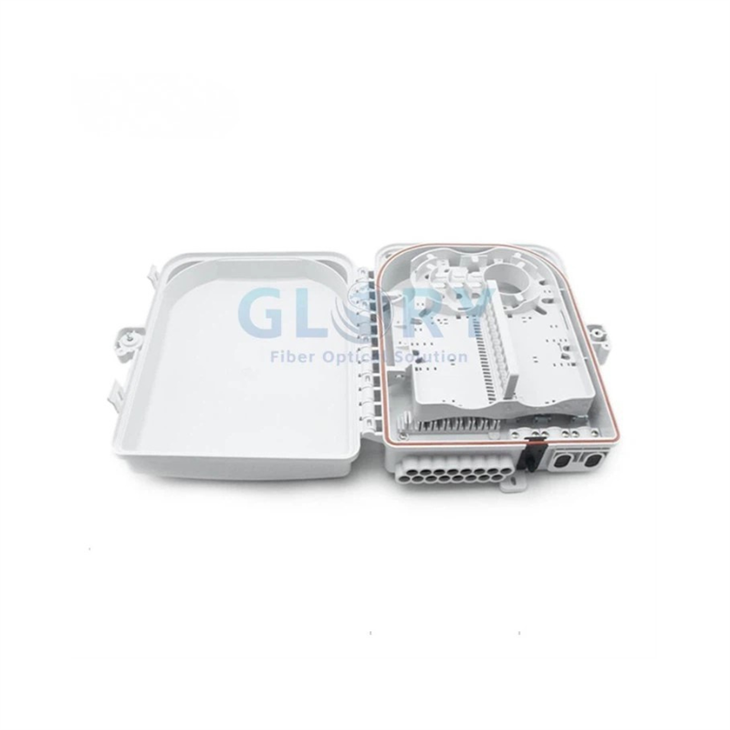
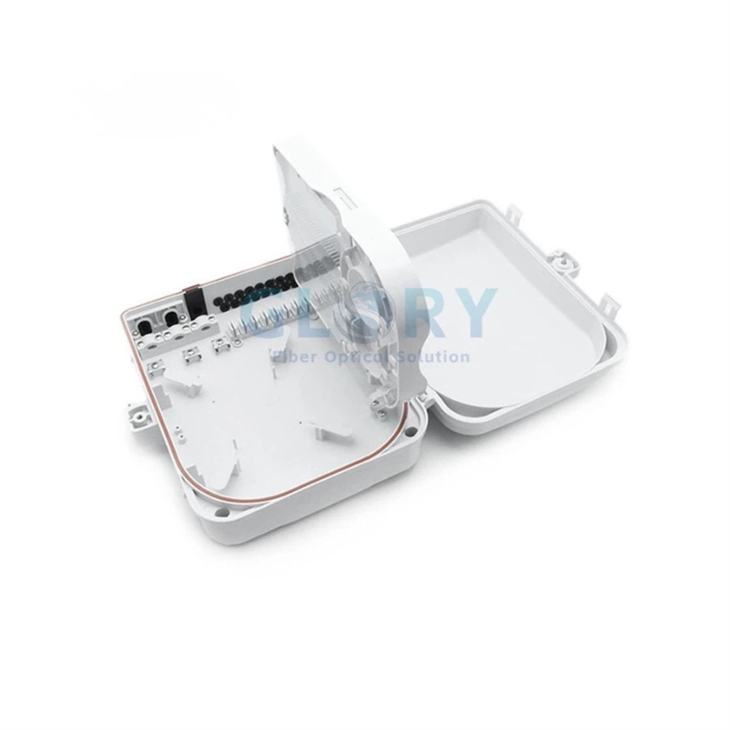
FDB Fiber box
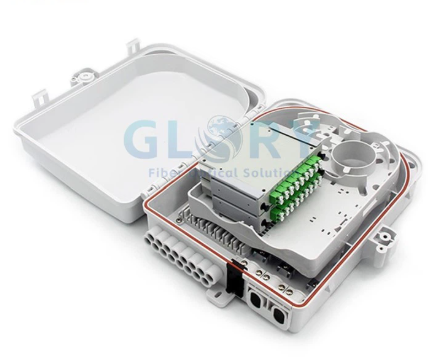
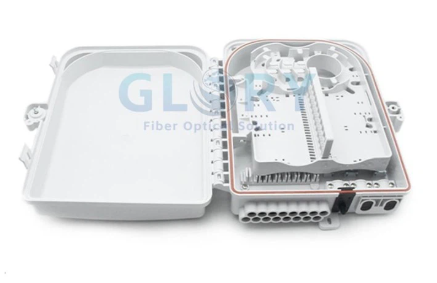
The GL-FDB-24D is the distribution node that sits between your feeder cable and your subscribers' premises. Twenty-four SC adapter output ports. Two through-cable feeder entries for cascade topology. ABS housing sealed to IP65. Integrated splitter tray for 1:8 or 1:16 PLC configurations. Designed for outdoor wall and pole installation across the full range of FTTH, CATV, enterprise, and 5G fronthaul distribution environments. One product. Every ODN architecture it needs to serve .
24
SC output ports
IP65
Protection
1:16
Max split ratio
Cascade
Topology support
Where the FDB fiber box sits
GL-FDB-24D in the FTTH ODN Architecture
The GL-FDB-24D occupies the Distribution Point (DP) position in the FTTH ODN - between the feeder cable from the OLT/ONU and the 24 individual subscriber drop cables. Every design decision traces back to the operational demands of this specific network position.
FTTH ODN signal path - GL-FDB-24D position
At the FDB position, four functions happen simultaneously: fiber splicing (feeder cable to splitter input), optical splitting (1 feeder fiber → 8 or 16 subscriber paths via PLC), drop cable termination (24 SC adapter output ports connect subscriber drops), and environmental protection (IP65 housing protects all internal components from outdoor conditions). The GL-FDB-24D supports one additional function: feeder cable pass-through - the two uncut cable entry ports allow the feeder cable to continue to downstream FDB nodes in cascade topology deployments.
Why FDB boxes fail - and what we address
Four Field Failures the GL-FDB-24D Was Engineered to Prevent
Post-deployment maintenance data from FTTH rollouts across Southeast Asia, Eastern Europe, and Latin America identifies four recurring failures at the FDB distribution node. Each has been addressed in the GL-FDB-24D design.
Rubber cable gland failure - moisture ingress along feeder cable path
The most common failure mode in outdoor FDB/NAP boxes is moisture infiltration along the feeder cable jacket path through degraded rubber gland seals. Standard rubber glands in low-cost distribution boxes lose their compression recovery within 2–4 years of UV and thermal cycling exposure. Water tracks along the cable jacket into the splice cassette, contaminating splices and causing progressive insertion loss increase on affected subscriber paths. The GL-FDB-24D uses modulated rubber seals with controlled compression force at each cable entry port, maintaining IP65 integrity across the −40°C to +70°C operating temperature range.
ABS UV chalking - housing micro-cracks bypassing primary gasket seal
Standard ABS without UV inhibitor treatment shows surface photo-oxidation chalking and micro-cracking within 18–36 months of outdoor aerial exposure in tropical and high-UV environments. The resulting micro-cracks open moisture pathways that bypass the primary housing gasket - allowing water ingress even when the main seal remains intact. The GL-FDB-24D ABS housing incorporates UV stabilizer additive that prevents surface photodegradation and maintains housing dimensional integrity across the specified service life in outdoor aerial and wall-mount deployments.
Inadequate internal volume - fiber bend radius violations during installation
Undersized FDB enclosures force installers to coil excess fiber and splitter pigtails below the minimum bend radius. For standard G.652D fiber, the minimum static bend radius is 30mm; for G.657A, 15mm. Violating these limits during installation introduces micro-bend losses that accumulate over thermal cycling - gradually degrading individual subscriber paths below the GPON link budget minimum. The GL-FDB-24D internal volume and layout are sized to accommodate 24 subscriber pigtail runs, a 1:16 PLC splitter module, and the splice cassette with minimum bend radius maintained on all fiber routing paths.
Unlabeled ports causing wrong-subscriber disconnect during fault isolation
In a 24-port FDB serving 24 subscribers, incorrect port identification during maintenance is a systematic operational risk. A technician disconnecting the wrong port to isolate a fault creates a new outage on an unaffected subscriber. The GL-FDB-24D internal port labeling system provides numbered port identification on both the adapter panel and the splice cassette - enabling correct correlation between the physical adapter port and the subscriber splice record without opening the housing body.
Engineering specification
What the GL-FDB-24D Delivers - Engineering Logic Behind Each Parameter
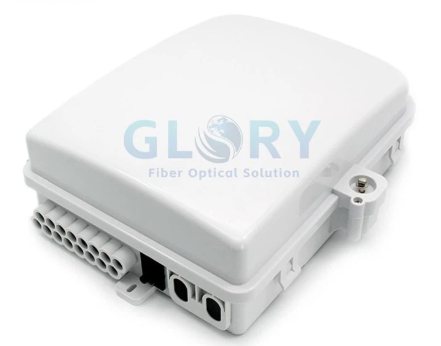
Every GL-FDB-24D specification addresses a specific operational requirement. We explain the engineering reasoning rather than just listing numbers - so procurement teams can make informed comparisons against competitive alternatives.
24 SC Adapter Output Ports - Full GPON PON Capacity from Single Node
The GL-FDB-24D provides 24 SC adapter output ports - the maximum subscriber count that can be served from a single GPON OLT port using 1:24 split ratio, or from two OLT ports using 2 × 1:8 or 2 × 1:12 configurations. This port count represents the industry standard for FTTH distribution node sizing in high-density residential and MDU deployments.
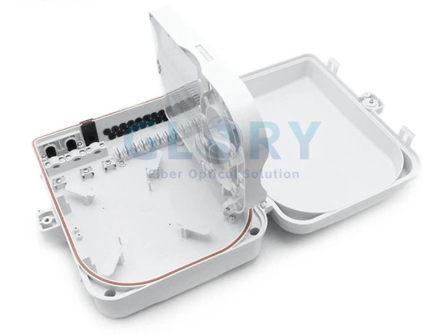
Each SC adapter port is individually accessible from the front of the enclosure after the cover is opened - without disturbing adjacent ports or the splice cassette. The flip-up distribution panel design allows the adapter panel to be positioned for comfortable working access during port change or connector cleaning operations without requiring full disassembly of the enclosure interior.
2 Uncut Cable Entry Ports - Feeder Cascade Topology Without Re-splicing
The GL-FDB-24D provides two cable entry ports for uncut through-cable routing - meaning the feeder distribution cable passes through the GL-FDB-24D without being cut, with selected fibers broken out at this node while the remaining fibers continue to downstream FDB nodes in the cascade. This architecture is the standard topology for linear FTTH distribution along pole lines, building facades, and street cable routes.
The uncut cable entry design is fundamental to cascade topology economics: a 48-fiber distribution cable serving 4 downstream FDB nodes (12 fibers per node) with feeder continuation is significantly more cost-effective than running individual feeder cables from the OLT to each node. The GL-FDB-24D's modulated rubber seals at the uncut cable ports accommodate cable outer diameters up to 20mm, covering all standard FTTH distribution cable types.
Integrated Splitter Tray - ABS Box-Type PLC, Field-Swappable Configuration
The GL-FDB-24D includes a dedicated splitter tray supporting ABS box-type PLC splitter modules. The standard configuration supports two 1:8 ABS PLC modules (serving 16 of the 24 ports from two separate feeder fibers) or one 1:16 ABS PLC module (serving 16 ports from a single feeder fiber). Alternative configurations using 1:12, 1:24, or 2:16 arrangements are available on custom order.
ABS box-type PLC splitters are the field-standard for FTTH distribution FDB applications because the ABS housing provides mechanical protection for the planar waveguide circuit inside - far more durable than bare-chip or blockless PLC modules in the outdoor thermal cycling environment. The splitter tray is accessible from the front of the enclosure after cover removal, enabling splitter module replacement without disturbing the splice cassette or adapter panel.
IP65 ABS Housing - Flip-Over Cover, Bottom Cable Entry, UV Stabilized
The GL-FDB-24D housing achieves IP65 ingress protection - complete dust-tight and water-jet resistant from any direction - through a combination of ABS housing with UV stabilizer, bottom-entry cable port geometry (routing cables down and away from the housing face reduces water runoff ingress potential), and a flip-over cover with integrated seal system.
The flip-over cover design provides an additional operational advantage: when the cover is opened for maintenance, the cover flips to a position that provides overhead protection for the internal fiber management area during rain. This seemingly minor design detail reduces re-seal failures from moisture ingress during maintenance operations - a documented cause of post-maintenance IP rating degradation in competitor models that use top-hinged covers.
Wall / Pole Mounting - Both Methods Supported From Single Housing
The GL-FDB-24D supports both wall mounting and pole mounting from the same housing configuration - standard mounting bracket with screw pattern for wall attachment, and hose clamp attachment points for pole mounting. The mounting system is included with the enclosure at no additional charge.
The outdoor FDB position makes mounting versatility operationally important: in dense urban FTTH networks, distribution boxes may need to be installed on building walls in one zone and on utility poles in another zone of the same project. Using the same GL-FDB-24D across both mounting environments eliminates the inventory management overhead of separate wall-mount and pole-mount SKUs.
Full Specification - GL-FDB-24D FDB Fiber Box
Complete production specifications for the GL-FDB-24D. Contact our technical team to confirm suitability for non-standard cable types, custom splitter configurations, or OEM requirements.
| Parameter | Specification | Notes / Operational relevance |
|---|---|---|
| Model | GL-FDB-24D | 24-core FTTH Splice Distribution NAP Box |
| Subscriber capacity | 24 drop cable outputs | Covers 24 subscriber premises per FDB node |
| Housing material | ABS with UV stabilizer | IP65-grade; UV resistant; long-term outdoor service |
| Protection grade | IP65 (IEC 60529) | Dust-tight + water-jet resistant any direction |
| Operating temperature | −40°C to +70°C | Arctic to tropical outdoor deployment range |
| Cable input ports | 2 × uncut cable (through) + 1 × branch | Cascade topology fully supported |
| Cable OD range | Up to 20mm | Modulated rubber compression seals |
| Output ports | 24 × SC adapter | Supports SC/APC and SC/UPC (specify on order) |
| Fast connector compatibility | 1 dedicated fast-pass port | One port allows SC fast connector direct pass-through |
| Splitter supported | ABS box-type PLC: 2 × 1:8 or 1 × 1:16 | Field-swappable; custom configs OEM available |
| Splice cassette | Internal splice tray for feeder-to-splitter splices | Accessible without disturbing adapter panel |
| Flip-up panel | Yes - distribution panel flips up for access | Cup-joint feeder cable placement; maintenance access |
| Cover type | Flip-over (maintenance weather protection) | Cover open position protects interior during rain |
| Lock type | Key lock | Anti-tamper; 2 keys supplied per unit |
| Port labeling | Numbered internal panel 1–24 | Port-to-subscriber documentation support |
| Installation methods | Wall mount / pole mount | All hardware included; single SKU for both |
| Compatible fiber types | G.652D, G.657A1/A2 SM | Passive enclosure - vendor-agnostic |
| Network applications | FTTH / FTTB / CATV / LAN / 5G fronthaul | Compatible with all major PON architectures |
| Certifications | IP65 (IEC 60529) · RoHS | Batch test reports available on request |
| Warranty | 3 years | Year 1: return · Year 2: replace · Year 3: repair |
| MOQ | 10 units · Free samples available | 1–2 pcs free sample for evaluation |
Supported PLC Splitter Configurations
| Config | Splitter modules | Feeder inputs | Active SC ports | Best use case |
|---|---|---|---|---|
| Standard 2×1:8 | 2 × ABS 1:8 PLC | 2 | 16 Recommended | Two OLT PON ports; 8 subscribers each; path diversity |
| Single 1:16 | 1 × ABS 1:16 PLC | 1 | 16 (8 ports reserve) | Single OLT PON port serving 16 subscribers; reserve 8 ports |
| Phase-2 partial | 1 × ABS 1:8 PLC | 1 | 8 active (phase-1) | Phase-1 deployment; add second 1:8 or upgrade to 1:16 later |
| Custom OEM | 1:12, 1:24, 2:12 on request | Variable | Up to 24 | Operator-specific split ratios; contact for custom BOM |
Application mapping
Where the GL-FDB-24D Performs Best
The GL-FDB-24D is the correct specification where high per-node subscriber count, flexible drop cable compatibility, and splitter upgrade capability are the primary requirements.
Residential FTTH Distribution
High-density residential estate FTTH rollout. Each GL-FDB-24D node serves 24 subscriber premises from a single distribution point. Wall-mount on building exteriors or pole-mount on estate utility poles. SC fast connector drop cable activation - field crews terminate on-site without pre-ordered fixed-length assemblies.
MDU / FTTB Building Riser
Multi-dwelling unit fiber distribution in mid-rise and high-rise buildings. Wall-mount GL-FDB-24D in building service risers or common area utility spaces, serving 24 residential units per box from a single building feeder cable. Standard SC adapters accept any drop cable routed through the building.
CATV Optical Distribution
Cable TV optical signal distribution at street-level access points. GL-FDB-24D accommodates CATV coexistence wavelengths (1550nm downstream) in the same SC/APC adapter configuration used for GPON. Suitable for hybrid CATV+FTTH PON deployments where both services are distributed from the same ODN node.
Enterprise Campus Backbone
Campus network backbone fiber distribution in enterprise, education, and government facilities. Wall-mount GL-FDB-24D at floor-level distribution points in campus buildings, connecting backbone feeder cables to building-level SC patch cord runs for LAN, IP telephony, and security system applications.
5G Fronthaul Distribution
5G small cell and macro-cell fiber distribution in urban outdoor plant. GL-FDB-24D cascade topology support - multiple FDB nodes on a single feeder cable route - matches the linear deployment architecture used for 5G fronthaul distribution along street infrastructure, minimising feeder cable cost per node.
Network Upgrade & Expansion
Capacity upgrade at existing distribution nodes - adding subscriber ports to a network where the original FDB node is at capacity. GL-FDB-24D's dual feeder input and field-swappable splitter tray allow upgrading from an 8-port 1:8 deployment to 16-port 1:16 or 24-port 2:12 by replacing the splitter module without re-splicing existing subscriber connections.
Frequently Asked Questions
1. What is an FDB fiber box and where is it used in an FTTH network?
An FDB (Fiber Distribution Box), also called a NAP box, CTO box, or ODB, is an outdoor weatherproof enclosure that serves as the distribution node between the feeder fiber cable and the individual subscriber drop cables in an FTTH access network. Inside, a PLC optical splitter divides one feeder fiber signal into multiple outputs (typically 8 or 16), each connected to a subscriber premise via an SC adapter port. The enclosure provides an IP rating (e.g., IP65) to protect the splitter, splices, and connections from outdoor environmental conditions. The GL-FDB-24D is a 24-port FDB providing drop cable outputs for 24 subscribers from a single node.
2. What is the difference between FDB, NAP, CTO, and ODB? Are they the same product?
Yes, FDB, NAP, CTO, and ODB all describe the same type of outdoor fiber distribution enclosure at the same position in the FTTH ODN architecture. The difference is purely regional terminology: FDB (Fiber Distribution Box) is the international technical standard term. NAP (Network Access Point) is used in Europe. CTO (Caixa Terminal Óptica) is the term used across Latin America. ODB (Optical Distribution Box) is used interchangeably with FDB by many manufacturers. The GL-FDB-24D qualifies under all four naming conventions.
3. How do I choose between a 1:8 and a 1:16 PLC splitter in an FDB fiber box?
The split ratio choice is an OLT port capacity decision. A 1:8 PLC splitter allows one OLT PON port to serve 8 subscribers; a 1:16 allows it to serve 16. The constraint is the optical power budget. A 1:8 split provides more power margin (3dB more than 1:16), which is important for longer cable routes or networks with higher attenuation. If the feeder cable run is short (<5km), the OLT is Class B+/C+, and cable quality is good, 1:16 is viable and reduces OLT port cost per subscriber. The GL-FDB-24D supports both configurations with field-swappable splitter modules.
4. What does "cascade topology" mean for FDB fiber boxes, and when should I use it?
Cascade topology means multiple FDB nodes are served from a single multi-fiber feeder cable. The cable enters one FDB node, specific fibers are dropped there, and the remaining fibers continue to the next node downstream. This differs from a star topology, where a separate feeder cable runs from the OLT to each FDB node. Cascade topology is used when distribution boxes are deployed along a linear route (e.g., a street or pole line), significantly reducing feeder cable cost. The GL-FDB-24D supports cascade topology via its two "uncut cable" entry ports.
5. What is the difference between an FDB box and a FAT pre-connectorized terminal box?
Both serve the feeder-to-drop distribution function but differ in how subscriber drop cables connect. In a standard FDB (like the GL-FDB-24D), drop cables are connected at SC adapter ports using SC fast connectors terminated in the field, offering compatibility with any SC-terminated cable. In a FAT pre-connectorized box, drop cables are factory pre-terminated with hardened connectors (e.g., Mini-SC) that plug directly into the box's ports, enabling faster activation but requiring pre-planned cable lengths. The choice depends on the project's need for flexibility versus deployment speed.
6. Can the GL-FDB-24D be used both indoors and outdoors?
Yes. The GL-FDB-24D is designed for outdoor installation (IP65 rated) but is equally suitable for indoor use in locations like building risers, mechanical rooms, or corridors. The IP65 rating provides extra protection in indoor environments with potential humidity or dust, extending service life.
7. How many subscribers can one GL-FDB-24D serve?
The GL-FDB-24D has 24 SC adapter output ports, so it can directly serve 24 subscriber premises from a single box. With a 1:16 PLC splitter installed, 16 of the 24 ports are actively connected; the remaining 8 can be reserved. With two 1:8 splitters, 16 ports are active across two separate feeder fibers. For higher density, multiple units can be connected using cascade topology.
8. Is the PLC splitter included with the GL-FDB-24D, or purchased separately?
The GL-FDB-24D can be ordered in two configurations: loaded(with factory-installed ABS box-type PLC splitter modules) or unloaded(empty box without splitter). The loaded configuration is recommended for most projects. Please specify "loaded 2×1:8," "loaded 1×1:16," or "unloaded" when ordering. Custom splitter configurations are available for OEM/ODM orders.
9. What drop cable types and connector formats does the GL-FDB-24D accept?
The 24 SC adapter output ports accept any drop cable terminated with an SC connector. Compatible types include: standard 2.0×3.0mm flat (butterfly) FTTH drop cable with SC fast connector, 3.0mm round drop cable, 0.9mm simplex indoor cable, and pre-terminated pigtail assemblies. Both SC/APC (green) and SC/UPC (blue) variants are available-specify when ordering. One dedicated fast connector pass-through port allows for direct connection.
10. What are the MOQ, lead time, and OEM/ODM options for the GL-FDB-24D?
The standard MOQ is 10 units. Free samples (1–2 units) are available for evaluation. Standard configurations ship within 15 business days. OEM/ODM orders (custom branding, colors, splitter configurations, etc.) are accepted with a lead time of 25–30 business days. Volume pricing is available from 50 units. Contact sales@gloryoptic.comfor a complete quotation.

Our Quality Promise
Comprehensive 3-Year Warranty
We confidently back all our products with a 3-year warranty. Our specific service policy is: within one year for quality issues, we take full responsibility for returns; within two years, for replacements; and within three years, for repairs.
Clear & Competitive MOQ
We welcome both trial and bulk orders. Our standard Minimum Order Quantity (MOQ) is 50 units. We also offer free samples for testing to help you evaluate our quality with confidence.
Fast & Reliable Logistics
We guarantee delivery within 10 days for standard items. Our logistics advantage includes cost-effective door-to-door service to simplify shipping for you.
Our Foundation
Backed by 18 years of experience since 2008, we control quality from our own factory, accept OEM/ODM requests, and maintain ready stock for wholesale. We focus on delivering the optimal balance of price and quality directly to end customers worldwide.
Your trust is our priority. Partner with us for dependable fiber optic solutions supported by clear promises.
Hot Tags: fdb fiber box, China fdb fiber box manufacturers, suppliers, factory, Outdoor Fiber Optic Junction Box, Nid Box, fiber optic box outdoor, Optical Fiber Distribution Box, fiber outlet box, box fiber